Hitting a target on land is relatively easy. The coordinates don't move. You program the guidance system, launch the rocket, and let physics do the rest. Hitting a moving ship in the middle of the sea at several times the speed of sound is an entirely different nightmare.
Turkey just proved it can do exactly that. For an alternative perspective, read: this related article.
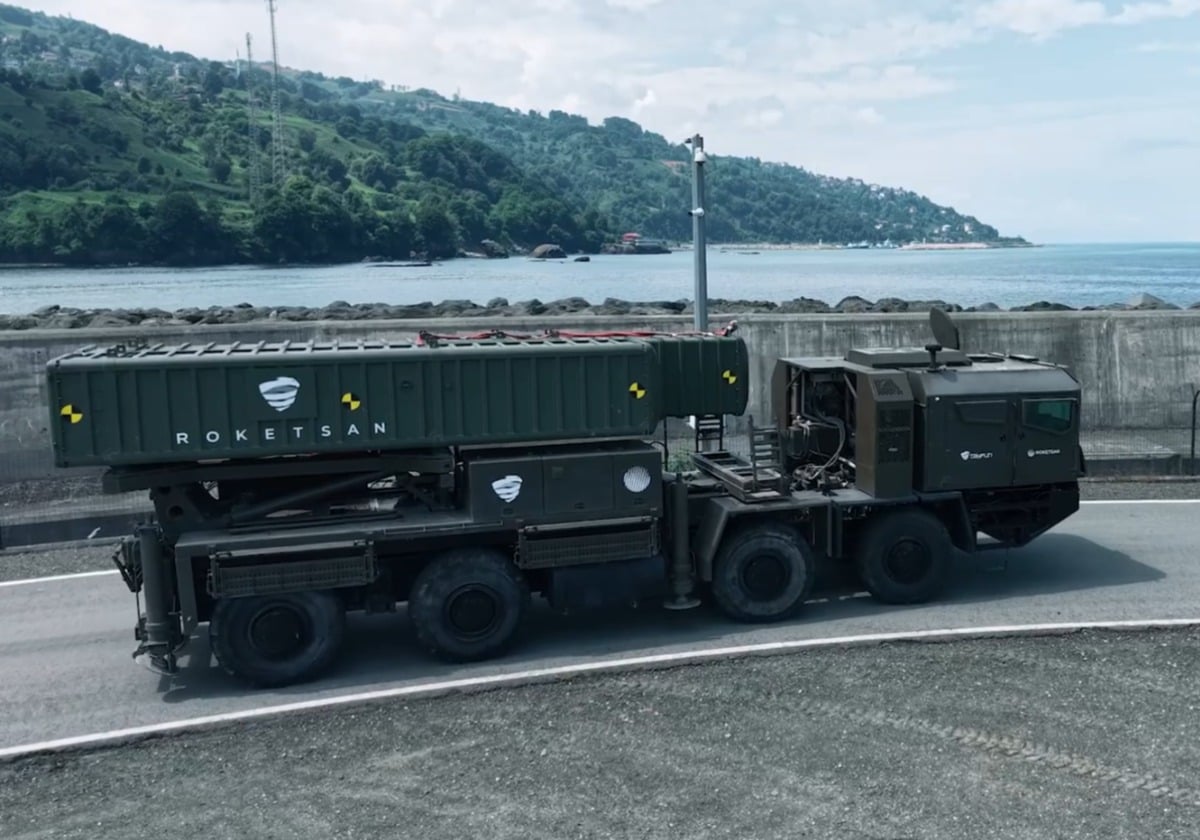
On July 4, 2026, the Turkish defense establishment quietly crossed a massive threshold. Roketsan, the country's premier missile manufacturer, conducted a live-fire trial of its TAYFUN Block 3 missile. This wasn't just another standard ballistic test. This time, the weapon was configured as a dedicated anti-ship ballistic missile.
Launched toward the Black Sea, the missile tracked, locked onto, and obliterated a small, moving maritime target roughly the size of a fishing boat. It did this while flying at hypersonic speeds. Related insight regarding this has been published by USA Today.
With this single test, Ankara joined a highly exclusive club of nations possessing active anti-ship ballistic missile capabilities. Before this, only heavyweights like China, Iran, and India played in this specific arena. Now, the naval balance of power in the region is looking very different.
The Tech Behind the TAYFUN Block 3 Strike
Building a ballistic missile is hard enough, but turning it into a ship-killer requires mastering terminal guidance under extreme thermal conditions. When a missile enters the atmosphere at hypersonic speeds, the friction creates an intense envelope of heat around the nosecone. This heat can blind ordinary sensors.
Defense analysts observing the test footage noticed a fascinating detail about the TAYFUN Block 3 nosecone. It appeared to feature a detachable heatshield. This design choice drops heavy clues about what is happening under the hood.
Most anti-ship ballistic missiles rely heavily on active radio frequency seekers or optical sensors to find their targets during the final seconds of flight. Optical sensors are incredibly precise but highly sensitive to the extreme aero-thermal environment of hypersonic flight. By utilizing a protective shield that pops off at the last possible second, Roketsan engineers figured out how to protect the sensitive optics until the missile is close enough to lock onto the target.
The test proved that the seeker head can survive the extreme thermal stress, calculate the intercept course for a moving vessel, and execute terminal maneuvers with pinpoint accuracy. Reports indicate the missile achieved a direct hit with a live warhead, a feat that requires flawless execution from the onboard guidance computer.
Anatomy of the Turkish Ballistic Missile Inventory
To understand how Turkey reached this point, you have to look at the broader evolution of its missile program. This wasn't an overnight miracle. It's the result of decades of incremental steps, moving from tactical battlefield systems to strategic long-range weapons.
The journey started with the YILDIRIM, which served as Turkey's first real foray into locally produced tactical ballistic missiles. Next came the BORA, which introduced vastly improved guidance and tighter accuracy tolerances. The TAYFUN family represents the modern iteration of this design lineage, offering modular flexibility and advanced propulsion technology.
Roketsan isn't building a single weapon system here. They're developing a family of systems designed for completely different operational profiles.
The baseline TAYFUN Block 1 serves as the short-range variant, famously making waves during early secret testing when it clocked a range of 561 kilometers.
The Block 2 variant pushes that envelope even further with extended-range propulsion systems.
The newly tested Block 3 introduces the specialized seeker head and terminal guidance packages needed to convert that raw ballistic range into a maritime strike asset.
Then there's the massive Block 4, an oversized variant designed for maximum payload and distance. The Block 4 roughly doubles the length of the original missile to 10 meters and balloons the weight from 2 tons to a staggering 7 tons. It trades the mobile multi-round launcher footprint for a single, heavy-hitting hypersonic round capable of striking targets up to 1,500 kilometers away.
The Real Challenge is the Kill Chain
Any defense engineer will tell you that building a fast missile is only 30% of the problem. The real bottleneck is the sensor loop. If you can't see the target in real time, a hypersonic missile is just a very expensive piece of fireworks. Ships move. A destroyer cruising at 30 knots will be miles away from its original coordinates by the time a ballistic missile completes its high-altitude arc.
This is why the TAYFUN Block 3 doesn't operate in a vacuum. It relies on a complex, multi-layered targeting architecture to provide midcourse updates before the missile's own seeker takes over.
Turkey has spent the last decade building a formidable network of airborne and coastal sensors that feed directly into this system. High-end unmanned aerial vehicles like the Bayraktar Akıncı and Anka fly at high altitudes, using advanced optical systems like the ASELFLIR 600 to track naval movements from safely outside the reach of air defense systems.
On the ground, coastal surveillance radars track local shipping lanes, while TÜBİTAK’s YDYFR high-frequency long-range radar provides over-the-horizon detection capabilities. This radar bounces signals off the ionosphere, allowing Turkish command centers to spot enemy naval formations hundreds of kilometers away, well beyond the curvature of the earth.
When a target is identified, coordinates are continuously beamed to the flying missile via an encrypted datalink. The missile adjusts its midcourse trajectory continuously based on these updates. Once the missile re-enters the lower atmosphere and sheds its protective thermal shielding, the internal seeker turns on, locks onto the ship, and guides the warhead home.
Integration with the BARBAROS Coastal Defense System
The TAYFUN Block 3 isn't meant to replace Turkey's existing naval defenses. It's designed to act as the heavy sledgehammer in a highly coordinated, tiered defense strategy.
Ankara integrates these ballistic assets directly into the BARBAROS coastal defense system. Think of BARBAROS as a unified command network that orchestrates multiple types of anti-ship weapons simultaneously.
In a real crisis scenario, an adversary fleet would have to deal with a terrifyingly diverse array of threats. At the lower tier, land-based ÇAKIR compact cruise missiles offer highly maneuverable, low-altitude strikes designed to oversaturate close-in weapon systems. At the middle tier, the larger land-based ATMACA anti-ship cruise missiles skim the waves at high subsonic speeds, dodging radar detection until the final seconds.
The TAYFUN Block 3 operates above them all. While cruise missiles hug the water, the TAYFUN screams down from the upper atmosphere at hypersonic speeds. Defending against a low-altitude cruise missile requires completely different radar frequencies and interceptor geometries than stopping a high-angle ballistic threat diving from the edge of space. By mixing these weapons together within the BARBAROS framework, Turkey forces hostile naval commanders to defend against two opposite extremes at the exact same time.
Creating Operational Ambiguity for Opposing Navies
The introduction of a terminal seeker to the TAYFUN line introduces a massive psychological and tactical problem for foreign naval commanders operating in the eastern Mediterranean or the Black Sea. It creates total operational ambiguity.
In the past, if early warning radar picked up a Turkish ballistic missile launch, military analysts could look at the launch vector and immediately determine the land-based infrastructure asset being targeted. Ballistic tracks were predictable.
Not anymore. Because the TAYFUN Block 3 looks exactly like its land-attack siblings during the launch and midcourse phases, an adversary has no way of knowing whether a launched missile is heading toward an inland military base or a primary command ship at sea. Every single launch suddenly demands that naval assets assume they are the target. This forces fleets to scatter, burning fuel, breaking formation, and turning on active electronic warfare systems that expose their exact positions to other sensors.
Practical Next Steps for Regional Stability
If you are a maritime security planner or an international defense observer, watching this capability go live means the old assumptions about regional naval movement are officially obsolete. Naval forces can no longer count on distance alone to keep them safe in enclosed seas like the Black Sea or the Aegean.
The immediate next step for regional defense planners is clear. Fleets operating within a 1,000-kilometer radius of Turkish shores must completely overhaul their shipborne air defense protocols. Traditional point-defense systems built to shoot down sea-skimming cruise missiles won't cut it against a 2-ton ballistic mass dropping vertically at Mach 5. Navies will have to invest heavily in advanced exo-atmospheric interceptors and high-power electronic jammer suites capable of disrupting the midcourse satellite and radar datalinks before the missile can deploy its terminal seeker. The margin for error just dropped to zero.