Washington, D.C. does not do sudden changes. The city’s famous monuments look like they grew directly out of the soil, placed precisely by history to project quiet power. But right now, a massive architectural disruption is sitting on a federal drawing board.
Trumps plan for a triumphal arch is moving closer to reality, and it is kicking up a massive political and legal storm.
The National Capital Planning Commission met on July 9, 2026, to review the preliminary plans for this 250-foot structure. This isn't just a minor addition to the city. It is a deliberate attempt to reshape the physical identity of the nation’s capital. While commission staff gave a cautious green light to the initial site ideas, they dropped a massive caveat. The current design violates a century-old federal law meant to keep Washington looking like Washington.
If you think this is just another standard bureaucratic squabble, you are missing the bigger picture. This project challenges the foundational philosophy of American civic design.
The Absolute Scale of the Project
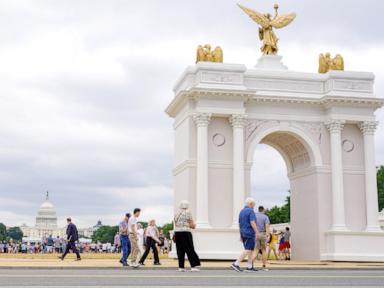
The proposed monument is massive. There is no other way to put it. Standing at 250 feet tall, the height is a deliberate nod to America’s 250th anniversary. It is an enormous block of granite meant to command attention.
To understand just how much this will alter the environment, look at the nearby icons. The Lincoln Memorial stands at 99 feet. This arch will dwarf it completely. It will rise to nearly half the height of the 555-foot Washington Monument.
Washington Monument: 555 feet
Proposed Triumphal Arch: 250 feet
Lincoln Memorial: 99 feet
The top of the structure will feature a massive figure resembling Lady Liberty holding a torch high into the air. Two large, gilded eagles will flank her. The initial designs included four golden lions guarding the base. Those lions are gone now. Architects removed them after critics pointed out that lions have nothing to do with American history.
Instead of lions, the base will feature open pedestrian crosswalks. Massive gold lettering will spell out "One Nation Under God" and "Liberty and Justice for All" across the top. The entire text of the Pledge of Allegiance will be carved into both the east and west faces. Visitors will ride an elevator to a public observation deck at the top, offering a complete view of the entire region.
The Legal Trap of the Height Act
The biggest immediate hurdle for the project is a piece of legislation passed in 1910. The Height of Buildings Act restricts the height of structures in downtown Washington. It ensures that the Capitol and the Washington Monument remain the dominant features of the skyline. No one gets to build a skyscraper here.
The commission's staff report, running over 180 pages, highlights a glaring conflict. The arch is just too tall for the specific legal limits of its site.
The staff recommended that commissioners demand a redesign. They want the White House to redistribute the height between the main granite structure, the usable roof area, and the statues on top. But here is the twist. Even if the architects shuffle those components around to satisfy the letter of the law, the total height will still hit that 250-foot mark.
It is a clever bit of compliance maneuvering. Shifting a few feet from the stone arch to the copper statue might satisfy the regulators, but it won't change the visual impact on the ground. The physical presence remains just as dominant.
A Battle Ground Over Sacred Sightlines
The chosen location is the real source of outrage for preservationists and military families. The plan places the arch directly on Memorial Circle. This is a busy traffic roundabout on the Virginia side of the Memorial Bridge, sitting right over the Potomac River.
This specific spot was not chosen at random. It sits directly on the historic axis connecting the Lincoln Memorial to Arlington House at Arlington National Cemetery.
Architects created this specific view after the Civil War. It serves a deep symbolic purpose. It represents the physical and spiritual reunification of the North and the South. By placing a 250-foot granite block right in the middle of that axis, you effectively cut that symbolic tie in half.
A group of military veterans and a prominent historian have already filed a lawsuit in federal court to halt construction. They argue the project ruins the experience of visiting the cemetery and violates federal preservation laws.
Local officials are also sounding the alarm about basic logistics. A professional transportation engineer noted in public comments that the arch will create two massive walls right next to a heavily congested traffic circle. Drivers won't be able to see around the bend. Traffic will slow down, gridlock will worsen, and accidents will likely tick up.
Follow the Money
Who is paying for this? Last year, the official line was that private donations would cover the entire bill. The administration claimed that leftover money from a separate White House ballroom project would fund the construction.
That story has changed.
Recent disclosures show that public funds will be mixed with private corporate donations to get the project across the finish line. The White House still refuses to release an official, comprehensive cost estimate. Critics are furious, calling it a blatant waste of taxpayer money during a tight fiscal environment.
The political reality is that public outrage might not matter. The administration has stacked the reviewing agencies with loyalists. Will Scharf, a top White House aide, leads the National Capital Planning Commission. The Commission of Fine Arts already rubber-stamped the design earlier this year. The traditional checks and balances of Washington architecture have been systematically bypassed.
The Alternative Nobody Wants to Take
There are options to fix this without a massive legal war. David Maloney, Washington's historic preservation officer, urged the administration to consider moving the arch entirely.
He suggested an empty traffic oval on South Capitol Street, located between Nationals Park and Audi Field. Maloney argued that placing the arch there would create a vibrant focal point for a growing neighborhood. It would tie into the local sports culture and enhance the city's layout without ruining historic views.
The White House ignored the suggestion completely. A sports-themed arch in a trendy neighborhood does not carry the same political weight as a massive monument commanding the entrance to the nation's most sacred historic grounds.
What Happens Right Now
The project is moving forward despite the lawsuits, the traffic concerns, and the architectural protests. If you want to watch how this plays out, keep your eyes on two specific arenas.
First, watch the federal court case brought by the veterans. A judge's injunction is the only thing that can realistically halt the bulldozers at this stage. Second, watch for the updated design submissions from Harrison Design, the architecture firm handling the project. How they attempt to rewrite the proportions of the arch to trick the Height Act will tell you exactly how far they are willing to push the boundaries of federal law.
The debate is no longer about whether the arch is good art. It is a raw exercise in political will, mapped directly onto the stone and sky of Washington.