Donald Trump just gave his critics enough ammunition to last the rest of his term. Sitting at a press conference during the NATO summit in Ankara, Turkey, the 80-year-old president managed to invent a completely fictional country while discussing actual, high-stakes military conflicts. The phrase out of his mouth was the Islamic Republic of Japan, a bizarre mashup that left diplomats staring at their shoes and social media predictably melting down.
He wasn't just passing time. Trump was trying to brag about American missile defense capabilities, specifically referencing an incident involving the USS Abraham Lincoln. "We had 111 missiles shot by the Islamic Republic of Japan," Trump told the press corps, completely unprompted. He went on to detail how every single one of those missiles was knocked down over the course of an hour.
Except Japan didn't fire those missiles. They are one of America's closest Pacific allies, a constitutional monarchy, and famously devoid of any Islamic theological governance. Trump clearly meant the Islamic Republic of Iran, the nation the US has been actively trading strikes with in the Middle East throughout 2026.
It was a massive verbal car crash. It got worse.
The Double Whammy Calling Zelensky Putin
If confusing a Middle Eastern adversary with a pacifist East Asian ally wasn't enough, Trump doubled down on the confusion just minutes later. Sitting right next to Ukrainian President Volodymyr Zelensky, Trump turned to the reporters and asked a question that stopped the room cold.
"You have a question for President Putin, please?" Trump said, pointing his finger directly at Zelensky.
The press room filled with awkward chuckles. A few reporters tried to correct him in real time. Instead of executing a graceful pivot, Trump leaned into it, attempting to spin the error as if it were a deliberate rhetorical strategy. "Do you have a question for President Putin, not Zelenskiy, Putin?" Trump insisted, still gesturing toward the obviously non-Russian leader beside him. "What would you like to ask him, because I'm going to ask him that question."
Zelensky just sat there. He had to. When your country relies on billions of dollars in American military hardware to survive, you don't lecture the leader of the free world on basic geography or global identities. You just swallow the insult and smile for the cameras.
The Hypocrisy of the Dozy Don Chronicles
The real sting here isn't just that an American president forgot who he was fighting or who he was funding. It's the absolute, unadulterated irony of who is making these mistakes.
Trump built his entire modern political identity on the idea that his opponents were mentally decaying. He spent years mercilessly mocking Joe Biden as "Sleepy Joe," turning every stutter, trip, and verbal stumble into a viral campaign ad. He ran on brute-force vigor. He painted himself as the sharp, unscripted alternative to an aging Washington establishment.
Now, Trump is 80. He's the oldest person to ever sit in the Oval Office. And the scripts have completely flipped.
Online commentators are now gleefully tracking the "Dozy Don Chronicles." This isn't an isolated incident. We're talking about a president who has recently been filmed seemingly nodding off during official briefings, staring blankly into space at public appearances, and repeatedly claiming his father was born in Germany when official records show he was born in New York.
When Biden stumbled, Trump called it cognitive decline. When Trump invents the Islamic Republic of Japan, his surrogates call it a "freewheeling, unscripted style." They point to his grueling travel schedule and high energy levels. But you can't have it both ways. If verbal slips signify an unfit mind for one party, they signify the exact same thing for the other.
The Real Danger Behind the Comedy
It's easy to laugh at the memes. Late-night hosts are going to have a field day with the idea of a fictional, missile-toting Islamic Republic of Japan. But the backdrop to this gaffe is incredibly grim.
The US and Iran are locked in a volatile, highly dangerous military standoff. Just a day before this summit, Trump declared that an interim ceasefire agreement with Tehran was officially dead. "To me, I think it's over," he told reporters in Turkey. "I don't want to deal with them anymore."
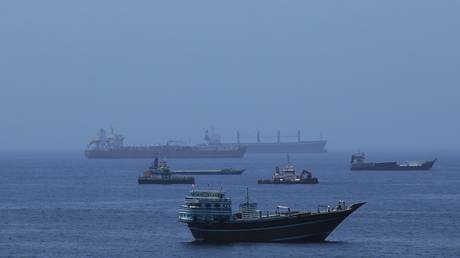
The US military has been launching retaliatory airstrikes against Iranian positions following a series of hostile actions against commercial shipping vessels in the Strait of Hormuz. Trump has openly threatened to take control of Kharg Island, re-establish a total naval blockade on Iranian ports, and bomb their domestic power grids.
This isn't a theoretical foreign policy debate. It's a shooting war.
When the commander-in-chief can't separate the nation he's threatening to bomb from the nation that builds America's tech and hosts thousands of US troops, it creates genuine panic in foreign ministries across the globe. Tokyo doesn't find this funny. They are already dealing with an increasingly aggressive China and a volatile North Korea. The last thing Japanese Prime Minister Sanae Takaichi needs is the American president casually telling the world that Japan is launching hundreds of ballistic missiles at US aircraft carriers.
A Pattern of Pacific Insults
This isn't even Trump's first bizarre interaction involving Japan and the Middle East conflict this year. Back in March, during a White House meeting with Prime Minister Takaichi, a reporter asked Trump why he hadn't warned Asian and European allies before launching a massive wave of airstrikes against Iranian infrastructure.
Trump's response was jaw-dropping.
"We didn't tell anybody about it because we wanted surprise," Trump said, sitting right next to a visibly uncomfortable Takaichi. "Who knows better about surprise than Japan? Why didn't you tell me about Pearl Harbor? Right?"
It's a bizarre worldview. He treats monumental historical tragedies like casual punchlines. To bring up a surprise attack from 1941 to justify freezing out a modern democratic ally in 2026 displays a profound lack of diplomatic tact. Combining that historical grudge with this new "Islamic Republic" blunder paints a picture of a foreign policy apparatus driven by gut instincts, personal whims, and a dangerous mix of historical confusion.
Where Does Washington Go From Here
Predictably, the political knives are out in Washington. A growing group of Democratic opponents and vocal political commentators are openly whispering about the 25th Amendment again. They are arguing that these public displays of confusion are becoming too frequent, too severe, and too dangerous to ignore.
Let's be realistic. The 25th Amendment isn't going to happen. It requires the vice president and a majority of the cabinet to strip the president of power. Trump's cabinet is filled with loyalists who wouldn't dream of making that move, especially with critical midterm elections looming and the party desperate to maintain a unified front.
But the damage to America's global standing is real.
Allies don't trust an unpredictable leader, but they fear an incompetent one even more. When the US president speaks, the world is supposed to listen to every syllable for policy shifts. Now, foreign leaders are forced to act like translators, constantly trying to figure out if Trump is announcing a new military doctrine or if he just needs a nap.
If you want to understand how this impacts global security, look at the immediate fallout. Watch how the State Department scrambles to issue clean-up statements over the next 48 hours. Watch for the inevitable, tightly scripted press release from Tokyo reaffirming the strength of the US-Japan security alliance.
Pay attention to what happens next in the Strait of Hormuz. The real conflict with Iran is escalating, regardless of what name the president decides to call them today. Keep your eyes on the actual troop movements and defensive deployments, not the late-night talk show monologues. The real policy is happening on the water, far away from the chaotic microphones of Ankara.