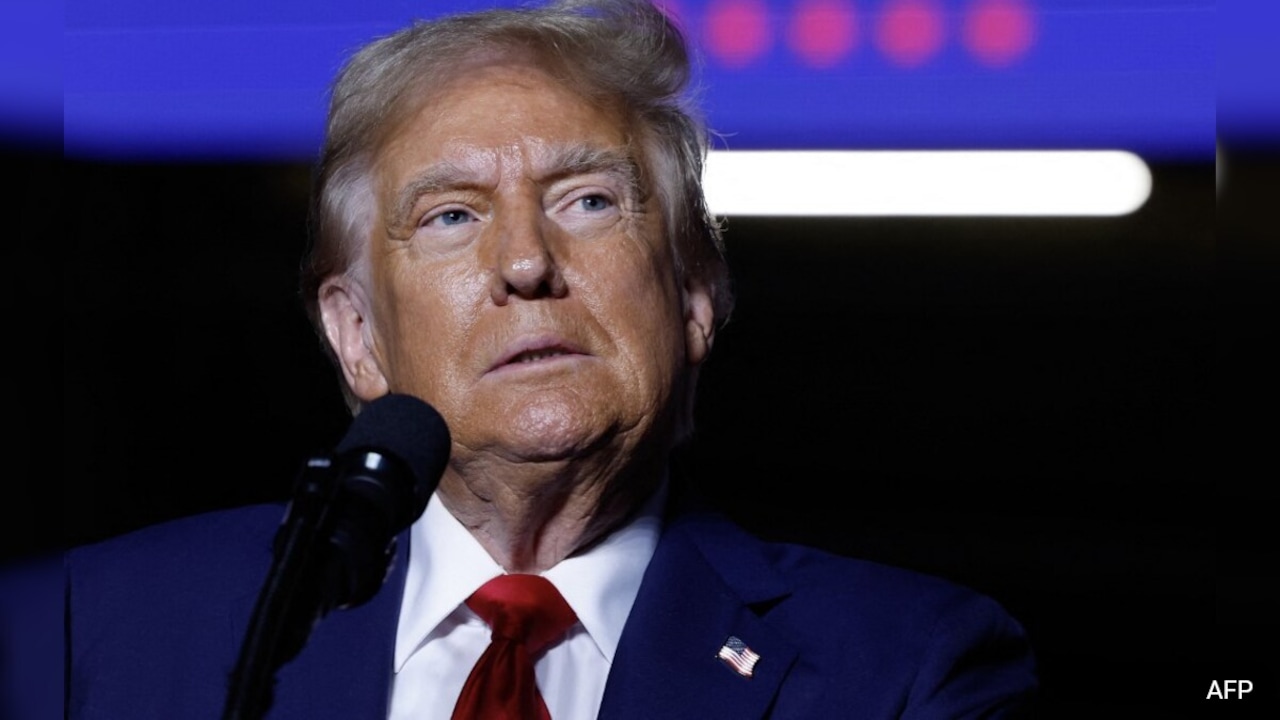
Donald Trump just flipped the entire script on how a sitting president builds wealth. Forget old-school real estate empires that take generations to build. The latest mandatory financial disclosure from the Office of Government Ethics shows the president brought in well over a billion dollars in just one year. Most of it didn't come from towering skyscrapers or pristine golf courses. It came from digital tokens and face-stamped meme coins.
The 927-page federal filing pulls back the curtain on a financial shift that feels almost impossible. Ventures that barely existed when Trump took office have completely outperformed his traditional real estate portfolio. While ordinary retail investors faced massive drops in the value of these exact same tokens, the Trump business machine locked in staggering amounts of revenue.
You need to understand exactly how this happened. It isn't just a story about a massive personal windfall. It shows how the intersection of executive power, digital assets, and billionaire buyers creates a new type of financial playbook.
Inside the Massive New Digital Income Stream
The sheer scale of the numbers in the ethics disclosure is mind-blowing. Forbes now estimates Trump's net worth at $6 billion, a massive jump from the $2.3 billion recorded back in 2024. Crypto acts as the absolute rocket fuel for this growth.
World Liberty Financial and the Power of Governance Tokens
The document reveals that Trump pulled in more than $500 million from World Liberty Financial. His sons and the children of his special envoy, Steve Witkoff, set up the crypto venture while Trump holds the title of co-founder emeritus. The venture specialized in selling new crypto products, specifically something called governance tokens.
Before the buying frenzy started, financial regulators warned people about these specific assets. Unlike traditional stocks, governance tokens do not give you an ownership stake in the underlying company. They don't pay dividends. They don't give you a claim on assets. They basically just give you the right to vote on corporate policies. Determining their true value is incredibly difficult.
That didn't stop big money from pouring in. While everyday buyers struggled, crypto whales jumped at the chance to participate. The disclosure shows that the business locked in half a billion dollars from these sales, showing just how hungry buyers were to get involved in a project directly tied to the first family.
CIC Digital and the Wild Rise of Celebrity Meme Coins
The second major pillar of this digital gold rush is a company called CIC Digital LLC. This entity brought in over $600 million. The money came from licensing fees and the sales of souvenir-style meme coins stamped directly with Trump's face.
The trading history of these coins looks like a terrifying rollercoaster ride. Right after the launch, enthusiasm drove the price of the souvenir coins to a peak of more than $74. Since that initial spike, the floor fell out. Today, those same coins trade for around $1.68.
This creates a brutal contrast. The sellers walked away with hundreds of millions in guaranteed licensing revenue and cash. The everyday buyers who held onto their tokens are sitting on severe losses. The World Liberty tokens followed a similar path, losing roughly 80% of their value since they began open trading.
How Digital Assets Outearned Traditional Real Estate
For decades, the Trump brand stood for physical property. It meant marble lobbies, gold-plated fixtures, and acres of golf turf. The latest filing shows that digital code now moves faster and pays better than physical brick and mortar.
Foreign Real Estate versus Digital Assets
It took the Trump family a century to build a global property footprint. Yet, a pair of crypto startups generated more cash in twelve months than a huge slice of that property portfolio. That doesn't mean the traditional business is struggling. The property side of the empire experienced its largest expansion in decades, driven heavily by international branding deals.
Look at the global revenue breakdown from the disclosure:
The United Arab Emirates property brought in $10.4 million for the family business.
A project in Saudi Arabia, built by a developer with close ties to the ruling family, sent $9 million.
Deals in Bucharest, Romania, and Qatar brought in another $5 million each.
These are massive, multimillion-dollar international deals. But when you stack them up against a $600 million meme coin haul, they look like small change. The speed at which crypto scales leaves traditional real estate completely in the dust.
Mar a Lago and the Access Economy
Closer to home, physical properties still saw a massive boost from Trump's political position. Mar-a-Lago in Florida saw its revenue skyrocket to $77 million. That represents a 50% jump compared to the previous year when Trump was a private citizen.
When a president owns the clubs where business leaders and foreign dignitaries gather, the value of that property naturally explodes. Traffic equals money. But even a historic 50% increase at a premier resort can't match the sheer velocity of the crypto market.
The Ethics Loophole That Makes It All Legal
This massive overlap between government policy and private business operations raises massive red flags for watchdogs. The White House completely rejects any claims of a conflict of interest, stating that all actions are taken in the best interest of the public. Legally speaking, they have a solid point.
Why Presidents Do Not Have to Avoid Conflicts
The biggest surprise for most people is that federal conflict of interest laws don't apply to the president and vice president. Congress explicitly exempted the top two executive positions decades ago. The logic was that a president has to make decisions affecting every single industry, so forcing them to divest every asset could create a logistical nightmare.
Previous presidents voluntarily put their assets into blind trusts to maintain public trust. Trump chose a different path. He placed his businesses into a revocable trust managed by his sons, Donald Trump Jr. and Eric Trump. Because the trust is revocable, Trump can alter it or change the trustees whenever he wants. He remains the ultimate beneficiary of the wealth flowing into it.
The Justin Sun Connection and Regulatory Shifts
The intersection of policy and business becomes incredibly obvious when you look at who bought these digital assets. Chinese crypto billionaire Justin Sun emerged as a massive player, spending $75 million on the governance tokens and a staggering $200 million on the souvenir coins.
At the same time, Sun was dealing with heavy legal trouble in the United States. A federal lawsuit charging him with defrauding investors was paused before ending in a $10 million settlement fine. Sun explicitly denies that his massive purchases of Trump-linked crypto assets had anything to do with his legal situation. World Liberty Financial also dismissed any talk of a conflict.
Meanwhile, the administration completely reversed previous executive branch positions on crypto. The government stopped its aggressive regulatory crackdown and began pushing policies designed to make America the crypto capital of the world.
Practical Steps for Crypto Retail Investors Moving Forward
If you are trying to navigate the crypto markets right now, you can't just copy what billionaires or political figures are doing. Their financial reality is completely different from yours. Here is how you should handle your approach based on what this disclosure reveals.
First, stop buying tokens based on celebrity hype or political loyalty. The data proves that founders and insiders make money on the initial sales and licensing fees. Retail buyers who purchase at the peak end up holding the bag when the price drops 80%. Treat every meme coin as pure speculation, not an investment.
Second, separate governance power from financial value. If a token only gives you voting rights on a platform, realize that whales with millions of dollars will always outvote you. Don't pay a premium for voting power you can't use effectively.
Third, watch federal policy instead of individual token drops. The real story isn't the coins themselves. It is the shifting regulatory environment. A friendlier regulatory stance helps major established cryptocurrencies far more than it helps speculative celebrity tokens over the long term. Focus your attention on broader market liquidity rather than individual hype cycles.
Keep your risk capital small. Never put money into speculative digital assets that you can't afford to lose completely. The insiders already made their money, and they won't be there to bail you out when the market turns.