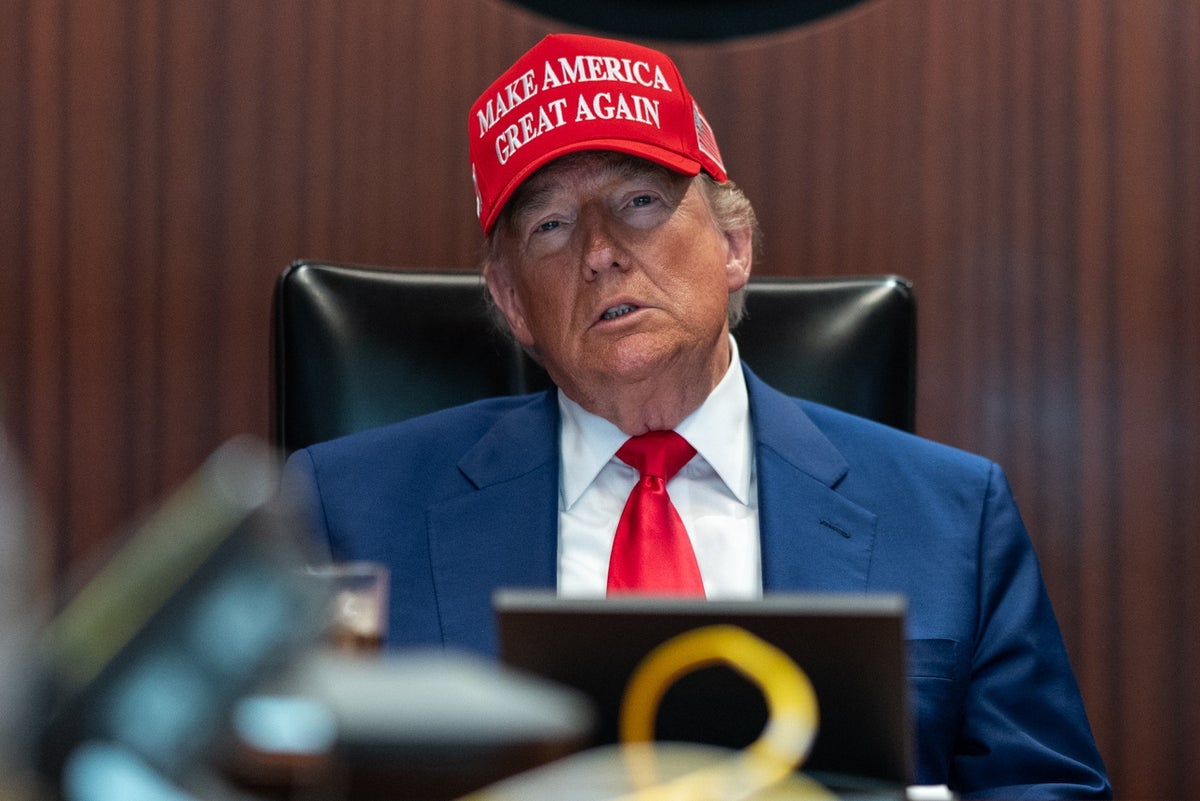
Donald Trump thought he could end birthright citizenship with the stroke of a pen on his first day back in office. He was wrong. The Supreme Court just handed his administration a massive defeat, striking down Executive Order 14160 in a 6-3 decision that firmly protects the 14th Amendment. Chief Justice John Roberts and Justice Amy Coney Barrett joined the liberal wing to block the president's attempt to deny automatic citizenship to children born on American soil to undocumented or temporary-resident parents.
It's a brutal blow to the White House immigration playbook.
But don't think for a second that this fight is dead. Minutes after the ruling came down, Trump flipped the script. He called the decision "too bad for our Country" and immediately demanded that Republicans in Congress pass a law to achieve the exact same thing. He's betting that what he couldn't do by executive fiat, he can force through the legislative branch.
This isn't just a legal squabble. It's a fundamental fight over who gets to be called an American, exploding right as the nation prepares to celebrate its 250th anniversary. The timing couldn't be wilder.
The High Court Draws a Line on Executive Power
The administration's legal argument was always a long shot. For over a century, the United States has operated under the principle of jus soli, or right of the soil. If you are born here, you're a citizen. It's that simple. The Trump administration tried to change that by reinterpreting a single phrase in the 14th Amendment: "subject to the jurisdiction thereof".
The White House argued that undocumented immigrants and tourists don't owe full allegiance to the US, so their children shouldn't get automatic citizenship.
Chief Justice John Roberts tore that argument apart. Writing for the majority, Roberts stated that the administration was trying to inject a "dramatically revisionist view" into the Constitution. He noted that the government offered a literal "smorgasbord of formulations" to define allegiance, trying to tie it to permanent domicile. The trouble is, the text of the amendment doesn't say that.
The majority opinion didn't pull punches. Roberts tracked the history of citizenship from English common law through the horrors of the Dred Scott decision, which denied citizenship to Black Americans based on bloodline. He made it clear that the 14th Amendment was explicitly designed to destroy that caste system.
"Citizenship, then and now, was the right to have rights," Roberts wrote.
By siding with the liberals and Barrett, Roberts showed that the court's institutionalists won't let a president rewrite the Constitution without an actual constitutional amendment. It proves that even a conservative-dominated court has its limits when it comes to executive overreach.
Inside the Legal Breakdown of the Six Three Ruling
The vote count hides some fascinating internal drama among the conservative justices. This wasn't a simple left-versus-right split.
Why Roberts and Barrett Sided with History
Justice Amy Coney Barrett proved once again that she is not a reliable vote for the MAGA movement's most radical legal theories. By joining Roberts and the three liberals, she anchored the center-right of the court. The majority relied heavily on United States v. Wong Kim Ark, an 1898 precedent that confirmed a child born to Chinese immigrants in San Francisco was a citizen. Barrett's vote shows she values stare decisis and clear textual history over political goals.
Kavanaugh Open Door for a Legislative Strategy
Justice Brett Kavanaugh took a bizarre middle path. He concurred with the final judgment but dissented from the constitutional reasoning. Kavanaugh argued that Trump's executive order didn't violate the 14th Amendment itself, but it did violate existing federal law. Specifically, it broke 8 U.S.C. § 1401(a), which translates the constitutional clause into statutory law.
Kavanaugh wrote that Congress has the power to change this statute. He essentially handed Trump a map. He told the White House that if they can get a bill through Congress to create exceptions for children of non-citizens, he would likely vote to uphold it.
The Angry Dissent from the Conservative Flank
Justices Samuel Alito, Clarence Thomas, and Neil Gorsuch were furious. Alito warned that the majority was making a "serious mistake" that would affect the country's long-term future. He argued that keeping the current system preserves a massive incentive for people to enter or stay in the country illegally.
Thomas took a different angle, suggesting the Citizenship Clause was merely a race-conscious remedy meant for formerly enslaved people, not a blanket policy for future generations of immigrants. That view got a sharp rebuke from Justice Ketanji Brown Jackson, who wrote that the Reconstruction Amendments were an "anticaste, antisubordination reset for the Nation," not a temporary band-aid.
Trump Immediate Pivot to Capitol Hill
Trump didn't spend time mourning the judicial loss. He immediately shifted his energy toward Congress.
"Congress should start TODAY to work on ending expensive and unfair to our Country, Birthright Citizenship," Trump posted on Truth Social.
Donald J. Trump @realDonaldTrump
The Supreme Court upheld Birthright Citizenship, which is too bad for our Country, but we can easily make it up in Congress through Legislation, with the support of the President, that has now been determined during this process. Congress should start TODAY...
His political allies jumped into action. House Speaker Mike Johnson quickly backed the president, calling the Supreme Court's ruling "antithetical to the rule of law" and a danger to national security. Stephen Miller, the architect of Trump's immigration policies, blasted the court's decision as "one of the most destructive and outrageous" in American history.
But let's look at the actual math in Washington. Passing a bill to end birthright citizenship is an insanely high mountain to climb. Even if Republicans hold majorities, they don't have the 60 votes required to bypass a Democratic filibuster in the Senate. Some moderate Republicans are also deeply uncomfortable with messing with the 14th Amendment.
Democrats are already fundraising off the decision. House Minority Leader Hakeem Jeffries celebrated the ruling, calling Trump's executive order a "disgraceful" assault on the American way of life. The ruling gives Democrats a massive policy win to rally their base just ahead of the midterm elections.
The Department of Justice Silent War on Birth Tourism
Since the front door of the executive order got slammed shut, the Trump administration is using the back door. The Department of Justice isn't waiting for Congress to act.
Hours after the Supreme Court ruling, Assistant Attorney General Colin McDonald issued a sweeping internal memo to all federal prosecutors. The directive orders DOJ employees to prioritize the investigation and prosecution of what the administration calls "birth tourism" networks. These are operations where foreign nationals travel to the US on temporary visas or under false pretenses specifically to give birth so their children gain US citizenship.
The DOJ is going after these rings using existing federal laws, including:
- Visa fraud and wire fraud
- Money laundering
- Identity theft
- Healthcare fraud
This tactical shift means that while the legal right to birthright citizenship remains secure for the child, the parents and organizers facilitating these trips are going to face intense federal heat. Expect to see high-profile raids and indictments targeting agencies that market birth tourism packages overseas. It's a way for Trump to show his base he's still fighting, even if the Supreme Court took away his biggest weapon.
How the Ruling Shadows America Semi Quincentennial
The timing of this legal explosion is incredibly symbolic. The United States is actively setting up massive celebrations for America 250, marking two and a half centuries since the Declaration of Independence.
The White House wants to use the America 250 events to project a specific image of national identity, focused on traditional values and strict borders. This Supreme Court ruling totally disrupts that narrative. It forces a national conversation on the exact meaning of our founding documents right during the celebration.
Civil rights groups are leaning into this timing. Rallies outside the Supreme Court featured speakers pointing out that the country's strength has always come from its immigrant roots. They argue that protecting the 14th Amendment is the ultimate way to honor the nation's 250-year journey toward equality.
Trump plans to keep using his rallies and the upcoming national events to hammer his message. He wants voters to see a direct link between national pride and border enforcement. By framing the Supreme Court as an obstacle to protecting the nation, he's setting up a massive campaign issue for the next election cycle.
Your Next Steps to Track This Battle
The institutional fight over citizenship isn't heading back to the courtroom anytime soon, but it's going to dominate the political arena. Here is what you need to watch next to understand where this lands:
- Watch the Senate docket: Keep an eye on whether Senate Republicans attempt to introduce a bill targeting 8 U.S.C. § 1401(a). Even if it fails, the vote will force every lawmaker to go on the record.
- Monitor DOJ federal indictments: Look out for a surge in federal visa fraud cases coming out of places like California, Florida, and New York, which are traditional hubs for birth tourism businesses.
- Track the midterm campaign messaging: Watch how both parties use this ruling in their advertising. Republicans will use it to scream about activist judges, while Democrats will use it as a shield to protect civil rights.
The Supreme Court protected the text of the Constitution today, but the political war over who belongs in America is only getting started.