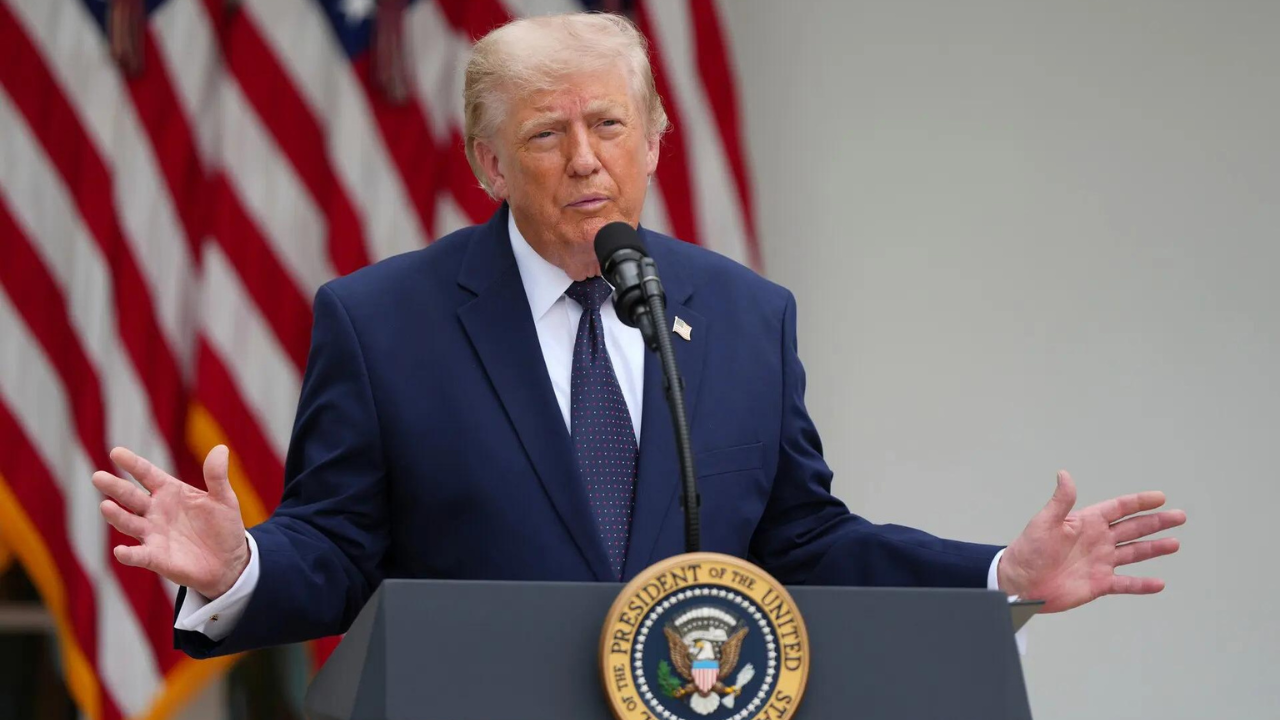
Donald Trump didn’t just travel to Ankara for a polite NATO summit. He went there to settle scores, air grievances, and completely reshape transatlantic security on his own terms.
Standing alongside Turkish President Recep Tayyip Erdogan ahead of the highly anticipated defense gathering, Trump dropped a bombshell that has sent shockwaves through European capitals. He explicitly confirmed that his administration viewed the recent military conflict with Iran as a loyalty test for America’s allies. For a deeper dive into similar topics, we recommend: this related article.
The verdict? Most of them failed.
Trump bluntly admitted he was "very disappointed" with the response from NATO member states. He revealed that his decision to keep allies at arm's length during the active phase of hostilities was a calculated move. "We didn't need any help at all, and in a way, I was testing people," Trump stated. "I was testing to see whether or not they'd be there, because I've long said that we helped them, but I'm not sure that they'd be there for us." To get more details on this issue, extensive analysis can also be found on USA.gov.
This isn't just typical campaign trail rhetoric. This is a fundamental shift in how the United States approaches collective defense under a Trump administration.
The Reality Behind the Testing People Doctrine
When the United States and Israel launched a series of intense military strikes targeting Iran's non-conventional and nuclear capabilities, Washington didn't just ask for a blank check. They wanted concrete strategic cooperation.
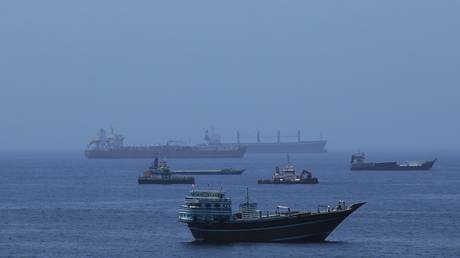
Instead, a deep rift opened. Multiple European allies flatly refused to let American forces use their air bases for strikes against Iranian positions. Furthermore, when Washington looked for naval contributions to secure the vital shipping lanes of the Strait of Hormuz against retaliatory threats, several core NATO partners kept their warships at home.
For Trump, this wasn't just a tactical disagreement over a Middle Eastern conflict. It was absolute proof of a thesis he's been pushing for nearly a decade: European allies are happy to sit under the umbrella of American protection, but they won't pick up a rifle when the storm actually hits.
By framing his actions as "testing people," Trump is effectively rewriting the rules of Article 5. He's making it clear that American protection isn't guaranteed by an aging piece of paper from 1949. It's a transactional relationship built on reciprocity.
When Personal Rapport Meets Realist Politics
For months, European diplomats assumed they had a handle on Trump. They thought they knew how to manage him. NATO Secretary-General Mark Rutte, widely hailed as the "Trump whisperer," even brought a literal gold-lettered chart to Washington showcasing "The Trump Trillion"—a graphic detailing the massive surge in European defense spending driven by the president's demands.
It didn't work. Trump blew past the shiny graphics because, in his eyes, writing checks for domestic defense budgets doesn't matter if you won't back American operations when the bullets start flying.
Take Italian Prime Minister Giorgia Meloni. She and Trump have enjoyed an incredibly cordial, publicly warm relationship. Yet, Trump didn't hesitate to call her out by name in Ankara for refusing to join the naval operation in the Strait of Hormuz.
"She refused to get involved with the Hormuz Strait, or you could also say just Iran," Trump said. "So it soured my relationship with her a little bit. But I like her. I think she's a nice person. But I think she made a mistake."
Trump's critique of Meloni exposes the core of his energy independence argument. Italy is heavily reliant on oil imports moving through the Persian Gulf, yet Rome wouldn't protect the route. The US, flush with domestic shale and crude, doesn't need the straits for its own survival. "We have a lot of oil," Trump reminded everyone. "We don't need the straits. We do this because we think it's an important thing to do. But she just wasn't there for us."
Then there's UK Prime Minister Keir Starmer. Trump took an even harsher swipe at London's caution, suggesting Starmer's hesitation to fully commit to the Iran operations meant he lacked the backbone of a modern-day Winston Churchill.
Elevating Ankara While Reining In Tehran
While Trump spent his arrival lambasting traditional Western European allies, he went out of his way to praise his host, Erdogan. The diplomatic contrast couldn't have been more stark.
Trump announced that Washington is prepared to lift the heavy CAATSA sanctions imposed on Turkey back in 2020 over its purchase of the Russian S-400 missile system. Even more significant, the US is looking to reopen the door for Turkey to purchase F-35 stealth fighter jets.
Why the sudden generosity toward Ankara? It comes down to realpolitik. Trump praised Turkey for navigating the crisis carefully, acknowledging that while they chose to avoid direct kinetic involvement, they played an instrumental role behind the scenes in attempting to wind down the hostilities.
Importantly, Trump redefined the entire conflict with Iran not as an ongoing regional war, but as a specific, targeted mission.
"With respect to our relationship, including trying to end the war with Iran, or whatever you call it, it's not even a war. It's a military operation. It's a denuclearization," Trump asserted. He made it clear he believes Erdogan is entirely aligned with the American goal of ensuring Tehran never achieves an operational nuclear weapon.
What Happens Next for Transatlantic Security
NATO allies are scrambling to adapt to this transactional reality. As the summit kicks off in Turkey, member nations are trying to show they are serious by rolling out a massive $50 billion multinational procurement project—including advanced Saab GlobalEye surveillance aircraft and air-refuelling fleets.
But buying new hardware might not be enough to mend the damage. If you're looking at what this means for your security posture or global markets, expect the following shifts immediately:
- Expect conditional deterrence: Understand that the US commitment to European defense is no longer absolute. If a conflict breaks out on European soil, Washington's level of support will likely depend directly on how much those specific nations aided recent US global operations.
- Watch bilateral deal-making: Follow the money outside of NATO's official channels. Trump prefers one-on-one negotiations, as seen with Turkey. Expect individual European nations to try and secure independent defense agreements with Washington rather than relying purely on Brussels.
- Monitor the Strait of Hormuz: Keep an eye on energy shipping insurance and logistics. With the US openly questioning its role as the world's maritime policeman for uncooperative allies, shipping rates through the Persian Gulf will remain highly volatile.
The era of assuming America will automatically back its allies is officially over. Trump didn't just test NATO during the Iran conflict—he gave them a failing grade, and the cost to retake the exam is going to be astronomically high.