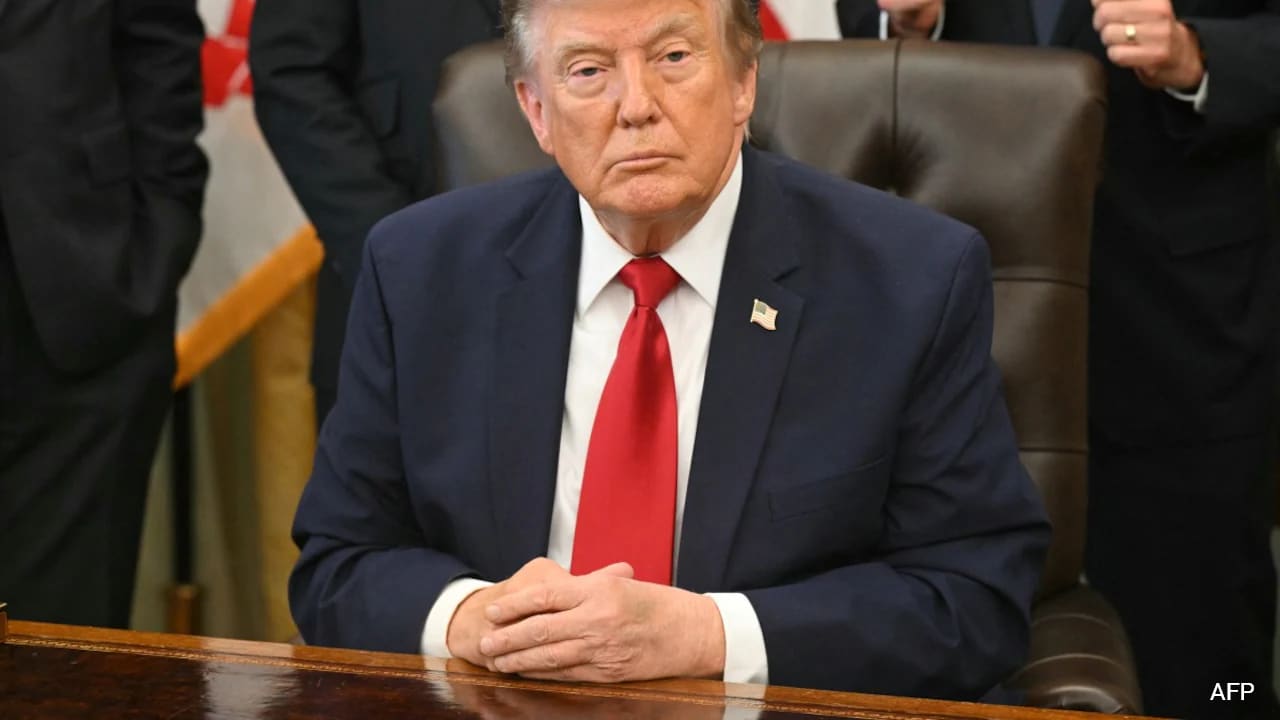
Donald Trump is going back to his favorite playbook. On Thursday night, the president will deliver a national address focused on newly declassified intelligence. According to White House officials, the speech will center on foreign plans to interfere in the 2020 election and what the administration claims are critical vulnerabilities in U.S. voting machines.
If you feel like you have seen this movie before, you are not alone. Meanwhile, you can explore similar developments here: What The Media Gets Wrong About Putin's Latest Attacks On Kyiv.
Ever since his defeat to Joe Biden in 2020, Trump has insisted the vote was rigged. Dozens of court rulings, state-led audits, and his own first-term Justice Department found absolutely no evidence of widespread fraud. Yet, this upcoming speech is not just a rerun of old grievances. It represents a coordinated effort by his administration to reshape how Americans vote, using the highest offices of the intelligence community to back up his claims.
Here is what is really happening behind the scenes, why this speech matters right now, and what the newly declassified information actually says. To see the complete picture, check out the excellent article by NBC News.
The Intelligence Trump Wants You to See
The White House plans to base the Thursday address on declassified documents from a task force recently assembled to investigate the 2020 election. This task force has been quietly collecting thousands of pages of intelligence and law enforcement records.
The administration’s argument centers on two main areas.
1. Foreign Interference Campaigns
Trump is expected to point to newly released intelligence reports detailing how foreign adversaries targeted the 2020 election. But there is a massive difference between a foreign nation attempting to influence an election and actually changing the votes.
A 2021 intelligence assessment drafted by the National Intelligence Council, the CIA, the FBI, and the NSA was highly clear on this:
- No Technical Alterations: Intelligence analysts found no indication that any foreign actor altered voter registration, ballots, or technical vote tallies.
- Russian Operations: The assessment concluded that Russian President Vladimir Putin authorized operations to support Trump and undermine public confidence in the electoral system.
- Iranian Operations: Iran carried out a campaign to undercut Trump’s candidacy.
- Chinese Position: Beijing considered conducting operations to influence the outcome but ultimately decided against it.
The Trump administration has been focused on a dissenting analysis from that 2021 assessment. Former Fox News contributor John Solomon has been working with the White House task force to gain access to those specific files, hoping to highlight evidence of a broader foreign threat.
2. Voting Machine Vulnerabilities
The second pillar of the speech focuses on voting machine flaws. Trump will argue that technical vulnerabilities leave these systems open to foreign cyberattacks.
To build this case, the administration is leaning on a forensic analysis conducted by Mojave Research. The contractor, hired under former Director of National Intelligence Tulsi Gabbard, analyzed voting machines seized in Puerto Rico. The firm’s report did find security flaws in the machines, but it explicitly stated there was no evidence of actual hacking or compromised results.
Federal and state election officials maintain that the machines are secure and that physical audits consistently verify the machine tallies.
The New Players Running the Playbook
To understand why this push is happening now, you have to look at who Trump has put in charge of the nation's intelligence apparatus.
[Tulsi Gabbard]
   │ (Initiated 2020 election reviews & machine seizures)
   ▼
[Bill Pulte] (Appointed Acting DNI, June 2026)
   │ (Authorized to declassify "whatever" he wants)
   ▼
[National Address] (Thursday night speech on 2020 "vulnerabilities")
Before resigning, Tulsi Gabbard used her tenure at the Office of the Director of National Intelligence (ODNI) to push for the declassification of documents related to Trump-era grievances. She also oversaw the seizure and testing of the Puerto Rican voting machines.
When Gabbard stepped down, Trump tapped Bill Pulte to serve as the acting director of national intelligence. Pulte, a wealthy home-construction heir and major Republican donor, previously ran the Federal Housing Finance Agency (FHFA). He has zero national security or intelligence experience.
Critics and lawmakers from both parties have called his appointment a weaponization of the intelligence community. Almost immediately after taking the job, Pulte was given broad authority by Trump to declassify documents relating to the 2020 vote. Trump openly admitted to reporters in June that he wanted Pulte in the role specifically to investigate "rigged elections".
The Real Strategy Behind the Speech
Why is Trump giving a national televised address about an election that happened six years ago? It is not just about vindication. It is about laying the groundwork for future election rules.
For over a year, the administration has pushed to increase federal oversight of election administration. Historically, states run their own elections, as mandated by the U.S. Constitution. By portraying the current state-run systems as weak and vulnerable to foreign hackers, Trump is building a public case to centralize election control under the federal government.
Legal experts point out that this effort would strip powers directly from state governors and secretaries of state.
There is also an immediate political angle. With critical midterm congressional elections coming up this November, casting doubt on the voting system allows Trump to establish a ready-made defense. If his allies lose, he can point to the "vulnerabilities" he highlighted in July to challenge the results. If they win, he can claim his warnings protected the vote.
What to Watch For on Thursday
When Trump takes the podium, do not get distracted by the political theater. Focus on these three critical areas to separate the spin from the facts:
- Sources of the Data: Is the President quoting the consensus of the 17 U.S. intelligence agencies, or is he relying on dissenting footnotes and a single contractor's report on Puerto Rico?
- Proof of Impact vs. Proof of Attempt: Watch whether the speech conflates foreign attempts to influence voters with actual hacks on voting machines. No intelligence agency has ever found evidence of the latter.
- The Policy Prescription: Listen to the solutions he offers. If he calls for federal intervention in state election processes, you will know the speech was less about history and more about taking control of the future.