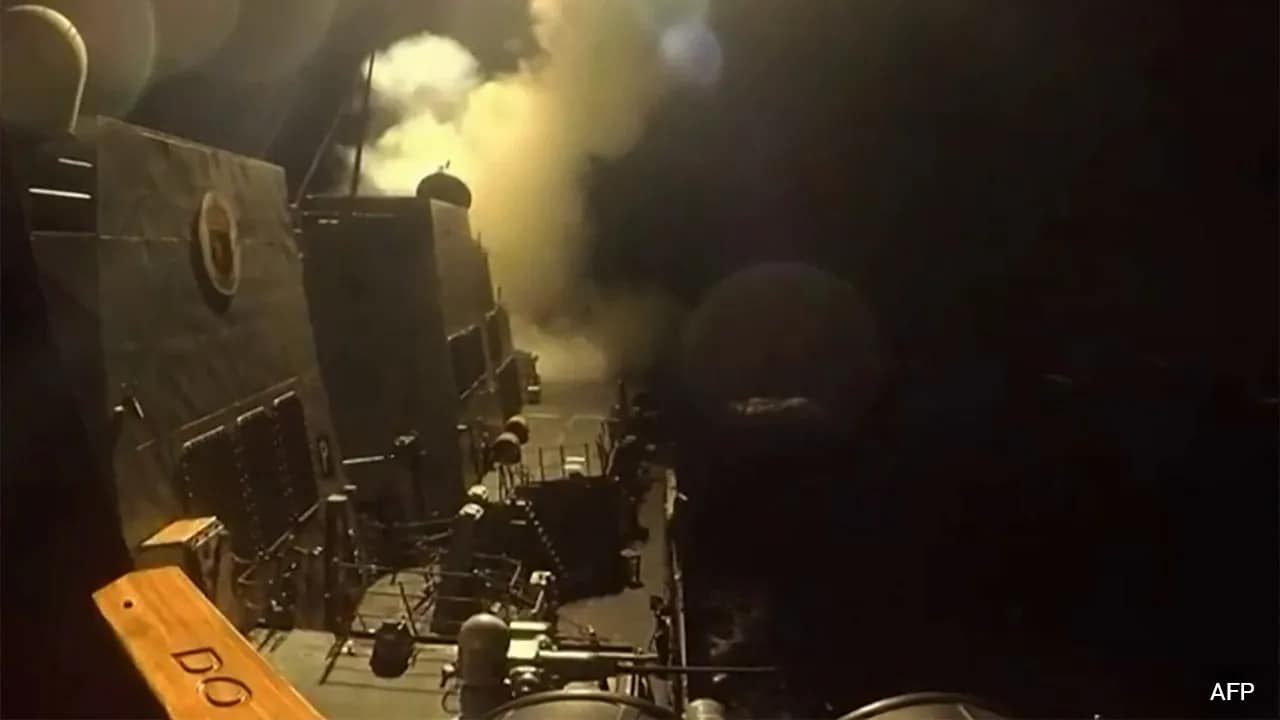
The Middle East is back on the edge of a total blowout. For the third night in a row, American fighter jets, warships, and Tomahawk missiles hammered targets deep inside Iran.
If you're wondering how we got here so fast after a fragile spring ceasefire, you aren't alone. Just weeks ago, Washington and Tehran signed a tentative memorandum of understanding to reopen the Strait of Hormuz, end a grueling naval blockade, and start diplomatic talks. Now? That deal is basically ashes.
Let's look at exactly what happened, why President Donald Trump decided to pull the trigger on this massive escalation, and what this means for the global economy.
The Third Night of Fires
On Monday evening, U.S. Central Command (CENTCOM) confirmed it initiated another intensive wave of airstrikes against Iran. The strikes began around 4:45 p.m. Eastern Time, directly authorized by Trump.
According to military officials, the mission is straightforward: degrade the Islamic Revolutionary Guard Corps (IRGC) and impose a "heavy cost" for their relentless targeting of commercial ships.
Recent Conflict Timeline (July 2026):
[July 6-7] -> Iran attacks three commercial tankers in the Strait of Hormuz.
[July 7]   -> US launches Night 1 of retaliatory strikes; Trump declares the ceasefire "over."
[July 8]   -> US launches Night 2 of strikes hitting 90 targets. Iran retaliates with drone/missile salvos on US-allied Gulf states.
[July 13]  -> US launches Night 3 of strikes targeting major air defense and port infrastructure.
The scale of this operation is massive. Over the last few days, American strikes have targeted coastal surveillance radars, air defense installations, command bunkers, and launch sites for anti-ship cruise missiles. Key Iranian port cities, including Bandar Abbas, Sirik, and Qeshm Island, have reported heavy explosions.
Why Diplomacy Fell Apart So Fast
For a brief moment in June, things looked hopeful. Negotiators signed a temporary deal to extend a temporary truce, get commercial shipping moving again, and keep the world's energy supply lines open.
But agreements with Tehran are incredibly volatile. The tension snapped on July 6 and 7 when Iranian forces launched attacks on three merchant vessels navigating the critical shipping lane of the Strait of Hormuz.
For Washington, that crossed a bright red line. Trump acted instantly. He didn't just order the strikes; he completely tore up the diplomatic script. When reporters asked about the status of the hard-fought ceasefire, he was blunt:
"As far as I'm concerned, it's over."
Behind the scenes, Trump also took the step of formally notifying Congress that the U.S. had officially resumed active military operations against Iran. This legal move, under the War Powers Resolution, grants the Pentagon a fresh 60-day window to run offensive combat operations in the region without needing a formal declaration of war or a vote from lawmakers.
Trump's Hardball Strategy
If you listen to Trump's public statements, his strategy isn't just about containment anymore. It's about overwhelming leverage. He wants to force Iran's new leadership—reeling from the recent death of Supreme Leader Ayatollah Ali Khamenei—to negotiate on U.S. terms, or face total military devastation.
During a radio interview on Monday, Trump bragged about the sheer asymmetry of the conflict. He warned that Tehran "has nothing" to stop the American onslaught:
"We're going to hit them very hard tonight, and we're going to hit them hard tomorrow. And there's not a damn thing they can do about it."
He even escalated the rhetoric by threatening to target "Pickaxe Mountain," a highly fortified, deeply buried underground nuclear site near Natanz. Western intelligence believes Iran has been using the site to secretly enrich uranium away from international inspectors.
Yet, in classic Trump fashion, he left the door open for a deal, claiming a diplomatic resolution is still technically "possible" if Iran yields to basic maritime security rules. He noted that Iran wants "to make a deal so badly," but questioned whether they are reliable partners to sit across the table from.
The Dangerous Blowback on Allied States
Iran isn't sitting back and taking the hits quietly. Instead of launching direct attacks back at the U.S. Navy, Tehran has resorted to asymmetric warfare, launching retaliatory drone and ballistic missile strikes at American allies and regional military hubs.
- Kuwait and Bahrain: Both Gulf nations have had to activate their air defenses to intercept hostile drone and missile waves. Siren systems have blared across Manama, home of the U.S. Fifth Fleet.
- Jordan: Amman has also faced airspace violations and drone attacks aimed at U.S. logistics bases near its borders.
- The Shipping Lanes: The threat to global mariners has skyrocketed. An Indian official confirmed that three Indian sailors were killed when a commercial tanker was caught in the crossfire.
This regional escalation highlights the core problem with the current strategy: every U.S. strike in southern Iran triggers an immediate, dangerous counter-reaction against fragile neighboring states.
What Happens Next
If you're looking for how this plays out, don't expect a sudden diplomatic breakthrough. Keep an eye on these specific developments over the next 48 hours:
- Watch the Oil Markets: The Strait of Hormuz is the most critical oil transit chokepoint on Earth, handling roughly 20% of the world's petroleum. If Iran successfully closes the strait or continues hitting tankers, global oil prices will skyrocket, directly impacting gas prices at home.
- Monitor Gulf State Airspace: Watch for further retaliatory drone strikes on logistics hubs in Kuwait, Bahrain, and the UAE. These proxy attacks are Iran's primary way of pushing back without risking a direct, conventional war with the U.S. military.
- Track the Nuclear Negotiations: Keep an eye on Qatari and Omani mediators. Even as bombs fall, these channels remain open. If Iran's civilian leaders decide they can't survive the economic and military pounding, they might sue for peace. If they double down on nuclear enrichment, a much wider war is inevitable.