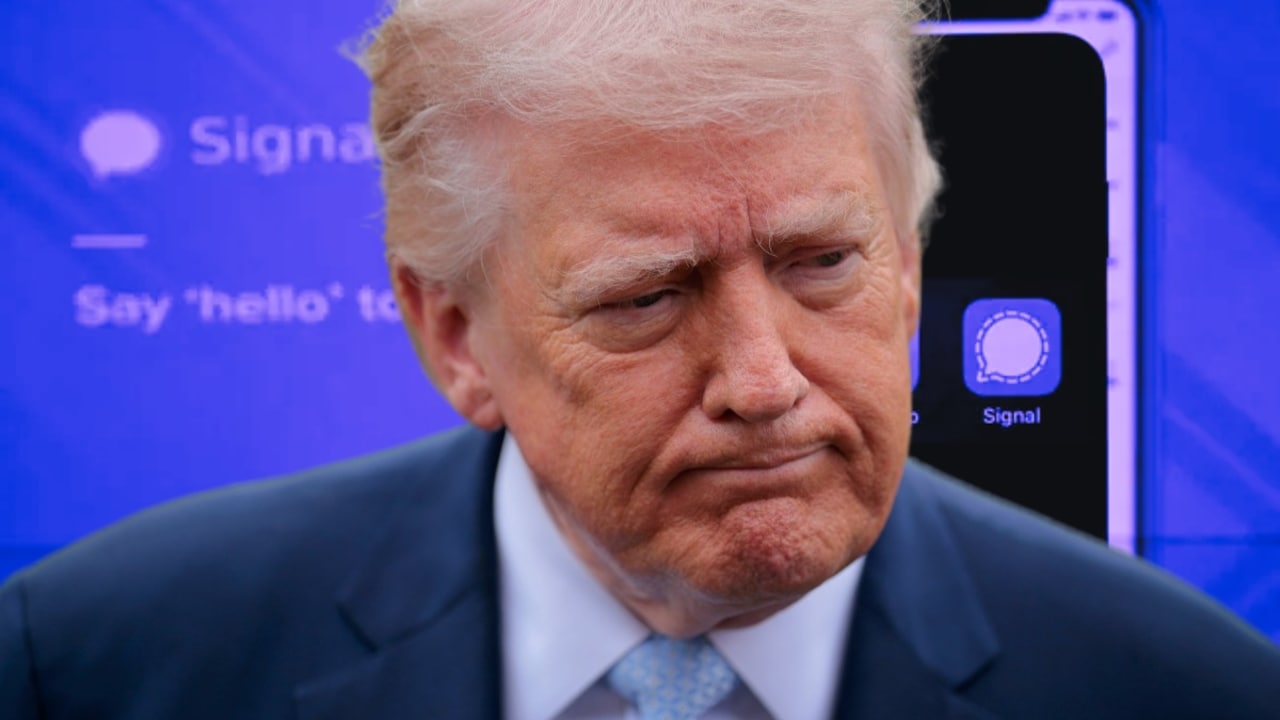
Donald Trump told his top officials to stop using the Signal messaging app. They listened, nodded, and then completely ignored him.
Newly released freedom of information records show that the highest ranks of the administration kept spinning up secret group chats on the encrypted app well into 2025. This defiance happened right after one of the most embarrassing operational security blunders in modern White House history. You might remember when a national security aide accidentally added a prominent journalist to a live chat discussing military strikes in Yemen. Read more on a connected issue: this related article.
It turns out that wasn't a wake-up call. It was just Tuesday.
The data reveals that officials like Secretary of State Marco Rubio, Defense Secretary Pete Hegseth, and Vice President JD Vance didn't delete the app. Instead, they kept talking, setting up at least 13 previously undisclosed group chats with names like "Iran/Ukraine Planning" and "State USAID." Further journalism by The Guardian highlights related views on the subject.
The situation highlights a massive disconnect between what the president says and how his team operates when they want to keep secrets from the public, from Congress, and sometimes from each other.
The Illusion of Absolute Secrecy
Government officials love Signal because of its auto-delete feature. Disappearing messages mean no paper trail, no leaks, and no headaches from historical record laws. But using ephemeral messaging in the West Wing is a legal minefield.
The Presidential Records Act and federal record-keeping laws explicitly require the preservation of official communications. When an app vaporizes a message five minutes after it's read, it breaks that law.
The administration defends the practice by claiming Signal is an approved application. They say no classified information moves through these threads. But let's be honest. When the group chat is titled "Iran/Ukraine Planning," you aren't discussing the White House Easter Egg Roll. You're talking policy, strategy, and government business.
The defense has always been that these chats are just for quick logistics. The reality is that they've become a shadow communication network operating right under the president's nose.
Why the White House Won't Stop Texting
So, why risk the president's wrath and a federal judge's order just to stay on an app?
First, convenience wins every time. Official government communication systems are clunky, highly monitored, and slow. Signal is fast. It feels like regular texting, but it comes with a psychological safety blanket.
Second, the fear of leaks inside this administration is rampant. Everyone wants a secure channel where they can speak freely without worrying that a colleague will screenshot the conversation for a memoir or a Sunday morning news segment. Ironically, this obsession with secrecy is exactly what led to the massive leak last year when National Security Advisor Michael Waltz's team accidentally added The Atlantic's Jeffrey Goldberg to a thread detailing upcoming missile strikes against Houthi rebels.
Even after that nightmare scenario—where live flight times of F-18s and Tomahawk missile launches were exposed to a reporter—the inner circle couldn't quit the platform. They just got sneakier about it.
The Hypocrisy of the Server Double Standard
It's impossible to overlook the political irony playing out here. Many of the key figures caught in these Signal threads built their political careers on attacking political opponents for using private, unsecure email servers.
In 2016, the mantra was all about protecting sensitive information and following strict data protocols. Flash forward to today, and those same figures shrug off an encrypted chat breach as a minor administrative hiccup. They attack the journalists who discover the threads rather than addressing the structural rot of using self-destructing text messages to coordinate foreign policy.
A federal judge previously ordered the administration to preserve these chats following lawsuits from watchdog groups like American Oversight. Yet, the newly uncovered records show that threads were still actively utilized with short-duration auto-delete timers turned on. You can't preserve what is already gone.
What This Means for National Security
Using consumer-grade encryption for high-level statecraft is dangerous. Yes, Signal uses incredibly strong protocol encryption. But the human element is always the weakest link.
If an official can accidentally add a journalist to a thread, they can just as easily add a foreign adversary or have their personal phone compromised. Foreign intelligence services target the personal devices of top American officials constantly. When those officials bypass secure, monitored government channels to use private phones, they're handing an advantage to espionage operations.
Moving forward, the administration faces mounting pressure from congressional investigators and ongoing transparency lawsuits. But don't expect the texting to stop anytime soon. The culture of bypassing official channels is deeply embedded.
If you want to protect your own digital communications from prying eyes without breaking federal law, stick to best practices for personal cybersecurity. Turn on two-factor authentication, use strong device passcodes, and never add people to a group chat unless you've double-checked their phone number twice. The white house learned that lesson the hard way, even if they refuse to change their behavior.