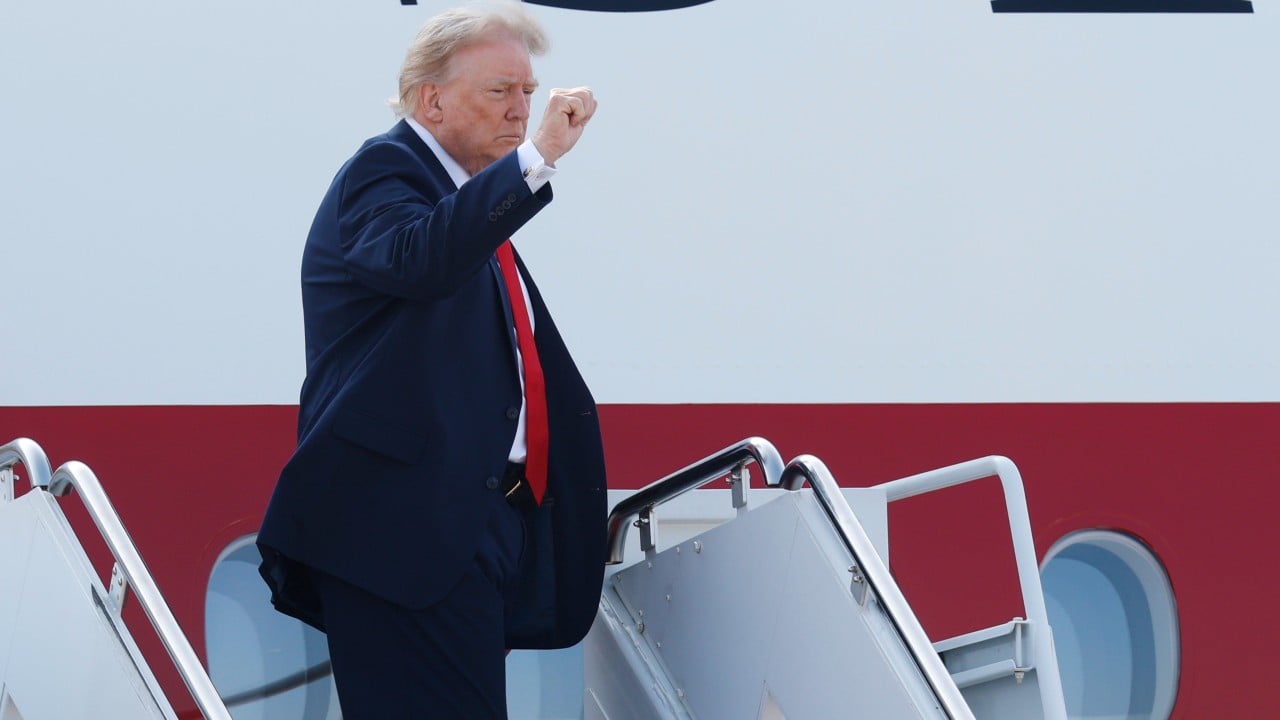
Donald Trump just stepped onto a newly retrofitted Boeing 747-8i at Joint Base Andrews, marking his first official flight on a heavily disputed piece of presidential hardware. It isn't just any plane. This multi-million-dollar luxury jumbo jet was handed over to the United States government as a direct gift from Qatar.
The flight to North Dakota to visit the Theodore Roosevelt Presidential Library represents a massive shift in how the US handles executive airlift. For decades, Air Force One meant a highly customized, American-built-and-bought military command center. Now, it is a repurposed foreign asset serving as a temporary bridge because Boeing can't deliver its official replacements on time.
The Story Behind the Flying White House Upgrade
The plane Trump boarded wasn't ordered from a factory floor by the Pentagon. It started its life as part of the Qatar Amiri Flight, the luxury fleet used by the Qatari royal family. When Qatar struggled to find a commercial buyer for the massive Boeing Business Jet, a deal materialized. In 2025, the Qatari government officially transferred the aircraft to the US as a donation.
Supply chain failures and labor shortages pushed the delivery of Boeing's permanent VC-25B presidential aircraft out to 2028. The existing VC-25A planes, which have carried presidents since the George H.W. Bush era, are pushing 36 years old. Maintenance costs are soaring, and reliability is getting shaky. Enter the Qatari jet, designated as an interim "bridge" aircraft to fill the gap.
Trump made no secret of his excitement before takeoff. He told reporters traveling with him that the country couldn't build a plane like this because leaders wouldn't be willing to spend the cash.
"They made it appropriate for a president," Trump said, pointing to the security installations and the internal layout. "This is a plane that the United States of America should have."
Stripping the Skies of Robin Egg Blue
The most immediate change is visual. The iconic, soft robin's egg blue paint scheme designed by Raymond Loewy during the Kennedy administration is completely gone. Trump long complained about the vintage look, and he used this new aircraft to finalize his vision.
The new livery features a deep navy blue belly, a sharp red stripe slicing through the middle, and a massive, stylized American flag rippling across the tail. Gold accents frame the text. Trump's philosophy on the aesthetic shift was straightforward: you can either keep things low-key or show off. He chose to show off.
Inside, the Air Force claims they left the core cabin layout minimally altered to keep costs down. However, the starting point was already pure luxury. The original interior boasted sycamore wood paneling, Tai Ping carpets, and hand-selected artwork. Recent photos shared by White House staff show circular conference tables, plush leather captain's chairs, and custom throw pillows bearing the presidential seal. The press cabin even has lie-flat seats with built-in massage options.
The Legal and Financial Friction
You don't accept a luxury jumbo jet from a foreign government without triggering massive pushback. Bipartisan critics immediately flagged potential violations of the Foreign Emoluments Clause of the US Constitution. Democrats called the deal highly problematic, raising concerns about foreign influence from a Gulf state that simultaneously acts as a mediator with nations like Iran.
To bypass the legal hurdles, White House lawyers crafted a specific workaround. The aircraft will not remain a permanent piece of the active military fleet indefinitely. Instead, ownership is structured to transfer directly to the Donald J. Trump Presidential Library Foundation once his term ends, meaning it will likely double as a post-presidency transport and a museum piece.
Then there's the money. Trump argued that the acquisition saved taxpayers an absolute fortune. The actual retrofitting tells a more complicated story. While the plane itself was free, turning a civilian luxury liner into a secure military command post requires serious engineering. Defense contractors, led by L3Harris, had to strip sections to install secure satellite communications, defensive countermeasure systems, and hardened electronics.
Reports surfaced that nearly $934 million was quietly diverted from an ongoing missile modernization project to fund these retrofits. The Air Force publicly stated the direct security modifications cost under $400 million, but the opaque nature of the total upgrade budget keeps critics highly skeptical.
What Happens to the Rest of the Fleet
Don't expect the old planes to vanish into a desert boneyard just yet. The Air Force confirmed that the two classic VC-25A aircraft are staying in service for now. The Presidential Airlift Group plans to mix and match the planes based on where the president is going and what the security landscape looks like.
The Qatari bridge plane is already booked for high-profile international duty. Trump indicated he will fly the new 747-8i to the NATO summit in Ankara, Turkey, followed by upcoming diplomatic trips across Asia later this year. For domestic audiences, the plane is scheduled to perform a low-altitude flyover above Washington DC during the upcoming July 4th celebrations.
How This Impacts Future Presidential Travel
The arrival of the bridge aircraft changes the timeline and expectations for executive flights over the next two years. If you're tracking the political and logistics trail of this development, keep an eye on these specific issues:
- Watch the Maintenance Reports: Watch whether the civilian-derived Boeing 747-8i experiences fewer mechanical delays than the aging 747-200 infrastructure it's replacing.
- Track the 2028 Boeing Project: Monitor whether the arrival of this stopgap takes the political pressure off Boeing, potentially leading to even more delays or cost overruns on the permanent $5 billion Air Force One replacement program.
- Follow the Congressional Inquiries: Look for upcoming house committee hearings regarding the defense fund transfers, specifically how money moved from missile programs to executive transport retrofits.



.jpg)