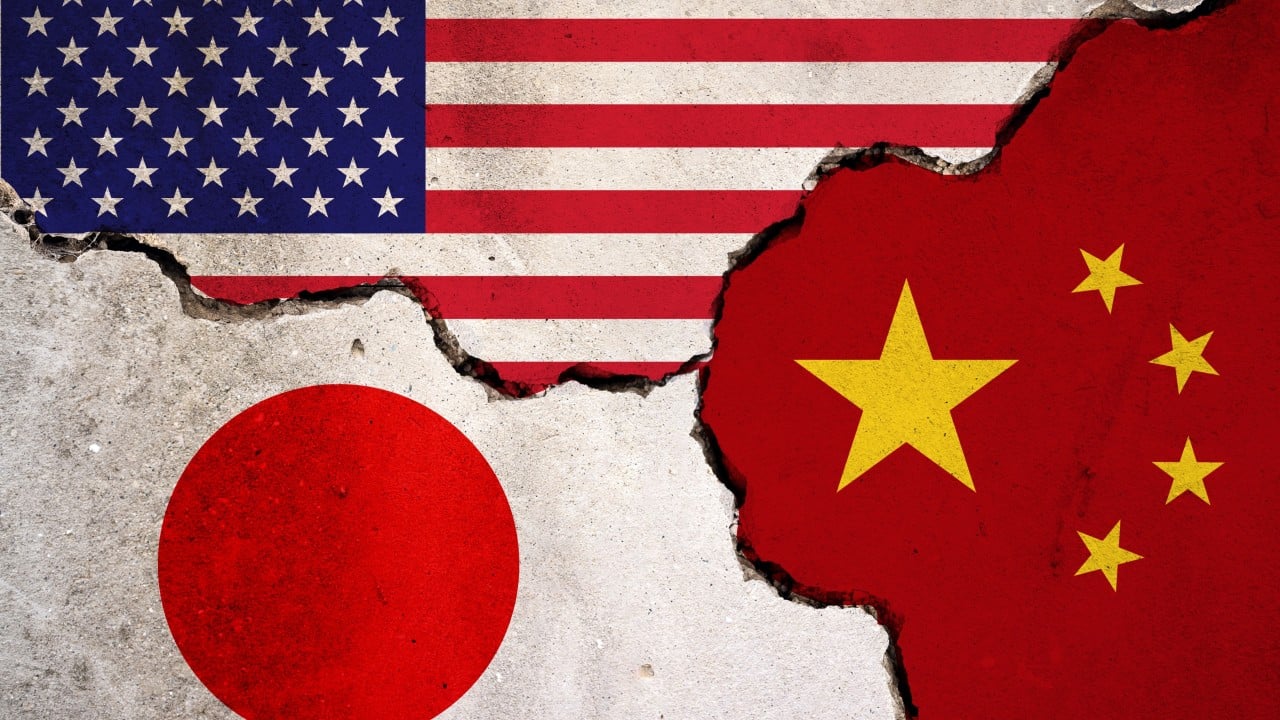
Tokyo expected a shield. Instead, it got a bill.
As Beijing intensifies its economic and military coercion against Japan, the expected full-throated defense from the White House has been noticeably quiet. Donald Trump's administration is holding back, viewing the escalating crisis not as an automatic trigger for American intervention, but as a transaction that needs renegotiating. If you think the decades-old U.S.-Japan security alliance guarantees unconditional American protection in 2026, you haven't been paying attention to the new rules of Washington politics.
The friction started when Japanese Prime Minister Sanae Takaichi made it clear that a Chinese invasion of Taiwan would constitute an "existential crisis" for Japan. Under Japan's current legal framework, that designation allows its military to act in collective self-defense. Beijing reacted with immediate fury. Chinese diplomats launched online threats, tourism was choked off, and seafood imports were banned.
Now, the pressure has moved to critical industries. Beijing recently strangled the export of dual-use technologies, tungsten, and rare earth materials to Japanese manufacturing hubs. Japanese factory groups are scrambling for scrap metal and alternative supply lines. Yet, instead of deploying American diplomatic or economic might to break the blockade, Washington is telling Tokyo to handle its own backyard while demanding higher financial contributions for the U.S. military presence.
The Fallout of Takaichi’s Taiwan Gamble
When Sanae Takaichi doubled down on her Taiwan statements, she bet heavily on the idea that the U.S. would back her up. She refused to retract her words despite immense pressure from Chinese Deputy Foreign Minister Sun Weidong and aggressive posturing from Consul General Xue Jian in Osaka. Takaichi argued that her stance matched Japan's core security realities. Geographically, Taiwan's survival is tied directly to Japan’s southern islands.
Beijing’s response wasn't just diplomatic noise. It was a targeted economic strike. China’s export of tungsten and rare earths to Japan dropped dramatically, hitting zero for several critical metals. This isn't a minor trade dispute. Tungsten is vital for manufacturing weapons, automobiles, and advanced electronics. Japanese companies are suddenly facing supply shocks that threaten their core industrial output.
Instead of stepping in to balance the scales, the Trump administration has used the moment to highlight its own agenda. White House officials are pushing American companies to reshore supply chains, but they aren't offering a free safety net to Tokyo. The message to Japan is clear: if you poke the bear, you need to be ready to pay for your own armor.
Washington Demands Cash Over Commitments
The hesitation from Washington isn't an accident. It’s a deliberate strategy. In a recent congressional testimony, Assistant Secretary of State Michael DeSombre laid out the administration's vision for East Asia. Security guarantees are no longer automatic. Trade agreements are being pickaxed. Everything must be renegotiated with a focus on what benefits the American taxpayer directly.
The administration’s three-pronged strategy in Asia makes this clear. First, they want critical supply chains out of China. Second, they demand that treaty allies like Japan, South Korea, and the Philippines dramatically increase their own defense spending. Third, they prefer bilateral economic deals that give America the upper hand.
Look at how the administration is handling the rare earth crisis. While Japanese manufacturers are desperate for raw materials, the Pentagon is pouring billions into new mining operations, including a massive project in Kazakhstan that happens to have financial ties to members of the Trump family. Meanwhile, the U.S. has made polite requests for China to resume exports to Japan, but there is no real teeth behind the diplomacy. Washington is using Japan’s vulnerability to force Tokyo into buying more American military hardware and funding regional infrastructure projects on America's terms.
Japan Forces Its Own Hand
With the White House keeping its distance, Japan is taking matters into its own hands. Tokyo is staging massive military exercises to signal that it won't be bullied, even if its superpower ally is playing hard to get.
Exercises like Valiant Shield and Resolute Dragon show a profound shift in how Japan plans to defend itself. For the first time, Japan’s Self-Defense Forces are heavily integrated into the direct planning and execution of these drills alongside American forces. They are deploying Typhon missile systems and High Mobility Artillery Rocket Systems (HIMARS) around Kanoya and Amami Oshima Island. Crucially, these advanced missile systems will remain in Japan after the exercises end.
Japan's Ground Self-Defense Force is also practicing casualty evacuation drills, moving troops from Camp Saga to Miyako Island and Okinawa using V-22 Osprey aircraft. They are preparing for a hot conflict because they realize that relying on a piece of paper signed in the 1950s is a dangerous gamble in 2026.
Moving Past Dependence
Japanese manufacturers aren't waiting around for a change of heart in Washington. They are actively pivoting to alternative partners like Vietnam to secure tungsten and other critical materials. They are investing heavily in domestic recycling capacity to extract rare earths from industrial scrap. It’s a costly, painful transition, but it’s the only way to survive.
If you are running a business or analyzing regional security, the lesson here is simple. The old assumptions about American protection are dead. To navigate this environment, you must take immediate steps to insulate your operations from geopolitical shifts:
- Audit your supply chain vulnerabilities. Map out every single tier-one and tier-two supplier. If your manufacturing relies on materials routed through contested zones or monopolized by a single superpower, you are exposed.
- Diversify your regional dependencies. Follow the "China-plus-one" strategy. Look toward Southeast Asian nations like Vietnam, Indonesia, or India to build redundant manufacturing and sourcing nodes.
- Treat security guarantees as transactional. Do not assume a treaty or an alliance will save you from an economic embargo. Build your own operational resilience rather than relying on external political goodwill.
The era of the unconditional American security umbrella is over. Tokyo is learning that lesson the hard way, and global markets will have to adapt just as fast.
For a deeper look into how these dynamics are shifting power structures along the First Island Chain, check out this expert breakdown on How China’s rise is shaping Trump’s strategy in Asia. This video outlines the exact points where American deterrence meets transactional politics in the Pacific.