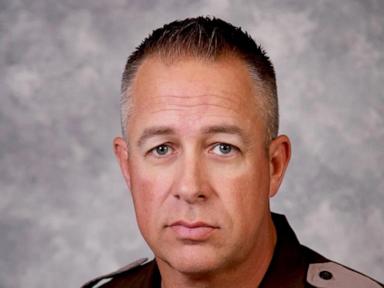
Donald Trump just signaled exactly how he plans to run his mass deportation strategy, and he didn't pick a Washington bureaucrat or a high-profile attorney to do it. Instead, he reached straight into local law enforcement. By nominating former Oklahoma state trooper Lance Schroyer to be the next director of U.S. Immigration and Customs Enforcement, the administration is making a definitive bet on field operations over political policy.
The move comes at a highly volatile moment for the agency. ICE has been operating under a rotating door of temporary leadership for over a decade. If the Senate confirms him, Schroyer will be the first permanent, Senate-confirmed director to lead the agency since early 2017.
For an agency tasked with executing the most aggressive immigration crackdown in modern American history, putting a tactical veteran at the top says everything about where this administration's priorities lie. Trump made the announcement on Truth Social, leaning heavily on Schroyer's 29 years of law enforcement experience in Oklahoma and his background as a U.S. Marine. But the real reason for this pick goes much deeper than standard law-and-order rhetoric. It is about a specific federal mechanism called the 287g program, and Schroyer knows how to use it better than almost anyone else in the country.
The Local Connection in the Federal Ground Game
To understand why Schroyer is getting the nod, you have to look at the man who likely put his name on Trump's desk. Department of Homeland Security Secretary Markwayne Mullin took over the top spot at DHS earlier this year. Mullin is a former Oklahoma congressman who has been quietly trying to steer his massive department away from unnecessary media sideshows while remaining fiercely loyal to the president's core agenda.
Mullin brought Schroyer into DHS recently as a senior advisor, but their relationship goes back to their home state. At a recent National Sheriffs' Association event, Mullin openly called Schroyer a close friend. By placing a trusted ally at the head of ICE, Mullin ensures total alignment between the Cabinet level and the frontline agents carrying out the administration's mandates.
Prior confirmed ICE directors have historically come from legal backgrounds or federal prosecution tracks. They were people who understood the bureaucratic labyrinth of Washington. Schroyer breaks that mold entirely. Before joining DHS as an advisor, he was a Major at the Oklahoma Department of Public Safety, commanding the Emergency Services Unit. He spent nearly three decades managing high-stakes local law enforcement operations, including tactical response teams, civil disturbance units, and regional threat assessments.
This background tells us that the administration wants an operational commander, not a policy theorist. They want someone who can build multi-agency task forces because the sheer scale of the promised mass deportations requires local police departments to act as force multipliers.
The Power of the 287g Partnership
The central pillar of Schroyer's resume is his extensive work with the 287g program. This specific provision of the Illegal Immigration Reform and Immigrant Responsibility Act allows the federal government to delegate certain immigration enforcement powers to state and local law enforcement officers. Under these agreements, local deputies and jailers receive training from ICE to identify, process, and detain individuals within their local jurisdictions who are in the country illegally.
In states like Oklahoma, where Trump famously won every single county across three consecutive presidential elections, local law enforcement has been incredibly receptive to these partnerships. Schroyer spent years spearheading these exact programs, bridging the gap between local county sheriffs and federal immigration authorities.
The current administration views this local-federal bridge as essential. ICE simply does not have enough federal agents on its payroll to find and deport millions of people by itself. By selecting a director who spent his entire career in the state-level operational field, the White House is signaling to sheriffs across the nation that Washington wants to clear out the bureaucratic red tape that usually slows down local cooperation.
Local police departments have often felt squeezed between conflicting state directives and federal immigration requests. Some cities have active sanctuary policies that forbid local police from honoring ICE detainers. Other regions are eager to help but lack the technical coordination or legal cover to do so safely. Schroyer’s primary objective will be to replicate the seamless integration he built in Oklahoma on a national scale, targeting jurisdictions that are ready to cooperate and maximizing their collective resources.
A Massive Cash Injection and Soaring Tensions
This leadership transition arrives as ICE finds itself sitting on an unprecedented pile of cash. Last year, the agency received a massive $75 billion financial injection. That funding surge allowed ICE to hire roughly 12,000 new officers and aggressively scale up its detention facility capacity across the country.
But with massive growth comes massive scrutiny. The public mood regarding these heavy-handed enforcement tactics has grown increasingly tense. Earlier this year, a tragic incident in Minneapolis ignited nationwide protests when ICE agents fatally shot two U.S. citizens, Alex Pretti and Renee Good, during an enforcement operation. The fallout from those shootings put the agency under an intense microscope, drawing sharp rebukes from civil rights groups and local officials who argue that federal immigration surges into major cities endanger civilian populations.
Secretary Mullin has stated that he wants to keep DHS out of controversial headlines, but balancing that desire with Trump’s demand for the highest daily arrest rates in history is a brutal tightrope act. The administration routinely boasts about hitting record numbers for daily apprehensions and deportations. Keeping those numbers high while preventing operational disasters like the one in Minneapolis will be Schroyer's ultimate test.
The operational reality inside the agency is incredibly demanding right now. The former director, Todd Lyons, resigned at the end of May after leading the deportation push for more than a year. Since June 1, David Venturella, a former executive from a private prison operator, has been holding down the fort as the acting head. According to internal DHS sources, Venturella will remain in the interim role to keep operations running smoothly while Schroyer moves through what promises to be a highly contentious Senate confirmation process.
The Senate Battleground and the End of the Acting Era
The fact that ICE has lacked a Senate-confirmed director for 11 years highlights just how radioactive immigration politics have become in Washington. The agency has been run by a steady stream of a dozen different acting directors, none of whom had the permanent mandate required to institute long-term structural overhauls.
An acting director serves at the pleasure of the executive branch but lacks the institutional permanence that comes with full legislative confirmation. This long stretch of temporary leadership has often left rank-and-file agents feeling caught in legal limbo, unsure if the policies they enforce today will be reversed by an administrative memo tomorrow.
Schroyer's path through the Senate will not be easy. While his local law enforcement credentials will win him deep support among conservative lawmakers, opposition senators are already preparing to grill him on his lack of federal administrative experience. Expect intense questioning regarding his record with constitutional safeguards during tactical operations in Oklahoma, as well as how he plans to manage the agency's vast network of private detention facilities.
His supporters argue that his outsider status is exactly what the agency needs. John Torres, a former senior ICE official, noted that while Schroyer faces an uphill battle in Washington, his extensive background at the state and local levels gives him a unique perspective that federal lifers often lack. He understands how a local sheriff thinks, what resources they need, and why they might hesitate to work with federal agents.
What This Appointee Means for Local Municipalities
For local governments and community organizers, this nomination is a clear sign that federal immigration enforcement is about to look a lot more like local law enforcement. If you live in a region that actively participates in the 287g program, you can expect an immediate acceleration of localized sweeps, expanded jail sharing agreements, and a renewed focus on detaining individuals with local criminal records.
Conversely, in cities with sanctuary laws, a Schroyer-led ICE will likely rely heavily on tactical units deployed directly from the federal level, bypassing uncooperative local authorities altogether. His deep familiarity with special weapons and tactics means the agency's operational execution will likely become tighter, more precise, and far less reliant on traditional administrative channels.
The era of managing ICE through temporary oversight and cautious policy statements is over. The White House has picked its commander, laid out a historic budget, and set a clear mandate. Now, the entire strategy rests on whether a former Oklahoma state trooper can successfully scale up his local playbook to reshape the entire landscape of American border and domestic enforcement.
The Operational Path Forward
With the nomination officially sent to the Senate, the administration is pushing for an expedited timeline. Communities and local law enforcement agencies should prepare for immediate shifts in how federal resources are deployed.
To navigate the upcoming changes in immigration enforcement, local stakeholders should take specific actions. Local law enforcement administrators need to review their current 287g memoranda of understanding to ensure total compliance with updated federal guidance. Municipal legal teams must audit their local detainer policies against recent federal court rulings to avoid civil liability during joint operations. Community defense networks and legal aid organizations should immediately scale up their informational workshops, ensuring that vulnerable populations understand their rights during interactions with both local police and federal agents. The operational mechanics of immigration enforcement are fundamentally shifting, and staying ahead of these structural changes is the only way to effectively respond to what comes next.