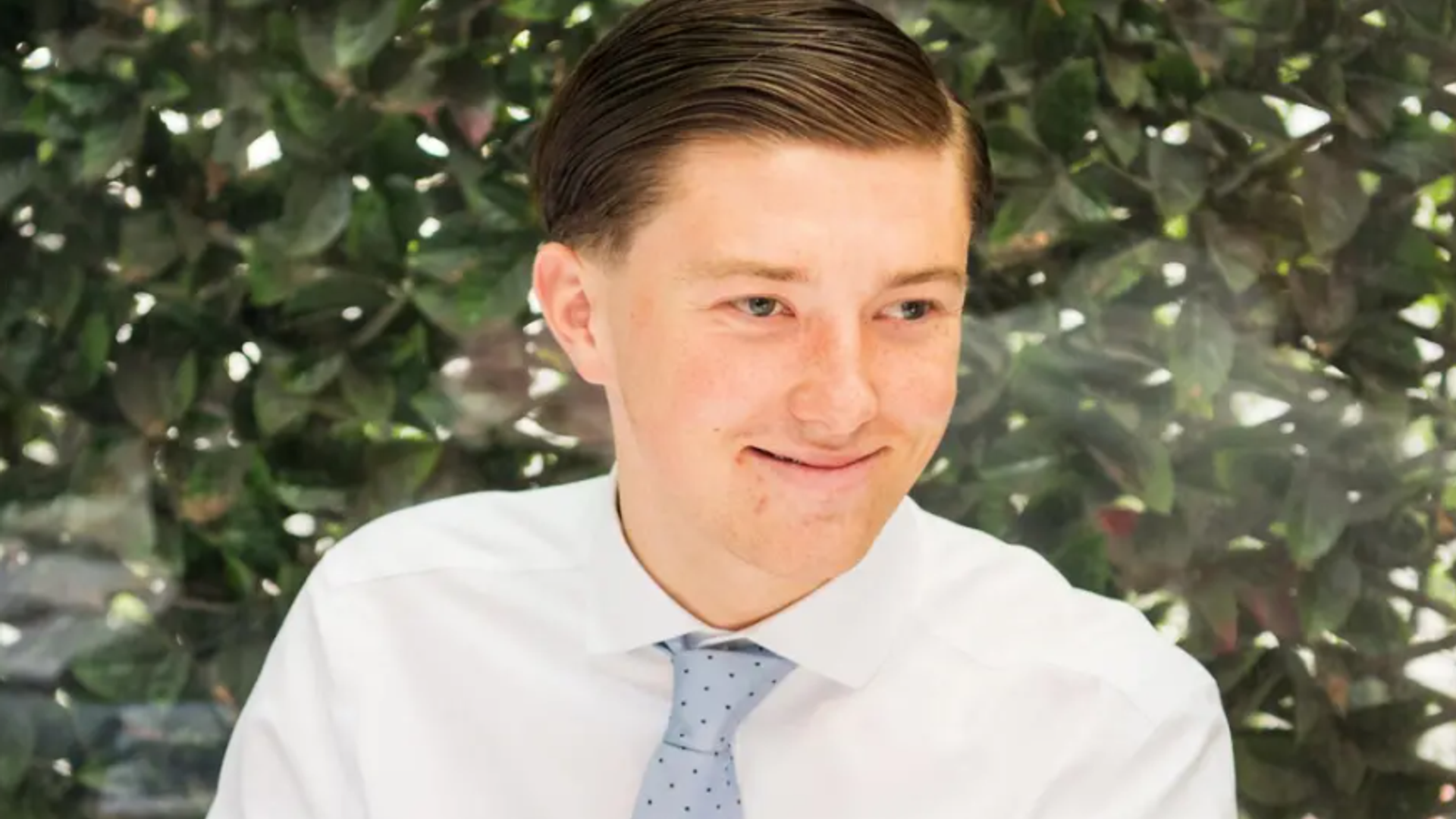
On a freezing December night in Southampton, an 18-year-old finance student lay on the cold pavement, his life draining away through five stab wounds. Henry Nowak was terrified, bleeding, and gasping for air. Yet, when the police arrived, they did not reach for a medical kit. They reached for handcuffs. They pinned the dying teenager's arms behind his back, read him his rights, and ignored his desperate pleas. While Henry spent his final conscious moments crying out that he could not breathe, his killer stood feet away. Unrestrained. Calm. Weaving a calculated web of fiction that the police swallowed without hesitation.
The release of new police bodycam footage has laid bare the chilling mechanics of that night. It shows exactly how 23-year-old Vickrum Digwa exploited the system by weaponizing false claims of racial bias to mask an act of pure savagery. This case is no longer just about a brutal murder. It has exploded into a national crisis regarding police incompetence, tactical failure, and the devastating consequences of taking a suspect's word at face value.
Anatomy of a Fatal Deception
The latest eight-minute video fragment reveals the jaw-dropping ease with which Digwa manipulated responding officers. Minutes after plunging an eight-inch ceremonial blade into Henry's chest, Digwa assumed the role of an aggrieved victim. In the footage, he stands with his hair uncovered, claiming Henry had knocked his turban off in a unprovoked, racially motivated assault.
Digwa spun his story with terrifying composure. He told officers he was simply walking down the street when Henry barged into him. He claimed he could smell alcohol on the teenager. He told police that Henry hurled racial slurs at him, grabbed his hair, and started punching him.
When officers asked Digwa about the massive amount of blood on the ground and Henry's visible wounds, Digwa feigned ignorance. He suggested Henry might have received a wound from a basic punch or perhaps he simply fell over while climbing on some nearby bins.
The court subsequently exposed every single one of these assertions as wicked lies. CCTV and evidence from before the police arrived proved Digwa had his turban firmly on his head during the confrontation. He had intentionally removed it himself after the stabbing. He did this to create a visual prop for his narrative. He staged his own appearance to look like the survivor of a hate crime.
Digwa was not acting alone in this deception. The audio captures his father, Moga Singh, actively reinforcing the fraud. Singh can be heard telling arriving officers that his son had just been assaulted and pointing toward the dying teenager on the ground as the aggressor.
The responding officers did not question this story. They did not look at the physical disparity between an uninjured man spinning a complex tale and an unresponsive teenager swimming in his own blood. Instead, an officer can be heard on camera comforting the killer. When Digwa repeats that he has been racially attacked, the officer replies with three words that now haunt the Hampshire Constabulary.
"I know, I know, I know."
The Fatal Eight Minute Blind Spot
While police offered sympathy to the man holding the knife, they treated the victim like a dangerous combatant. The mechanics of Henry's arrest are agonizing to watch. Officers dragged the teenager across the ground, pulling his hands behind his back to snap the metal cuffs into place.
During the three-minute clip of his arrest, Henry told officers seven times that he could not breathe. He managed to say he had been stabbed. The response from the officers was dismissive.
"Don't think you have, mate," one officer replied.
An officer briefly lifted the side of Henry's shirt but failed to conduct a proper, thorough check. They assumed his breathlessness was a symptom of intoxication or resistance rather than internal bleeding. They read him his legal rights while his lungs were collapsing.
It took a full eight minutes from the arrival of the police for anyone to discover the catastrophic wound to Henry's chest. By the time they realized their mistake, uncuffed him, and began CPR, it was far too late. Henry bled to death on the street.
A forensic pathologist later testified that the nature of the chest wound meant Henry likely would not have survived even with immediate medical intervention. But that factual reality does not erase the moral failure of the scene. The police managed to strip an innocent, dying young man of his dignity, his voice, and his rights in the final minutes of his life. They did this because they let a loud, calculated lie dictate their tactical reality.
Political Exploitation and Global Shockwaves
Tragedies of this scale rarely remain confined to the courtroom, and Henry's murder has become fuel for a raging political firestorm across the UK and beyond. The revelation that a white teenager was handcuffed while dying because police instantly believed a false accusation of racism from a minority suspect has ignited a furious debate over what critics call two-tier policing.
Reform UK Leader Nigel Farage brought the issue directly to the House of Commons, asserting that police bosses have institutionalized rules that force officers to treat different ethnic groups differently. The anger on the streets of Southampton turned physical. Riots erupted, leaving eleven police officers injured and resulting in twenty-five people being charged with violent disorder.
The shockwaves crossed the Atlantic. US Vice President JD Vance used the tragedy to attack the British government, blaming the murder on the politics of self-hatred and immigration. The intervention prompted an immediate, tense diplomatic row. Prime Minister Keir Starmer accused US officials of attempting to interfere in British democracy, while Deputy Prime Minister David Lammy revealed he directly told Vance he was completely wrong.
The tragedy has been weaponized by political factions to serve completely different agendas. Yet, lost in the high-level political posturing is the simple, devastating failure of basic police training. The officers on the ground were not operating on grand geopolitical theories. They were incompetent. They lacked the critical thinking required to distinguish a bleeding victim from a calculating perpetrator.
Legal Repercussions and the Fight for Accountability
The justice system has moved to punish the killer, but the battle over police accountability is just beginning. On June 1, 2026, Vickrum Digwa was sentenced to life in prison with a minimum term of twenty-one years. The sentencing judge, William Mousley KC, made it clear there was absolutely no evidence that Henry had uttered a single racist word. The judge noted that Henry had actually started recording Digwa because he saw Digwa openly carrying an eight-inch ceremonial blade in public. Digwa reacted by snatching the phone, sparking the struggle that ended in murder.
The spotlight has now shifted entirely onto the Hampshire Constabulary. Temporary Deputy Chief DCC Robert France issued a public apology, expressing deep regret that Henry was handcuffed and arrested in his final moments. He defended his officers by stating they were lied to and could not have easily seen the injury.
That explanation is not satisfying the public or oversight bodies. The Independent Office for Police Conduct is currently conducting a formal investigation into the police response. Furthermore, a full jury inquest scheduled for next year at Winchester Coroner's Court will specifically examine whether the acts or omissions of the arriving officers directly contributed to Henry's death.
Urgent Tactical Shifts Needed in Emergency Response
The systemic failure that cost Henry his dignity provides clear lessons for how emergency services must operate moving forward. First responders cannot afford to let verbal narratives override physical assessments.
Mandatory Medical Triage Before Detainment
When arriving at a chaotic scene involving physical trauma, medical assessment must take absolute priority over suspect narratives. Officers must be trained to look past who is speaking the loudest and focus entirely on physical indicators of distress. A person stating they cannot breathe while covered in blood must always be treated as a medical emergency first and a suspect second.
Eliminating Bias in Credibility Assessment
The Southampton officers fell victim to confirmation bias. They accepted a narrative of a racially motivated attack without looking for supporting physical evidence. Police training must reinforce a culture of healthy skepticism toward all parties at a scene until objective physical evidence, such as weapon recovery or wound checks, can be established.
Overhauling the Response to Breathlessness Claims
The phrase "I can't breathe" has appeared in numerous high-profile police failures globally. It can no longer be dismissed as a standard compliance complaint or a sign of panic. Police protocols must mandate that any individual in police custody who states they cannot breathe must be immediately evaluated by medical professionals, with all restrictive restraints loosened or removed unless an immediate, active physical threat exists.
The tragedy of Henry Nowak is a stark reminder of what happens when institutional panic and clever lies intersect on the pavement. True justice requires more than putting his killer behind bars. It requires a complete overhaul of how frontline officers process information under pressure, ensuring that no dying victim is ever placed in chains again.