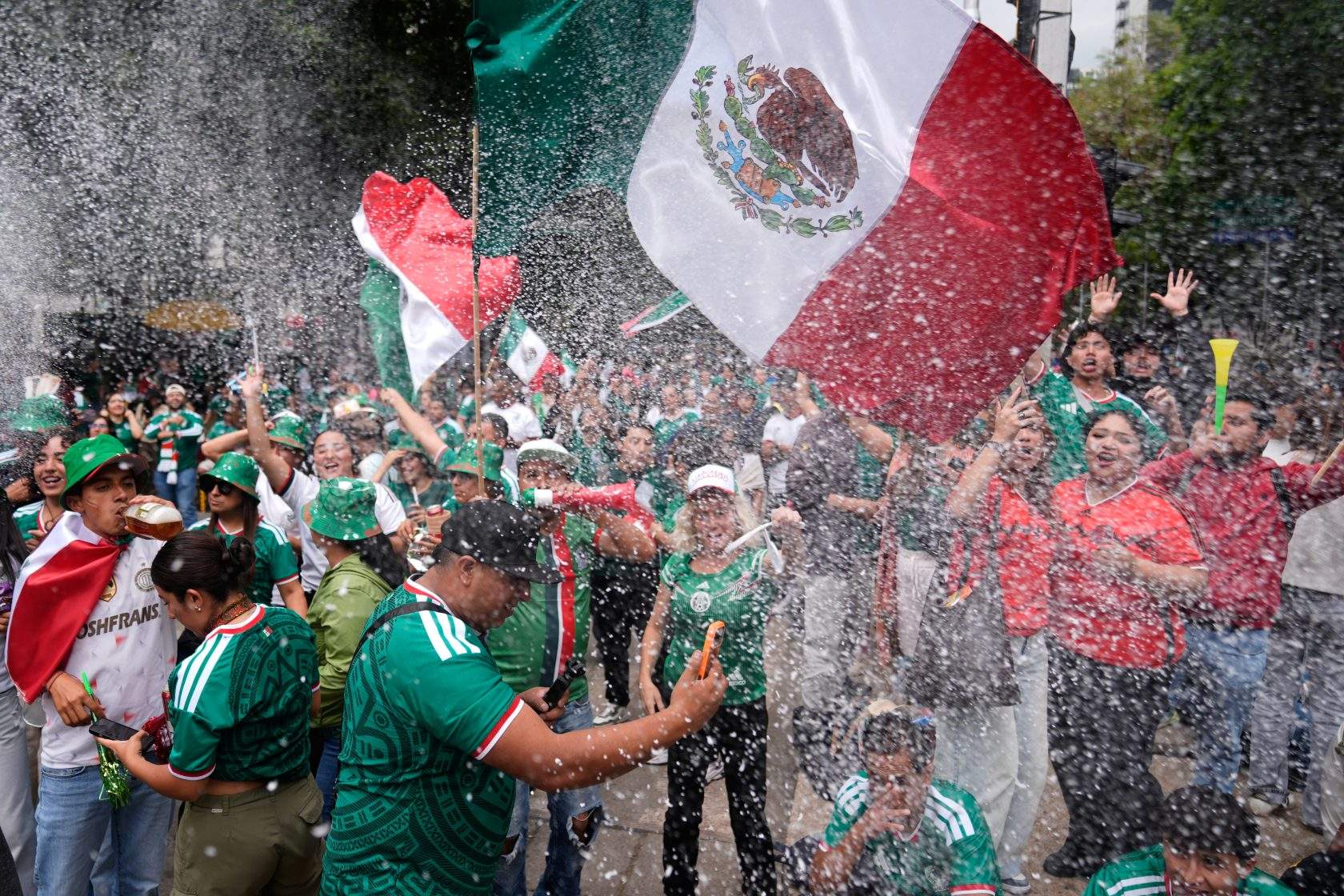
Football passion in Mexico runs deeper than almost anything else. When the national team secured a hard-fought victory against Ecuador to lock in a spot in the World Cup Round of 16, the entire country erupted. Fireworks lit up the sky, improvised brass bands took over street corners, and over a million people flooded the iconic Paseo de la Reforma. But the euphoria quickly shattered. The shocking confirmation of 4 dead in Mexico City during World Cup celebrations turned a night of pure joy into a stark reminder of how fast massive public gatherings can turn lethal.
We see it happen too often during major sporting events. Joy turns to chaos in a matter of minutes. When a crowd reaches a certain critical density, individual control vanishes entirely. Mexico City Mayor Clara Brugada pleaded with citizens on social media to stop heading down to the city center, but by then, the historic avenues were already choked with bodies moving as a single, fluid mass. The tragedy shows that our current approach to managing massive sports victories is broken. Read more on a connected issue: this related article.
Anatomy of a Crowd Crush at the Angel of Independence
The historic Angel of Independence monument, affectionately known to locals as El Ángel, served as the epicenter for Tuesday night's massive watch parties and subsequent celebrations. An estimated 1.4 million people packed into the streets. Think about that number for a second. That is more than the entire population of many major global cities crammed into a single five-kilometer urban corridor.
In the middle of this chaos, emergency workers made a horrifying discovery. Two women and one man were found completely unconscious on the pavement near the monument. Mexico City's Health Secretariat later confirmed that all three had died of asphyxiation. The victims were 48, 44, and 19 years old. More analysis by NBC News delves into similar views on this issue.
When you get a million people pushing toward a central landmark, the physical pressure becomes immense. People do not realize that in a true crowd crush, you do not die because people step on you. You die because the horizontal pressure is so intense that your lungs cannot expand. It takes only a few minutes of compressed chest pressure to cause compressive asphyxiation. The crowd becomes a solid block of concrete, and if you are caught in the middle, you are completely at the mercy of the collective surge.
The Medical Emergency That Escalated in the Crush
The tragedy did not stop with the three victims found near the monument. Later, Mexico City Health Secretary Nadine Gasman confirmed a fourth fatality during a press conference. A 30-year-old man suffered a severe medical emergency right in the middle of the packed streets. He experienced an epileptic seizure, severe convulsions, and gastrointestinal bleeding.
In a normal scenario, an emergency crew would pull up, load the patient into an ambulance, and get them to a trauma center within minutes. But Tuesday night was not a normal scenario. Carts carrying "toritos"—makeshift rocket launchers packed with fireworks—were inching through streets where people literally could not move their arms. Alcohol bottles passed from hand to hand. The dense wall of humanity blocked the path.
By the time emergency personnel managed to reach the 30-year-old man and transport him to a nearby hospital, it was too late. He suffered cardiorespiratory arrest and passed away shortly after arrival. When a city center becomes completely gridlocked by bodies, response times skyrocket. Minutes mean the difference between life and death during a cardiac or respiratory emergency, and the sheer volume of people stripped those minutes away.
Why Mass Sporting Triumphs Break Public Infrastructure
Urban spaces are designed for moving traffic and pedestrian flow, not for static, dense packs of millions of ecstatic sports fans. When Mexico won, people abandoned their cars, spilled out of bars, and rushed toward the Zócalo and Reforma. The city became a giant funnel.
Look at what happens to the human psyche in these moments. The collective high of a World Cup victory creates a false sense of safety. People lose their usual caution. Hundreds of fans kept pushing into the center even when it was painfully obvious that the area could not hold another body. Some were pushed away by the sheer physical resistance of the crowd, while others managed to force their way in, making the pressure cooker even tighter.
Mayor Clara Brugada tried to redirect the flow of people. She jumped on social media to urge fans to head to an alternative cumbia concert in the eastern part of the city instead of packing the center. It did not work. When people want to celebrate a historic football win, they want the monument. They want the historic heart of the city. Telling fans to go somewhere else after a massive win is like telling someone to open their Christmas presents in the garage. It ignores basic human behavior.
How to Stay Alive in a Suffocating Crowd
You cannot rely solely on city officials or police to keep you safe when 1.4 million people take to the streets. You have to know how to look out for yourself. If you ever find yourself caught in a massive street celebration that starts to feel too tight, you need to act immediately before you lose the ability to move.
First, track the density around you. If you can still format a circle around yourself or move your hands freely to touch your face, you are generally safe. The moment you feel your shoulders pressing against strangers without your control, you are in the danger zone. Do not fight the crowd. Do not push back against a human wave, because you will waste your energy and risk falling. If you fall in a dense crowd, getting back up is nearly impossible.
Instead, move with the crowd diagonally. Work your way toward the edges of the mass rather than trying to force your way forward or backward. Think of it like swimming out of a rip current in the ocean. You do not swim against it; you swim parallel or diagonally until you hit calmer waters.
Keep your feet firmly planted. If the crowd surges, move with it but maintain your balance. Keep your arms up by your chest like a boxer. This posture does not just protect your vital organs; it creates a crucial few inches of breathing space around your lungs if the pressure gets tight.
Moving Forward After the Tragedy
Cities need to rethink how they handle spontaneous sports celebrations. Setting up a giant screen is fine, but if you do not have strict perimeter controls and crowd-counting metrics in place, you are inviting disaster.
If you plan on celebrating future matches, stay away from the absolute center of the chaos. Celebrate at a local neighborhood square. Watch from a venue with clear exits. Avoid the main monuments where everyone else is bottlenecking. No victory on the pitch is worth losing your life on the pavement.
The immediate next step for city organizers across the globe is simple. Stop treating these massive victories as unexpected surprises. Implement strict zone barriers, clear evacuation paths that remain free of pedestrians, and active crowd diversion tactics blocks before the main squares become death traps.