Five days have passed since back-to-back 7.2 and 7.5 magnitude earthquakes tore through northern Venezuela, and the official death toll has already climbed past 1,719 people. It's an absolute nightmare on the ground. Families are tearing through concrete blocks with their bare hands in La Guaira, completely exhausted, refusing to sleep because thousands of their relatives remain missing. Emergency crews are working around the clock under the crushing reality that the critical 72-hour survival window closed days ago.
This is the strongest seismic event to hit the nation in over a century. But if you think this is purely a natural disaster, you're missing the real story. The astronomical destruction we're seeing right now is the direct result of a collapsed political infrastructure, years of economic neglect, and a government changeover that has left the country uniquely exposed to catastrophe.
Anatomy of a Doublet Disaster
Seismologists call what happened on Wednesday, June 24, 2026, a doublet earthquake. These aren't standard aftershocks. It was a pair of massive, independent ruptures striking minutes apart along the San Sebastián Fault zone. The first clocked in at a 7.2 magnitude; the second, hitting almost immediately after, registered a massive 7.5 magnitude.
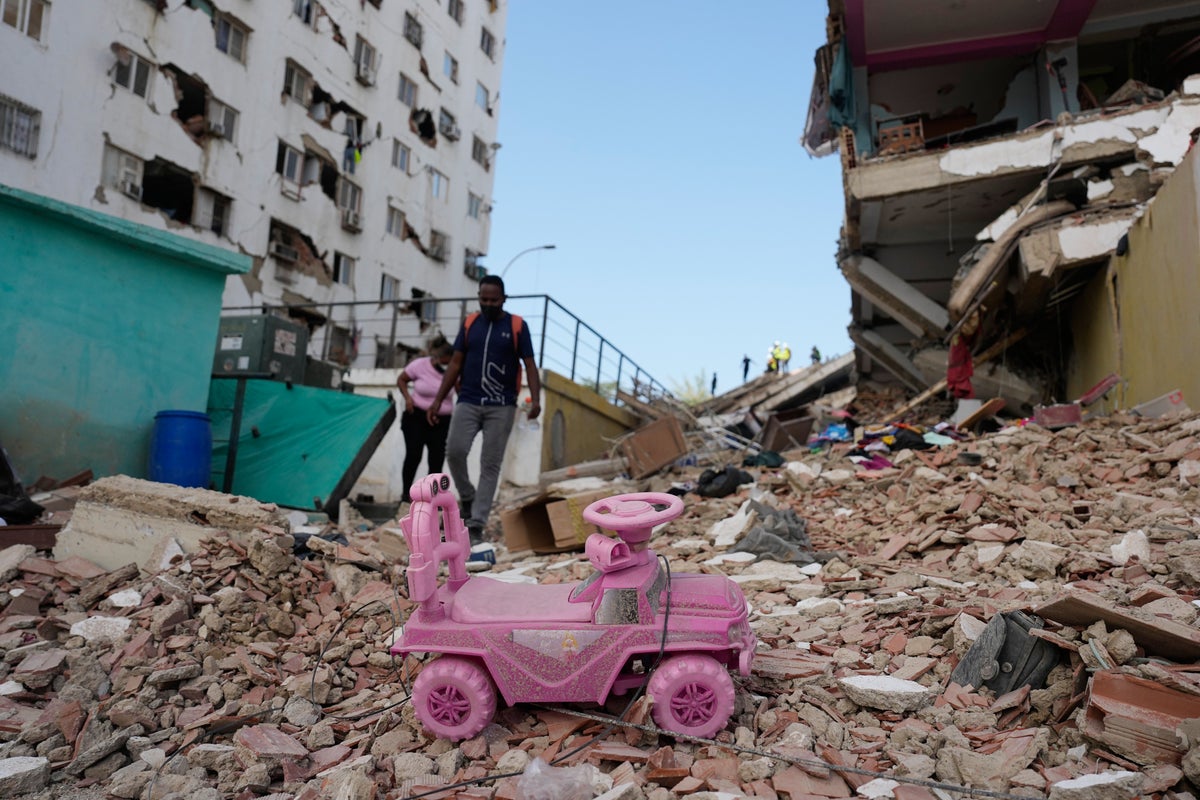
The physical toll is staggering. Preliminary satellite radar data analyzed by researchers at Oregon State University and NASA shows that approximately 58,870 buildings were likely damaged or destroyed across the affected coastal zone. Think about that number. That's not just cracked drywall; we're talking about entire multi-story apartment complexes reduced to stacks of unstable concrete pancakes.
The northern port city of La Guaira took the absolute brunt of the energy. Entire neighborhoods hugging the narrow strip between the coastal mountains and the Caribbean Sea simply gave way. To make matters worse, the infrastructure in the capital city of Caracas, located just over the ridge, was severed almost instantly. The quakes heavily damaged the main port facilities and partially destroyed the control tower at Simón Bolívar International Airport, crippling the primary gateway for international rescue teams trying to fly in.
When Nature Meets a Politically Broken Nation
You can't talk about this disaster without talking about who is running the country. In January, the political landscape flipped when the U.S. administration actively supported a transition that saw acting President Delcy Rodríguez take the reins after pushing out former President Nicolás Maduro. That means this catastrophic earthquake hit a government that was barely six months into organizing its cabinet.
National Assembly President Jorge Rodríguez announced on state television that over 5,034 people are confirmed injured and at least 15,866 are completely homeless. But the government is playing a dangerous game of public relations. State media channels are heavily scrubbing coverage, focusing exclusively on miraculous rescue stories while completely ignoring hard questions about why these buildings collapsed like houses of cards.
Look at what happened when a 4.6 magnitude aftershock rattled the coast on Monday. No new buildings fell, but it sent hundreds of thousands of terrified people screaming into the streets of Caracas. People are living in absolute terror because they don't trust the buildings they're sleeping in. Years of hyperinflation and bypassed building codes mean that even modern structures lack the basic steel rebar reinforcing required to withstand standard seismic shifts.
The Agony and Rare Miracles in the Rubble
Despite the odds, rescuers are still finding life. The story keeping the entire nation alive with hope is that of Dayana Patiño and her 18-day-old newborn son, Juan David.
They were inside their eighth-floor apartment in La Guaira when the twin shocks struck. Patiño describes feeling like she was flying through the air before being buried in a dark pit of dust and furniture. She spent 32 agonizing hours pinned down, using her fingers to constantly feel her baby's nose to ensure he was still breathing. Her brother eventually located her by screaming her name into the debris, and civil defense workers pulled them both out alive on Thursday night.
But these stories are rare exceptions. For every miracle, there are dozens of families like Ana Rada's, who has spent five straight days sitting beside a mound of rubble where her brother's apartment used to be. There is no heavy machinery coming to help her. Rescuers are using shovels, buckets, and literal bare hands to move tons of debris.
The Geopolitical Standoff Over Relief
The humanitarian crisis has triggered a massive geopolitical headache. Because the current Venezuelan administration is heavily backed by Washington, the U.S. has sent 300 first responders and flies multiple C-17 military transport planes into the region every single day loaded with food, water, and medical supplies. Total financial support from the U.S. has quickly surpassed $300 million. American military engineers are also working around the clock to patch up the fractured port at La Guaira so aid can arrive via the sea.
Yet, there is a massive double standard happening that many are hesitant to bring up. While the U.S. pumps money into the country, the current administration refuses to grant temporary humanitarian protections to the tens of thousands of Venezuelan migrants currently inside the United States.
Worse still, survivors on the ground have revealed a horrific detail. More than 100 Venezuelans who were recently deported from the U.S. were being held by local authorities at a specific coastal hotel when the earthquakes hit. That hotel completely collapsed, and almost all of those deportees are currently listed as missing.
What Happens Next
The immediate survival phase is winding down, and the long-term reality is setting in. The UN has already begun ordering 10,000 body bags, a grim indicator that the official death toll of 1,719 is just a fraction of the actual final number. If you are looking to support the relief efforts, experts stress that shipping physical goods like clothes or canned food often creates a bottleneck at the damaged ports. The most effective way to help right now is through direct cash donations to vetted, international non-governmental organizations like UNICEF or the Red Cross, who are bypass-routing bureaucracy to buy medical supplies directly from neighboring Colombia.
The recovery of northern Venezuela won't take months; it's going to take decades. The country is facing the reality of rebuilding its entire economic gateway while its population sleeps on sidewalks, terrified of the next tremor.