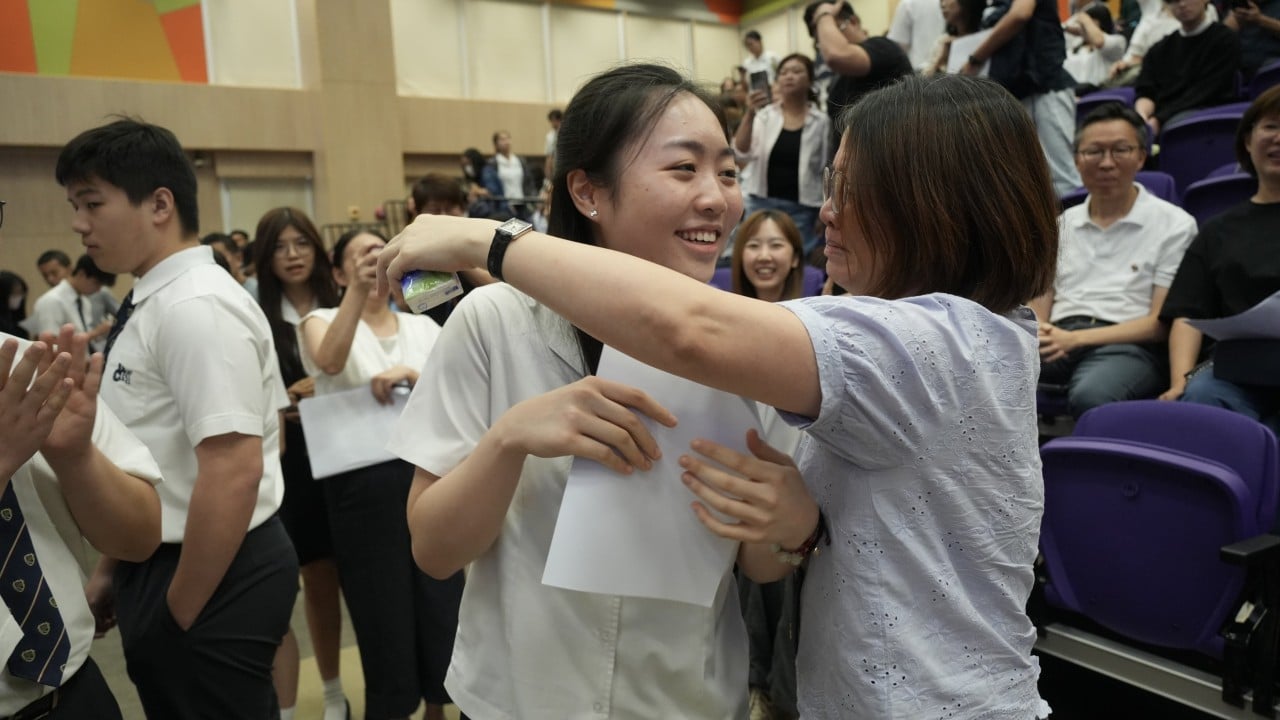
The old formula for acing the International Baccalaureate is officially dead. For decades, the recipe for a perfect 45-point score in Hong Kong looked like a form of self-punishment. Students drank endless cups of coffee. They slept three hours a night. They locked themselves in study rooms until their eyes went blurry.
That approach does not work anymore. The data proves it. Also making news in related news: Andy Burnham Is About To Become Prime Minister But The Real Work Starts Now.
The latest May 2026 IB results just dropped, and the numbers coming out of Hong Kong schools are staggering. At least 63 students across the city achieved a perfect score of 45. Victoria Shanghai Academy celebrated its best year on record with nine perfect scorers, up from six last year. The English Schools Foundation brought in 27 perfect scores. Schools like St. Paul’s Co-educational College and Po Leung Kuk Choi Kai Yau School each saw six students hit the absolute ceiling of academic achievement, while Diocesan Boys’ School and St. Stephen’s College each recorded five.
When you look closely at how these students pulled it off, a massive shift becomes obvious. The top performers this year did not just work harder. They worked completely differently. Instead of relying on brute-force memorization, the class of 2026 integrated artificial intelligence tools directly into their study workflows while enforcing rigid, non-negotiable health habits. Additional insights on this are covered by USA Today.
It turns out that survival is no longer the goal. Optimization is.
Why Grinding Twenty Hours a Day Is a Failed Strategy
High-achieving students in Hong Kong face a legendary amount of academic pressure. The cultural expectation to succeed can lead straight to severe burnout. In the past, the response to a massive workload was simple. You just traded your well-being for a higher grade point average.
The perfect scorers of 2026 rejected that trade. They realized that a sleep-deprived brain is practically useless when handling the complex, analytical requirements of the modern IB curriculum. The IB does not just test what you know. It tests how you think, how you connect ideas across disciplines, and how you structure an argument under extreme time constraints.
Think about it. If you are running on four hours of sleep, your cognitive processing speed plummets. You make sloppy mistakes in your Higher Level Mathematics papers. Your analysis in your Extended Essay becomes shallow.
The students who crushed the exams this year treated themselves like elite athletes. They realized that sleep, nutrition, and mental downtime are fundamental pillars of cognitive performance. Some top scorers openly admitted that keeping a consistent sleep schedule and scheduling time for physical exercise were just as vital to their success as active recall or practice papers.
How Top Scorers Actually Use AI Without Cheating
There is a lot of anxiety among educators about how software affects learning. Many schools worry about academic dishonesty. But the smartest students aren't using large language models to write their essays for them. Doing that is an easy way to get disqualified. Instead, they are using these tools as highly interactive, personalized study partners.
Consider the sheer volume of reading required for the IB. Students have to digest complex historical texts, literary critiques, and dense scientific papers. Perfect scorers use tech to accelerate their comprehension. Wendy Wang, a top scorer from the Canadian International School of Hong Kong who earned a bilingual diploma, pointed out that her essay-heavy subjects forced her to sift through massive amounts of text to build coherent, evidence-based arguments.
That is exactly where smart software comes into play. Top students use these applications to simulate specific learning environments.
- Sifting through dense data: Students feed complex articles into a tool to isolate the core logical assertions, allowing them to grasp the main thesis before analyzing the nuances themselves.
- Socratic debate simulation: Instead of just reading notes, students ask a chatbot to challenge their arguments on specific topics, like a historical event or a philosophical theory, exposed in their Theory of Knowledge coursework.
- Customized question generation: Students prompt software to generate unique chemistry or physics problems based on past paper styles, giving them endless fresh material for targeted practice.
This approach changes the entire dynamic of studying. You are no longer passively staring at a textbook page. You are actively engaging with information. You are testing your blind spots in real-time. This saves hundreds of hours of aimless skimming, giving students their time back so they can actually go to sleep at a reasonable hour.
Mental Resilience Over Raw Intelligence
You can have the best technology in the world and the most detailed study notes, but you will still fail if you crumble under stress. The IB is a two-year marathon. The pressure peaks during the final exam weeks, when years of effort boil down to a handful of high-stakes papers.
Austin Shen, another perfect scorer from the Canadian International School of Hong Kong, emphasized that a clear goal kept him motivated, but it was ultimately his support system that gave him the confidence to beat back moments of self-doubt.
This highlights a major misconception about top academic performers. People assume they are cold, solitary genius types who don't need anyone else. In reality, the students who hit perfect marks are usually those who communicate constantly with their teachers and lean heavily on their peers.
Isolation breeds anxiety. The students at Victoria Shanghai Academy who reached the 45-point mark this year—including Billy Chan, Chau Man-hei, Genevieve Cheuk, Koko Liu, Cyrus Fung, Hannah Tsui, Matthew Wong, Shannon Wong, and Alex Zhu—were noted by their administration for their ability to support one another as a tight-knit community. Success in this environment is a team sport. When you share resources, quiz your classmates, and talk openly about the stress, you build a psychological safety net that keeps you grounded when the pressure intensifies.
Your Actionable Blueprint for Crushing the IB Diploma
If you are a student preparing for the IB, or a parent supporting one, you need to abandon the outdated mindset of academic martyrdom. If you want to replicate the success of Hong Kong's top scorers, you need a system that balances technology with human lifestyle boundaries.
First, change how you view your study tools. Stop looking at AI as a shortcut to avoid doing work. Use it to deepen your work. When you receive a graded essay back, type the prompt and your thesis into a chat interface. Ask it to find the logical fallacies in your thinking or suggest three alternative perspectives you didn't consider. Turn the tool into an editor that forces you to think harder.
Second, fix your schedule with non-negotiable boundaries. Hilary Li, a perfect scorer who plans to study dentistry at the University of Hong Kong, managed to balance her heavy IB load while playing sports and running a food-focused social media account. She attributed her success to strict time management.
Don't let studying expand to fill every waking hour. Set a hard cutoff time every single night. If your brain knows that work stops at 9 PM, it becomes far more efficient during the day. Fill your daytime hours with high-intensity, focused study blocks, then completely disconnect in the evening to allow your brain to process and store that information.
Third, build your communication lines early. Don't wait until you are drowning in your Internal Assessments to talk to your teachers. Establish an ongoing dialogue with them. Ask for feedback on your arguments early in the writing process.
The data from the class of 2026 makes it clear. The future of academic excellence isn't about running yourself into the ground. It is about deploying modern tools intelligently, leaning on your community, and protecting your physical health at all costs.