Southeast Asian defense companies don't usually beat out entrenched global defense heavyweights on the open market. It isn't how the international arms trade typically works. Buyers usually lean toward multi-billion-dollar firms from South Korea, Turkey, or Eastern Europe because they have massive industrial backing and decades of proven supply chains.
But Chaiseri Metal and Rubber Co., a Thai defense contractor, just flipped that script.
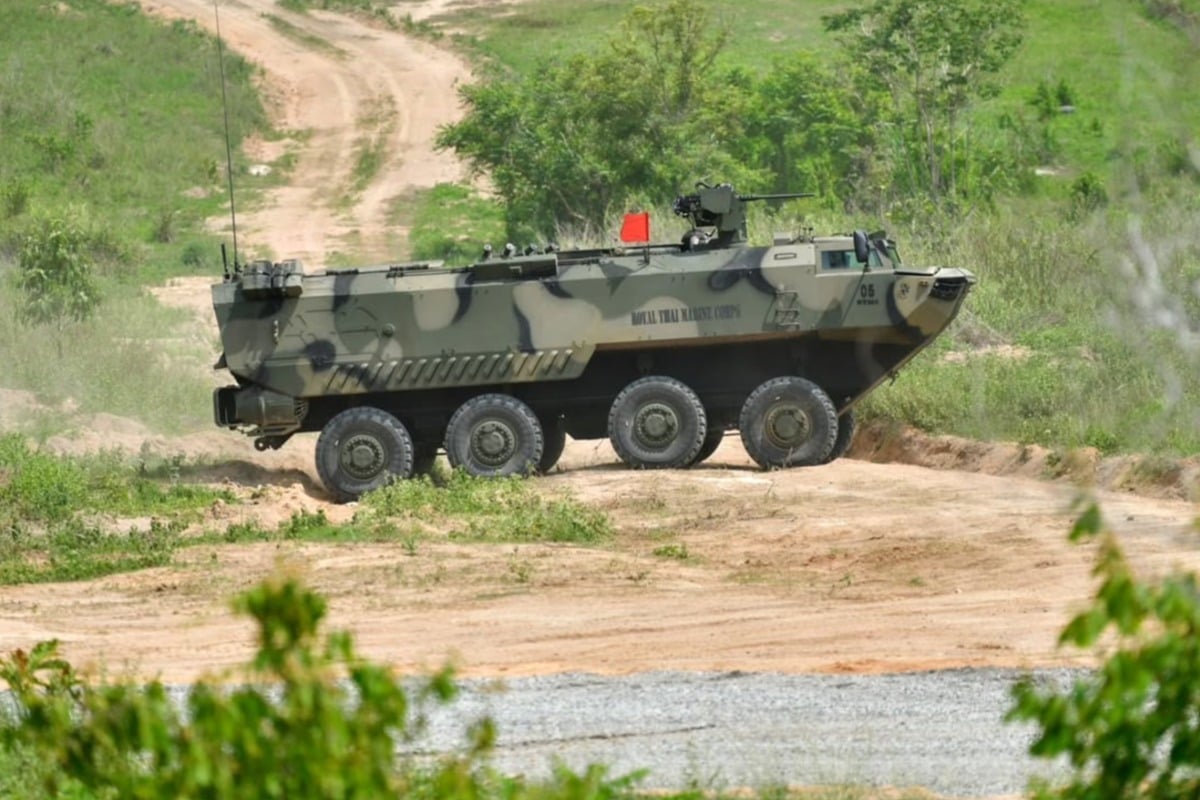
The Pathum Thani-based company secured its first-ever major export contract for its Armoured Wheeled Amphibious Vehicle (AWAV) 8x8. The buyer? The Philippine Marines. To win this contract, Chaiseri had to beat out elite, battle-tested competition from South Korea, Turkey, and the Czech Republic. It is a massive shakeup that reveals a shifting geopolitical reality in Southeast Asia. Countries in the region are increasingly looking for specialized regional solutions rather than over-engineered Western or global alternatives.
Shifting regional realities drive the demand for amphibious armor
The Philippine Marine Corps operates in one of the most volatile maritime environments on Earth. They face complex archipelagic security challenges, brutal typhoon seasons, and a constant need for inter-island rapid deployment. For years, they relied on legacy American gear and aging systems to patrol their coastlines and secure vulnerable beachheads.
They didn't just need a standard armored personnel carrier that could swim a bit. They needed a true dual-threat platform capable of tackling rough open waters and transitioning straight into rugged land combat without stalling or needing mechanical reconfiguration.
When Manila opened up the bidding for a new amphibious fleet, the global defense industry took notice. Heavy hitters from South Korea, Turkey, and the Czech Republic brought their best designs to the table. These were systems backed by extensive state funding and mature export track records. Yet, the Philippines chose the Thai AWAV 8x8.
The decision came down to two major factors: hyper-localized design and sheer mechanical practicality.
The engineering that outpaced global defense giants
Chaiseri didn't build a generic armored vehicle and slap some propellers on the back. The AWAV 8x8 was explicitly engineered for the exact operational environment the Philippine Marines call home.
Consider the raw specifications. The vehicle spans 9.2 meters in length, 3.1 meters in width, and stands 3 meters tall. It is a massive machine weighing in at 23.2 tonnes. Yet, despite its bulk, it acts like a nimble multi-role platform.
- The Powertrain: It runs on a 711-horsepower diesel engine, pushing the massive frame to a top speed of 105 km/h on paved roads.
- The Maritime Transition: Once it hits the surf, Chaiseri's custom-engineered water jet propulsion system takes over. It pushes the vehicle through open water at a steady 10 km/h.
- The True Selling Point: The AWAV doesn't require the driver to stop, switch gears, or alter the driving mode when moving from the ocean to land. It transitions seamlessly, which keeps the vehicle moving during the most dangerous moments of an amphibious landing.
The hull configuration is tailored to real-world marine feedback. Chaiseri built the vehicle with a heavily modified front end designed specifically to handle beachhead surf. The geometry deflects mud, sand, and heavy spray away from critical air intakes and the rear mechanical bays.
The driver's station features large-caliber ballistic glass, offering high-visibility situational awareness during rough sea maneuvers. It provides visibility that traditional periscopes simply cannot match. Inside, the vehicle protects its three crew members and 11 fully geared marines with NATO STANAG-compliant ballistic and mine armor. It also carries a remotely operated weapon system (ROWS) turret that achieved a 90% accuracy rate during rigorous pre-delivery firing trials.
The strategic value of domestic supply chains
What really sealed the deal for Chaiseri wasn't just the physical vehicle. It was the company's unique industrial background. Chaiseri didn't start out building advanced armored cars. They began in 1939 as a specialist in rubber-to-metal bonding and heavy vehicle track systems. They built their reputation by repairing, upgrading, and rebuilding foreign-made armor for the Royal Thai Army, including the venerable AAV7A1 tracked amphibious vehicles.
That means Chaiseri knows exactly where foreign armor breaks down in hot, humid, high-salinity environments.
By manufacturing at least 40% of the AWAV's production value from locally sourced materials, Chaiseri avoids the supply chain logjams that plague European and American manufacturers. If a Philippine AWAV needs a replacement part, they don't have to wait months for a shipment from a Western capital. The supply lines are right next door in Thailand.
The Royal Thai Marine Corps already operates seven of these vehicles. They bought them under a 448-million-baht ($12.9 million) contract and integrated them into their fleet alongside their existing landing platform docks (LPDs). The real-world data from Thai operations gave Manila total confidence that the platform could handle the grueling demands of South China Sea patrols.
What this means for the future of Asian defense procurement
This export deal is a warning shot to major global defense exporters. The era where Western or major Asian powers completely dominate developing defense markets is coming to a close.
Smaller regional players are proving they can build world-class, specialized military hardware tailored to their specific geography. By winning this contract, Chaiseri demonstrated that high localized survival rates and seamless regional supply lines beat global branding every single time.
If you are tracking regional defense trends, look closely at how mid-tier defense nations handle their local procurement. The true indicator of future arms trade shifts isn't the headline-grabbing billionaire jet contracts. It is the tactical, grit-and-steel deals like this one that quietly change the balance of industrial power.