California wants to test five-year-olds in math.
Let that sink in. If a new piece of legislation moves forward, your kindergarten child could face standardized math screenings before they even lose their first baby tooth. In other updates, we also covered: Why The Upcoming Israeli Election Is Netanyahu's Most Dangerous Gamble Yet.
Senate Bill 1067 is tearing through the state legislature with a singular, desperate goal: reverse California’s abysmal student math scores. We aren't talking about mild dips here. The state is facing an absolute crisis. Last year, a pathetic 37% of California students performed at grade level in math. For marginalized groups, the numbers drop off a cliff. Only 16% of Black 11th-graders met the state’s grade-level standards.
Proponents say we have to catch kids early. Opponents claim we are just traumatizing toddlers with unnecessary metrics. Here is the unvarnished reality of what is happening, why the state is panicking, and what it actually means for your family. TIME has provided coverage on this important subject in great detail.
The Kindergarten Tipping Point
The mechanics of Senate Bill 1067 are fairly straightforward. The bill requires schools to screen all kindergartners, first-graders, and second-graders for basic math proficiency.
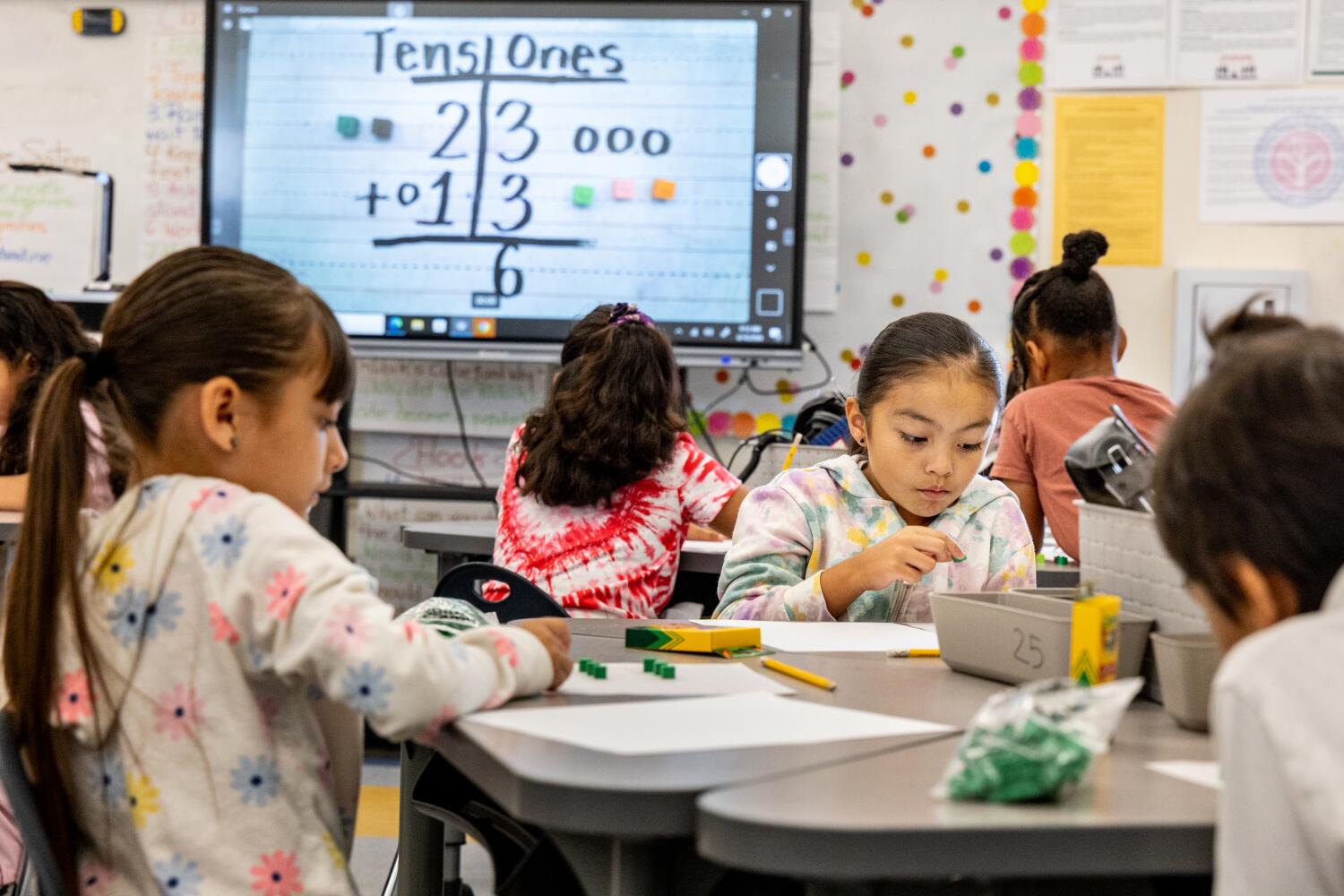
Don't picture a child sitting at a desk filling out bubble sheets with a number two pencil. The proposed screenings are brief, 10-to-20-minute diagnostic evaluations. A teacher might show a child two groups of dots and ask which side has more. Or they might ask a child to look at the number three and point to three plastic blocks to prove they understand the connection between a digit and a physical reality. English learners would take these diagnostics in their native languages.
The rationale rests on a brutal truth about mathematics: it is entirely sequential. If you don't understand that the number three represents three physical objects, you can't understand addition. If you don't grasp addition, multiplication is impossible.
Education advocates point out that early math gaps show up long before kindergarten. Kids who attend high-quality preschools or play math-heavy games at home arrive on day one with a massive advantage. Children from low-income households frequently start behind. Alice Klein, a developmental psychologist and research director at WestEd, calls this a critical tipping point. Without immediate intervention, the gap widens into a chasm, eventually blocking students from higher-level high school tracks, college admission, and tech-heavy career paths.
Why the Pushback is Fierce
You might think identifying struggling kids early sounds like a no-brainer. But California’s education community is deeply divided.
The biggest elephant in the room is the California Teachers Association. The state’s powerful teachers union, along with English learner advocates, just got done fighting a brutal battle over mandatory literacy screening. They aren't eager to repeat the experience for math.
Critics of the bill make a few compelling points. First, California just poured massive resources into a brand-new, comprehensive math framework designed to emphasize critical thinking and real-world problem-solving. Educators argue the state needs to give those investments time to breathe and show results before layering on more testing.
Second, critics rightly point out that testing is completely useless without funding for immediate, intensive tutoring. If a test reveals that twenty kindergartners in a class are lagging, but the school lacks the money to hire intervention specialists, the screening accomplished nothing but generating bad data. Nick Johnson, an associate professor of teacher education at San Diego State University, notes that the state has been obsessed with standardized testing since the No Child Left Behind era of the early 2000s, yet decades of evidence show that simply testing kids rarely improves actual learning.
There is also the human element. Rachelle Bacong, a transitional kindergarten teacher in National City, spends her days leading children through lessons involving blocks, tiles, and tubes. She worries that state-mandated screenings shift the focus entirely to a child's deficits. At five years old, math should be joyful and exploratory, not a source of early academic anxiety or school-level stigmatization.
What Parents Can Do Right Now
You don't have to wait for Sacramento politicians to decide how to handle your child's education. If you want to insulate your young child from early academic tracking and build genuine math confidence, you can take immediate action at home.
- Count physical objects daily. Stop reciting numbers in order like a song. Instead, have your child hand you exactly four forks for the dinner table, or count five blue cars out the window.
- Play board games that involve dice. Games like Chutes and Ladders force children to recognize dot patterns instantly and understand spatial movement along a numbered grid.
- Use spatial vocabulary. Talk about shapes, sizes, and dimensions naturally. Ask if a box is bigger or smaller, or if a toy is under, over, or next to the couch.
- Demand answers from your school board. Attend local school board meetings and ask direct questions about their intervention plans. If Senate Bill 1067 passes, ask exactly how your district plans to fund the tutoring required to fix the deficits the screenings uncover.