You can paint the bottom of a historic monument "American flag blue," but nature doesn't care about branding.
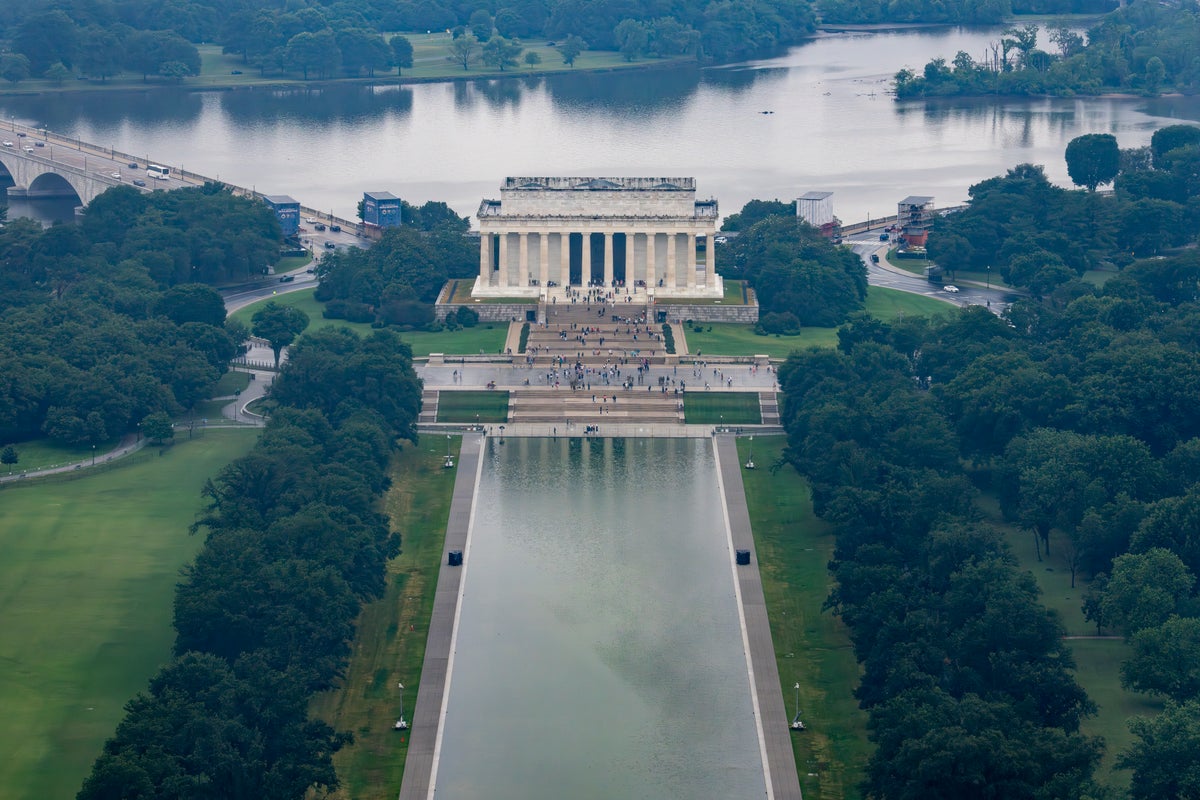
Right now, the Lincoln Memorial Reflecting Pool looks less like a national treasure and more like a stagnant backyard swamp. After a rushed, $14.7 million renovation ordered by President Donald Trump to prepare the site for the nation's 250th anniversary, the pool turned a vivid, murky green just two weeks after refilling.
While the political finger-pointing has focused on wild claims of nighttime saboteurs with razor blades, a far more mundane—and embarrassing—reality has emerged behind the scenes. The highly praised tech system installed to save the pool from its chronic green slime problem failed because it was fundamentally the wrong tool for the job.
According to recent investigative reports, the nanobubble filtration system and aeration devices meant to keep the water crystal clear had a fatal flaw. They were designed for industrial wastewater treatment and agricultural ponds, not a shallow, seven-acre concrete monument exposed to baking summer heat.
The Problem with Industrial Tech in a Public Monument
Shallow, unshaded water is an open buffet for algae. The Reflecting Pool is fed by nutrient-rich water from the Tidal Basin, which is packed with nitrogen and phosphorus. When you mix those nutrients with intense summer heat and zero shade, an algae bloom isn't just possible. It's guaranteed.
The administration tried to outsmart biology by installing oxygen-bubble technology. The system uses nanobubbles—microscopic bubbles that stay suspended in the water instead of rising to the surface and popping—to suppress phosphorus and starve the algae.
But there's a catch. Water science experts note that while nanobubbles work brilliantly in controlled environments like fish farms or closed chemical tanks, they can't keep up with a massive, open-air system. The volume of water is simply too vast, and the constant influx of organic material from birds, wind, and tourists dilutes the effect instantly. Worse, the decision to paint the pool's bottom a dark, heat-absorbing blue instead of leaving it light concrete essentially turned the monument into a giant solar water heater. The darker floor raised water temperatures, supercharging the microscopic green goop.
Chemistry Fights Coating
When the high-tech aeration failed to stop the green wave, the maintenance strategy devolved into panic mode. Workers in chest-high waders began dumping massive jugs of industrial-strength hydrogen peroxide directly into the water to oxidize and kill the cyanobacteria.
It killed the algae, sure. But it also triggered a secondary disaster.
The harsh chemical shock directly attacked the brand-new polyurea liner applied by the contractors. Within days, huge chunks of the "American flag blue" coating began delaminating, peeling away from the concrete floor, and floating to the surface like sheets of blue tarp.
What went wrong: You can't treat a historic monument like a chemical factory. The combination of intense UV rays, trapped moisture beneath a rushed no-bid paint job, and sudden chemical oxidation caused the specialized coating to lose its bond completely.
The Myth of the Box Cutter Saboteur
To deflect from a classic engineering failure, the official narrative quickly pivoted to malicious vandalism. The president claimed that criminals sloped into the night to slice a "350-foot gash" into the liner and intentionally inoculated the pool with agricultural fertilizer.
A federal court declaration by the National Park Service did confirm that a portion of the foam expansion joints showed signs of being cut by a sharp object, and some fence posts were thrown into the water. Six people have been arrested, including a former U.S. Olympic canoeist who claims he did nothing more than touch a piece of the already-peeling paint.
But environmental scientists have completely debunked the idea that vandals "caused" the algae. A body of water that large cannot be forced into a massive, uniform bloom overnight by a bag of fertilizer. The nutrients were already there, the water was hot, and the tech couldn't cope.
What Happens Next
The $14.7 million budget has already ballooned, and the pool will have to be completely drained yet again to scrape out the failing blue liner. If you are managing large-scale commercial water features or public municipal projects, this mess offers a few expensive lessons:
- Never prioritize aesthetics over thermodynamics. Darkening the floor of a shallow pool increases heat absorption, rewriting your water chemistry parameters completely.
- Match the tech to the environment. Industrial nanobubble systems require specific flow rates and containment to work. In a massive, open-air basin, they are little more than expensive toys.
- Rushed curing kills coatings. Applying a heavy-duty waterproof liner requires strict moisture testing and cure times. Rushing the process to hit a political holiday deadline guarantees a failure of adhesion.
The federal government is currently scrambling to patch the visible peeling before next week's holiday crowds arrive. But until they address the underlying biological reality of a shallow, sun-drenched basin, no amount of high-tech bubbles or blue paint will keep the swamp from reclaiming the Mall.