A hot Sunday afternoon in Florida looks exactly like a postcard. The water looks cooling, the shade of the oak trees offers a break from the humidity, and the temptation to jump in is almost impossible to fight. That was the exact setting at the Barr Street Trailhead within the Little Big Econ State Forest on June 28, 2026. A group of friends decided to cool off in the Econlockhatchee River around 1:30 p.m. It is a choice hundreds of people make every weekend across Central Florida.
This time, the water hid a lethal threat.
An alligator attacked a woman while she was swimming, inflicting massive trauma. Her friends scrambled to get help, and emergency crews rushed her to a local hospital as a trauma alert. She died from those injuries hours later. The Florida Fish and Wildlife Conservation Commission, along with the Seminole County Sheriff's Office, immediately flooded the area. They shut down the trail, launched boats, and deployed a contracted nuisance alligator trapper to find the animal.
It is a horrifying tragedy, but local hikers who frequent the Econlockhatchee River were not completely surprised. Regulars on the trail knew about a massive female alligator that routinely used that exact stretch of the riverbank to build her nest and lay eggs. The warning signs were posted at the trailhead. The danger was active. Yet, the mismatch between a peaceful afternoon and a apex predator resulted in a loss of life.
This incident exposes a fundamental misunderstanding about how Florida waterways function, especially during the summer months.
The Reality of Summer in Florida Waterways
If you step into any body of fresh or brackish water in Florida, you are sharing space with an apex predator. There are no exceptions to this rule. It does not matter if the water is crystal clear, looks shallow, or is located inside a heavily trafficked state park.
The end of June and the entirety of July represent the absolute peak of alligator nesting season in the state. This changes the dynamics of human-wildlife interaction completely. During the spring mating season, male alligators travel long distances and exhibit heightened aggression. By late June, females take over the high-risk behavior as they build mounds of mud, sticks, and rotting vegetation to protect their eggs.
A nesting female alligator will not retreat. She will defend that square footage of riverbank with everything she has.
Florida Alligator Reproductive Timeline
- April to May: Peak courtship and mating activity
- June to July: Egg-laying and nest construction
- August to September: Nest guarding and hatching periods
When a swimmer enters a narrow river channel like the Econlockhatchee during nesting season, they are unintentionally playing Russian roulette. The splashing mimics the sounds of a struggling animal or a threat to the nest. The dark tannin-stained water gives the alligator a massive tactical advantage. You will not see the animal coming until the strike happens.
What Most People Get Wrong About Alligator Behavior
People assume that alligators are lazy lizards that only sun themselves on logs. You see them floating like logs, completely still, and you think they are harmless. That is a massive mistake. Alligators are ambush predators that rely on explosive bursts of speed, driven by their massive, muscular tails.
They can move through the water at speeds topping 20 miles per hour in short bursts. For comparison, an Olympic swimmer tops out at around five miles per hour. You cannot outswim an alligator, and you certainly cannot outrun one if you are caught flat-footed in the shallows.
Another common myth is that alligators are inherently terrified of humans. While wild alligators generally avoid direct contact with people, that fear evaporates under two conditions. The first condition is the defensive nesting instinct we just talked about. The second condition is human conditioning.
When people feed alligators, the animals stop associating humans with danger and start associating them with a free meal. This completely breaks down their natural boundaries. A habituated alligator is a ticking time bomb, and it is usually an innocent swimmer or pet owner who pays the price for someone else's illegal feeding habits.
The Problem With Clear Water and False Security
The Econlockhatchee River alternates between dark, tea-colored patches and areas where you can see right to the sandy bottom. Swimmers often look down, see no massive shadows, and assume the coast is clear.
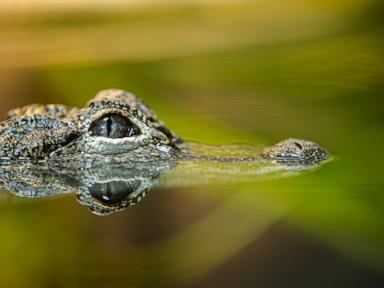
That logic fails because alligators are masters of camouflage. They can compress their bodies against the riverbed, sink quietly without leaving a ripple, or hide their entire mass behind a single submerged log or patch of eelgrass. They only need their nostrils and eyes above the surface to target a swimmer. In a moving river current, a human eye easily mistakes those two small bumps for a floating branch or a piece of debris.
The Florida Fish and Wildlife Conservation Commission manages these encounters through the Statewide Nuisance Alligator Program. The program permits the removal of specific alligators that measure four feet or more in length and are deemed a threat to public safety. Trappers work on a contract basis, using specialized lines, hooks, and snares to extract the animal from the environment.
But clearing a single nuisance animal does not make a river safe. Another alligator will inevitably move into that territory. The habitat belongs to them, and the burden of safety rests entirely on the humans who enter it.
How to Handle an Active Encounter
The best way to survive an alligator attack is to prevent it from happening in the first place by staying out of the water in un-designated areas. If you find yourself in a situation where you are face-to-face with an alligator, your immediate actions dictate whether you walk away or become a statistic.
If you spot an alligator while you are on the shore, maintain a minimum distance of 60 feet. If the animal drops its head, hisses, or begins moving toward you, it is actively defending its space or tracking you. Back away slowly and smoothly. Do not run in a zigzag pattern. That old myth is completely false and only slows you down. Run in a straight line away from the water. Alligators have zero stamina on land and will abandon a chase quickly if it requires sustained effort.
If you are already in the water and see an alligator swimming toward you, do not panic or splash wildly. Splashing triggers their predatory drive. Swim smoothly and directly toward the nearest exit point, keeping your eyes on the animal.
In the absolute worst-case scenario where an alligator grabs you, you must fight back instantly. Do not try to pry open the jaws. The closing force of an alligator's jaw is roughly 3,000 pounds per square inch, making it mechanically impossible for a human to pull apart.
Instead, target the animal's weak points. Strike the eyes, the tip of the snout, or the palatal valve. The palatal valve is the flap of tissue inside the alligator's throat that seals off its airway to prevent water from entering its lungs when it opens its mouth underwater. If you can punch or grab that valve, you force water into its throat, which typically compels the animal to release its grip to avoid drowning.
Moving Forward Responsibly in Natural Spaces
Enjoying the wilderness of Central Florida requires a hard reset on how we view safety. You cannot rely on caution tape or signs to keep you safe when you step off the paved road.
If you plan to hike, kayak, or camp near Florida rivers during the summer months, keep your pets on a short leash and never let them splash near the water's edge. Dogs are roughly the same size as an alligator's natural prey and are frequently targeted. Avoid the water completely during dawn, dusk, and nighttime hours when alligators are most active and their night vision gives them an insurmountable advantage.
The tragedy at the Little Big Econ River serves as a stark reminder that nature does not negotiate. When you visit these ecosystems, you are an observer in a complex, wild environment that operates on raw survival instincts. Respecting those boundaries is the only way to ensure you make it back to the trailhead.
Pack your gear, stay on the marked land trails, keep your eyes on the banks, and leave the swimming to designated, chlorinated pools or spring-fed state parks with clear visibility and active lifeguards. Safely navigating the wild means knowing when to stay on the shore.
:max_bytes(150000):strip_icc()/TAL-nassau-bahamas-BEAUTCARIB0323-4fbfce903e5a4418b895e03717e3de0d.jpg)