The rules of American political campaigns just got rewritten, and the timing couldn't be wilder.
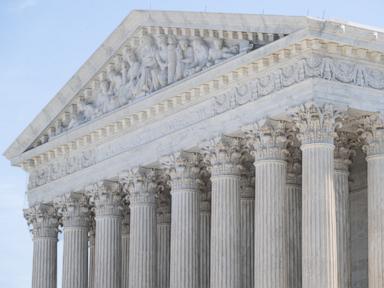
With the 2026 midterm elections right around the corner, the Supreme Court dropped a bombshell 6-3 decision in National Republican Senatorial Committee v. Federal Election Commission. The conservative majority completely struck down the decades-old federal limits on how much money a political party can spend in direct coordination with its candidates.
If you think this is just boring legal jargon, think again. This ruling shifts power straight back to major political parties, deals a blow to independent super PACs, and unleashes a massive wave of cash right when control of Congress hangs in the balance.
Here is exactly what went down, why it completely upends the current election cycle, and what it means for your TV screen and your ballot.
The Death of Coordinated Spending Caps
For decades, the Federal Election Campaign Act kept political parties and candidates at arm's length. Sure, the Republican National Committee (RNC) or the Democratic National Committee (DNC) could buy ad space to support a candidate, but they couldn't sit in a room together and plan exactly how to spend that money beyond strict, inflation-adjusted limits.
For the 2026 election cycle, those caps were set roughly between $65,300 and $130,600 for House races, and up to $4 million for certain Senate races.
Now? Those limits are completely gone.
Writing for the majority, Justice Brett Kavanaugh argued that these caps violated the First Amendment. He stated that the decision treats all political parties equally, allowing them to participate more freely and coordinate closely with their candidates. The majority essentially viewed the old rules as an unfair restriction on core political speech.
But let's look at the immediate, practical reality. This decision isn't hitting both parties the same way right now.
The Immediate 2026 Money Shift
This lawsuit started back when JD Vance was running for the Senate in Ohio alongside the NRSC. Now that the Supreme Court has cleared the path, the financial disparity between the two major parties is about to take center stage.
Republicans entered the summer with a staggering cash advantage. The top Republican party committees held roughly $256 million in the bank with zero debt. On the flip side, top Democratic committees had about $127 million on hand, weighed down by $18 million in lingering debt from past presidential campaigns.
Before this ruling, Republicans couldn't just dump that massive war chest directly into a candidate's specific localized strategy. They had to rely on independent expenditures or outside groups.
Now, the RNC and NRSC can act as an unrestricted megaphone for their candidates. This matters immensely because of a quirk in advertising laws: candidates get legally mandated lower rates for TV and radio ads. Outside super PACs have to pay premium market rates. By allowing political parties to buy ads in lockstep with the campaign, the Supreme Court just made Republican money go much, much further.
Why the Dissent Thinks Corruption Just Got Easier
The court's liberal minority didn't hold back in their dissent. Justice Elena Kagan, joined by Justices Sonia Sotomayor and Ketanji Brown Jackson, warned that the majority just created a massive loophole for wealthy donors.
Think about how individual donation limits work. You can only give $3,500 per election directly to a federal candidate. But you can give $44,300 per year to a national party committee.
Kagan argued that by erasing the coordination limits, a political party can now essentially serve as an alternative checking account for a campaign. A single wealthy donor can write a massive check to the party, and the party can immediately turn around and pay the candidate's exact bills.
The majority brushed these concerns aside, pointing out that base contribution limits and disclosure requirements are still intact to prevent blatant quid pro quo corruption. But transparency doesn't stop the sheer volume of cash from rising.
The Big Picture: Parties vs. Super PACs
For the last 15 years, the narrative in American politics has been dominated by the rise of the super PAC. Ever since the Citizens United ruling in 2010, shadowy outside groups and billionaire-backed PACs held all the cards because they could spend unlimited amounts of money, while formal political parties were constrained by tight regulations.
This ruling flips the script. It begins to centralize power back into the hands of the official party apparatus. National parties are no longer secondary players to independent spending groups.
Whether you view this as a victory for the First Amendment or the final nail in the coffin for campaign finance regulation, the reality on the ground is the same. The floodgates are wide open.
What Happens Next
If you live in a swing state or a competitive congressional district, brace yourself. Here is what you should expect to see immediately:
- A massive influx of coordinated TV and digital ads as national party committees begin direct coordination with local campaign teams to optimize every dollar.
- A test of the cash gap as the GOP attempts to use its immediate $125 million advantage to lock down key races before Democrats can close the fundraising deficit.
- New fundraising pitches hitting your inbox from both sides—Republicans capitalizing on the ruling to maximize donor impact, and Democrats using the decision as a rallying cry to counter the incoming wave of spending.
The legal debate over money in politics is settled for now, but the actual battle is just getting started on the airwaves.