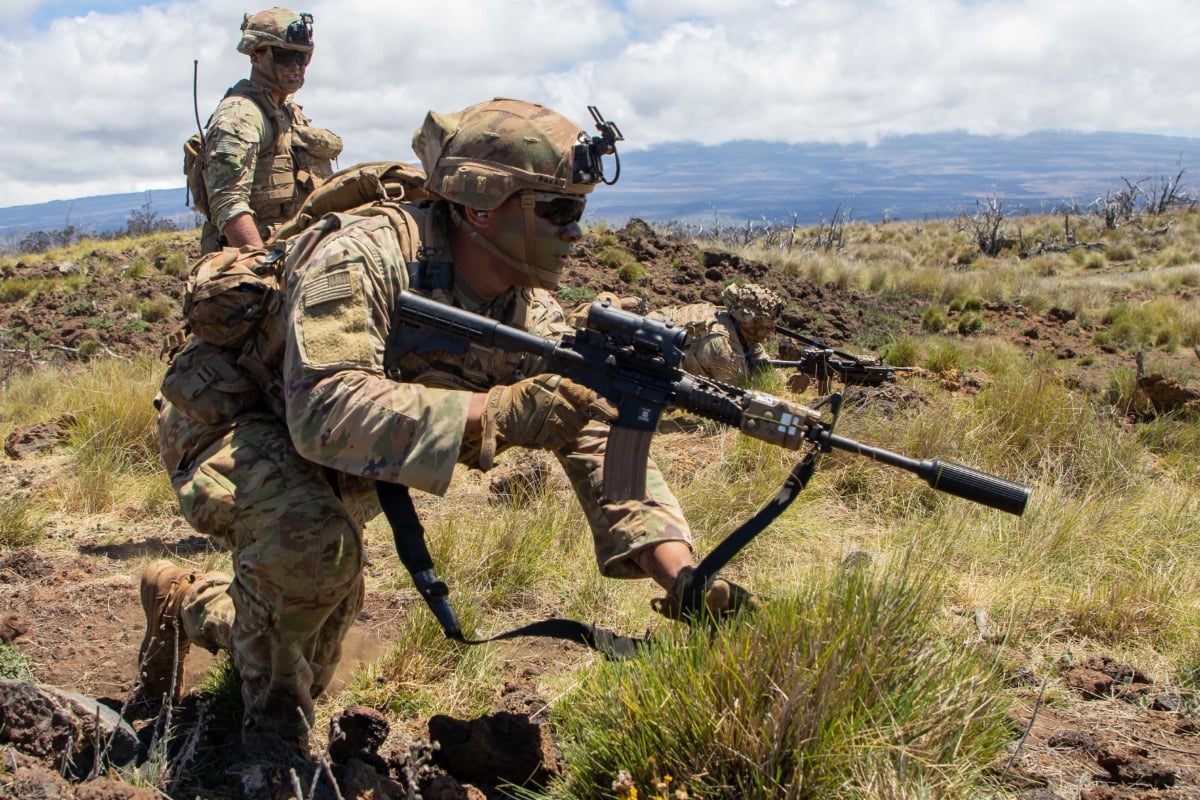
Hollywood lied to you about silencers. They don't make a rifle sound like a soft pfft whisper. If you screw a suppressor onto a standard military rifle, it still makes a loud, mechanical crack that will damage your ears without protection.
Yet, the US military is spending millions of dollars to put a suppressor on almost every front-line infantry rifle. The US Marine Corps started pushing these devices out to entire battalions a few years ago. Now, the US Army is making them permanent standard gear with the rollout of the Next Generation Squad Weapon program, specifically the SIG Sauer M7 rifle and M250 light machine gun.
This isn't happening because regular soldiers suddenly became stealth assassins. It's happening because commanders realized that the loudest squad on the battlefield is usually the one that gets targeted first.
The Evolution from Special Ops to Regular Grunts
For decades, suppressors were elite gear. You only saw them in the hands of Navy SEALs, Army Green Berets, or clandestine operators pulling off night raids. The technology was heavy, expensive, and tended to wear out quickly under sustained automatic fire. Regular grunts were told to wear earplugs and deal with the concussive blast of their M4 carbines.
That old mentality is dead. The modern battlefield is deadlier, faster, and incredibly chaotic. When a squad opens fire with unsuppressed weapons, the massive muzzle flash and sonic boom act like a giant neon sign pointing directly at their position. By making suppressors standard issue for regular infantry, the military is fundamentally changing how a fireteam operates.
The Real Tactical Math Behind the Silence
If a suppressor doesn't actually make a rifle silent, why bother adding the extra weight to a soldier's kit? The answers come down to basic physics and human behavior during a gunfight.
Command and Control
Have you ever tried to yell instructions to someone while a jackhammer is running two inches from your ear? That's what a standard infantry firefight sounds like. The noise is so deafening that squads often rely on hand signals or blind luck to coordinate movements.
Suppressors drop the decibel level of an M4 or M7 rifle by roughly 30 decibels. While that doesn't make it quiet, it lowers the noise enough that a squad leader can actually shout an order and have a realistic chance of being heard. Communication saves lives in combat, and you can't communicate if everyone is temporarily deafened by their own weapons.
Muzzle Flash Elimination
At night, the flash coming out of an unsuppressed rifle barrel is blinding. It ruins the shooter's night vision and gives the enemy a precise point to aim at.
Standard Muzzle Flash:  [Rifle] ===> (Massive Fireball) -> High Visibility
Suppressed Gas Flow:    [Rifle] ===[Baffles]==> (Cool Gas) -> Minimal Flash
A modern suppressor catches those burning gases before they exit the barrel, cooling them down and virtually eliminating the visible flash. If the enemy can't see where the shots are coming from, they can't effectively return fire.
Reduced Recoil and Barrel Whip
When the gases exit a suppressed barrel, they hit a series of internal chambers called baffles. This internal collision actually pulls the gun slightly forward, acting as a muzzle brake. The result is a noticeable reduction in felt recoil.
Marine Corps field tests showed that soldiers shooting suppressed rifles were actually more accurate. Because the gun didn't kick as hard and didn't produce a massive, concussive blast, shooters stopped flinching. They stayed focused on the target and got faster follow-up shots.
The Brutal Physics of the M7 Rifle
The push for suppressors became an absolute necessity with the birth of the Army's new M7 rifle. The M4 carbine fired a 5.56mm round that was relatively easy to handle. The M7 fires a massive 6.8x51mm hybrid cartridge designed to punch through modern body armor at long ranges.
To get that kind of power out of a short 13.5-inch barrel, the M7 operates at an insane chamber pressure of roughly 80,000 PSI. For comparison, a standard commercial rifle usually tops out around 60,000 PSI.
Firing the M7 without a suppressor is violent. The concussion alone is enough to rattle a soldier's teeth and give adjacent troops a headache. The factory-issued SIG Sauer SLX suppressor isn't a luxury item for the M7; it's a structural necessity to make the weapon system bearable to shoot in a squad environment.
The Downsides Nobody Likes to Talk About
It isn't all upside. Ask any regular infantryman who has been issued a suppressor recently, and they'll give you a list of things they absolutely hate about them.
- The Weight: The original M7 suppressor added nearly a pound and a half to the very end of the rifle. Hanging that much weight off the front makes the weapon incredibly muzzle-heavy. It tires out a soldier's arms during long patrols.
- The Heat: Suppressors trap gas, which means they trap heat. After firing just two or three magazines, the suppressor gets hot enough to cause third-degree burns through thick combat gloves. It creates a massive thermal signature that shows up instantly on enemy night-vision and thermal optics. The military has had to develop specialized thermal shields just to keep the heat hidden for the first 100 rounds.
- The Toxic Blowback: Because a suppressor restricts gas from leaving the front of the barrel, a lot of that dirty, carbon-filled gas gets pushed backward out of the ejection port. It blows right into the face of the shooter. Soldiers shooting suppressed weapons for extended periods end up breathing in a nasty mix of carbon and vaporized lead.
- The Cleaning Nightmare: A suppressed rifle gets filthy fast. Carbon buildup that used to blow out into the air is now deposited directly into the rifle's internal action. A weapon that used to take 20 minutes to clean can now take hours of scrubbing to prevent jamming.
What Happens Next
The era of the unsuppressed infantry rifle is officially drawing to a close. If you're tracking military modernization or preparing for a career in defense technology, stop looking at suppressors as optional accessories. They are now core components of weapon design.
If you want to understand how this impacts the field, look closely at the maintenance cycles and physical strain on troops currently fielding the M7. Watch how small-unit tactics change now that squads can operate with a much lower audio and visual profile. The stealth infantryman isn't a concept for the future anymore. It's the reality right now.