The illusion of peace in the Middle East usually lasts about as long as it takes to sign the paperwork. We saw that reality explode early Wednesday morning as the U.S. military launched heavy retaliatory strikes against Iranian targets. The immediate trigger was a series of brazen Iranian attacks on three commercial vessels navigating the vital Strait of Hormuz. But anyone who thought last month’s fragile interim agreement would actually hold hasn't been paying attention to the fundamental dynamics of this conflict. This isn't just a localized skirmish. It's a systemic breakdown of a ceasefire that was built on fundamentally incompatible demands, and it has already dragged regional neighbors Bahrain and Kuwait straight into the line of fire.
What we are witnessing is the rapid unraveling of the Islamabad understanding. The temporary truce was supposed to give both sides a 60-day window to negotiate a permanent end to a devastating war that began back on February 28, when a strike killed Iran’s Supreme Leader Ayatollah Ali Khamenei. Instead, the waterway has turned into a shooting gallery. Washington wants free navigation. Tehran wants to rewrite the maritime rulebook and extract billions in transit fees. When those two positions collided on the water, the guns started firing again.
The immediate fallout is severe. By attacking shipping, Iran didn't just invite American bombs. It also triggered a crippling economic penalty. The White House instantly revoked the specialized license that allowed Iran to sell its crude oil openly on the global market for U.S. dollars. This completely destroys the primary financial incentive Tehran had to stay at the negotiating table. With the ceasefire shattered and the economic lifelines cut, the region is sliding right back into total war.
The Night the Strait of Hormuz Exploded Again
The sequence of events that shattered the temporary calm began on Tuesday. Three commercial oil tankers were moving through the narrow channel that connects the Persian Gulf to the open ocean. According to the United Kingdom Maritime Trade Operations center, one of the vessels—the Qatari liquefied natural gas tanker Al Rekayyat—came under direct attack off the coast of Oman. The ship caught fire, sending shockwaves through international energy markets. Two other commercial vessels suffered noticeable structural damage during the coordinated assault but managed to limp away and continue their journeys.
Iran didn't even try to hide its role, though its state media spun a specific narrative. Tehran claimed the Qatari LNG tanker was targeted only after ignoring multiple direct warnings from the Islamic Revolutionary Guard Corps. The real issue wasn't a lack of communication. It was a dispute over geography. All three ships attacked by Iran were intentionally using a transit route running close to the Omani shoreline. They weren't using the specific shipping lanes that Tehran has been trying to mandate.
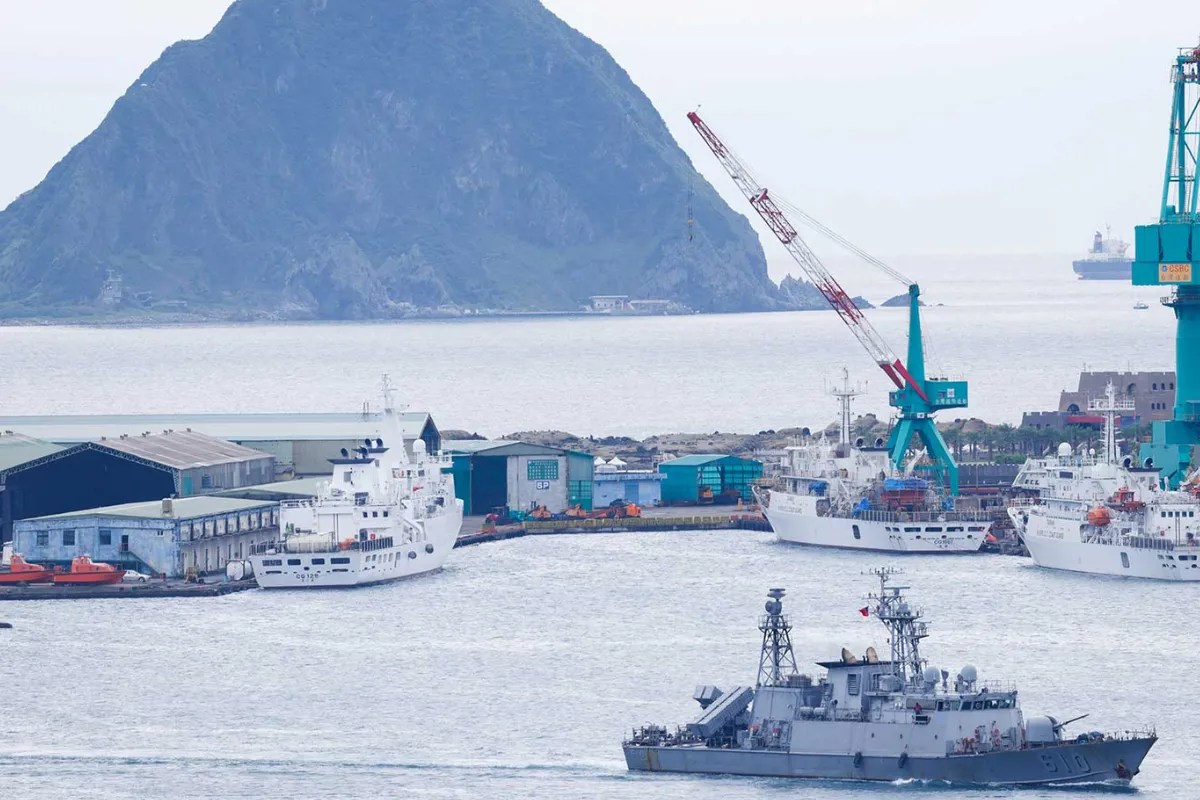
The response from U.S. Central Command was massive and immediate. American warships and aircraft hammered dozens of coastal positions inside Iran. CENTCOM later confirmed its forces targeted more than 80 distinct military installations. The strikes focused heavily on taking out coastal air defense networks, early-warning radar installations, and anti-ship missile batteries. Crucially, the American military focused a massive amount of firepower on destroying over 60 small, fast-attack boats used by the Revolutionary Guard. These small craft are the backbone of Iran's asymmetric naval strategy. They are the exact tools used to harass, board, and sabotage international commercial traffic.
Local residents in southern Iran reported hearing massive secondary explosions rocking the port city of Bandar Abbas, the strategic island of Qeshm, and the coastal town of Sirik. Qeshm Island has been a frequent target for U.S. forces throughout this war due to its commanding position right at the mouth of the channel. While Washington declared this specific round of retaliatory actions completed by Wednesday morning, the structural damage inflicted on Iran's coastal defense network will take months to repair.
The Regional Blowback on Bahrain and Kuwait
Iran did not take the American bombardment lying down. Within hours of the U.S. strikes, the Revolutionary Guard launched a wave of retaliatory missile and drone attacks targeting America’s key regional allies in the Persian Gulf. Bahrain and Kuwait both found themselves under direct bombardment early Wednesday morning, sending thousands of residents scrambling for cover as air defense sirens pierced the pre-dawn quiet.
Gulf Coast Target Zones:
- Bahrain: Home to U.S. Navy 5th Fleet (Air sirens activated twice)
- Kuwait: Host to major U.S. Army ground forces (Air defenses actively engaged)
Bahrain represents a massive strategic prize. It serves as the home base for the U.S. Navy’s 5th Fleet, which oversees all maritime security operations across the Middle East. Air raid sirens screamed across the island nation twice on Wednesday morning as defensive batteries intercepted incoming targets over the water. Meanwhile, further north, the Kuwaiti military confirmed its own air defense forces were actively engaged in confronting hostile missile and drone paths over its territory. Kuwait hosts the largest concentration of U.S. Army ground forces in the region, making it an obvious target for Tehran's retaliatory doctrine.
The Revolutionary Guard released a fiery public statement acknowledging the strikes on both countries. They called the U.S. military a terrorist organization and accused Washington of openly violating the ceasefire agreement. Interestingly, the Iranian military statement completely ignored their own pre-emptive attacks on the commercial oil tankers. They chose instead to frame their missile barrages as a purely defensive reaction to American aggression on their coastal provinces.
This regional crossfire exposes the terrifying vulnerability of the entire Gulf architecture. When Washington and Tehran clash, smaller nations pay the price. A nearly identical cycle of shipping attacks, American airstrikes, and Iranian missile barrages hit Bahrain and Kuwait late last month. The fact that it happened again so quickly proves that neither side has found a way to break the cycle of escalation.
The Economic Punishment That Ends the Talks
The military strikes are only half the story. The true structural blow to Iran happened in the financial sector. Alongside the physical bombing run, the U.S. Department of the Treasury's Office of Foreign Assets Control moved instantly to revoke General License X. This was the specific regulatory waiver granted under the interim deal that allowed the Islamic Republic to openly sell its crude oil on the international market in exchange for U.S. dollars.
To understand why this matters, you have to look at how Iran has survived years of intense Western isolation. For a long time, Tehran relied on selling heavily discounted, black-market crude oil to buyers in China through a complex network of ghost tankers and shell companies. The interim agreement changed everything. It gave Iran a legal, highly lucrative window to sell its primary export at full market value without hiding in the shadows. It was a massive financial lifeline for an economy hollowed out by months of intense kinetic warfare.
By ripping that license away, the United States has essentially signaled that the economic carrots are gone. The move came directly after Qatar’s Foreign Ministry publicly held Iran fully legally responsible for the attack on its tanker, labeling it an unacceptable assault on global navigation security. With the legal oil trade dead and the U.S. banking system slammed shut again, Iran has very little reason left to pretend it wants to negotiate a permanent peace.
Why the Funeral of Khamenei Didn't Stop the Violence
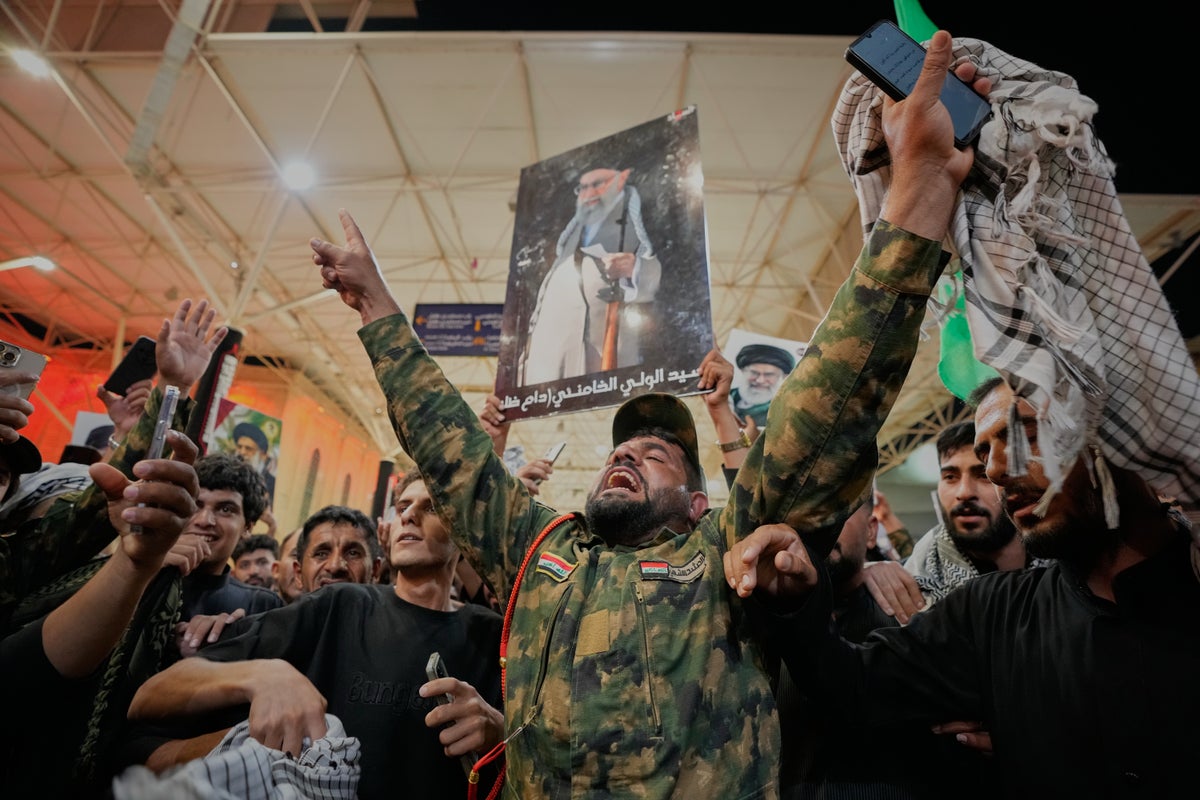
The timing of this entire flare-up caught many casual observers off guard. The attacks on shipping and the subsequent American strikes occurred right in the middle of a massive, dayslong public funeral for Iran’s late Supreme Leader, Ayatollah Ali Khamenei. Khamenei was killed in the opening hours of the war on February 28, and his prolonged burial process was widely expected to be a period of relative quiet and mandatory mourning.
Many diplomatic analysts assumed that Tehran would keep its head down until the funeral ceremonies concluded on Thursday. The reality on the ground was far uglier. The massive crowds filling the streets of Tehran weren't just mourning. They were actively chanting for the deaths of U.S. President Donald Trump and Israeli Prime Minister Benjamin Netanyahu. The political atmosphere inside Iran is incredibly volatile right now. The regime's hardliners are fighting for survival and dominance in the post-Khamenei power vacuum.
Showing weakness during the Supreme Leader's funeral is a luxury the current leadership cannot afford. This explains why Parliament Speaker Mohammad Bagher Qalibaf took to social media right after the U.S. strikes to issue a defiant public statement. He insisted that the era of Western bullying was over and declared that Iran would never fold under military pressure. For the internal audience in Tehran, launching attacks on international tankers was a calculated show of strength designed to prove that the regime remains functional and dangerous despite losing its top leader.
The Fatal Flaw in the 60-Day Transit Deal
The ultimate tragedy of this escalation is that it was entirely predictable. The interim memorandum of understanding signed earlier this summer gave both sides 60 days to hammer out a final diplomatic settlement. Pakistan has been acting as a key mediator, trying to keep both delegations talking. But the core dispute over the Strait of Hormuz is fundamentally unfixable through standard diplomatic compromise.
Under the temporary terms, both nations agreed that international merchant ships could pass through the channel without paying specialized transit charges for two months. However, the agreement left a massive, glaring loophole regarding operational control. Tehran firmly insists that because the shipping channels pass through its territorial waters, it has the absolute right to dictate the exact paths vessels take and eventually levy hefty transit fees once the 60-day window expires.
The Core Conflict over the Waterway:
- US/Gulf Position: International waterway, historic free transit, use Omani routes freely.
- Iran Position: Sovereign territorial waters, mandatory Iranian routing, future transit fees.
The United States, alongside the Western maritime alliance and the Gulf Arab states, completely rejects this stance. They view the channel as an international waterway governed by decades of established maritime law that guarantees transit rights without interference. When the U.S. Navy began actively routing inbound and outbound traffic closer to the Omani side of the strait to bypass Iranian radar installations, Tehran viewed it as a direct violation of their sovereign authority. They chose to enforce their perceived borders with anti-ship missiles, effectively killing the peace process before the formal technical talks could even resume.
What Happens Next on the Water
The breakdown of this ceasefire leaves the international community with very few diplomatic options. President Trump was in Turkey attending a high-stakes NATO summit when the strikes occurred, using the moment to demand increased defense spending from European allies while demonstrating American military willingness to act alone in the Middle East. The message to both allies and adversaries is unmistakable. The current administration has zero interest in protracted, strategic patience if American-aligned shipping is compromised.
For businesses, shipping syndicates, and energy analysts navigating this crisis, the immediate future requires concrete tactical shifts rather than waiting for another diplomatic breakthrough.
First, commercial maritime operations must completely abandon any expectation of safety within the traditional shipping lanes of the Persian Gulf without dedicated military escorts. Companies operating tankers in the region should immediately coordinate with the multinational maritime body overseen by the U.S. Navy's 5th Fleet to integrate into formal convoy systems.
Second, energy logistics firms must rapidly accelerate their reliance on alternative overland pipelines, such as East-West routes through Saudi Arabia, to bypass the chokepoint entirely. The risk premium for insuring hulls moving through the channel is going to skyrocket over the next 48 hours, making alternative routing economically viable despite the higher initial infrastructure costs.
Finally, regional corporate entities operating out of Bahrain and Kuwait need to review their internal emergency readiness protocols immediately. The reality of early morning missile alerts isn't going away anytime soon. Iran has clearly demonstrated that whenever its homeland is struck, it will use its extensive missile and drone inventory to hold neighboring civilian and military infrastructure hostage. The interim deal is effectively a dead letter. The real conflict has resumed, and it's going to get much worse before it gets any better.

:max_bytes(150000):strip_icc()/TAL-nassau-bahamas-BEAUTCARIB0323-4fbfce903e5a4418b895e03717e3de0d.jpg)