The Vatican just dropped a theological nuclear bomb. If you think church politics are limited to dusty archives and quiet handshakes, what happened in Écône, Switzerland will change your mind.
Pope Leo XIV issued an ultimatum. The Society of Saint Pius X (SSPX) ignored it. Now, the Vatican has excommunicated not just the rebel bishops who led the defiance, but also declared the order's 751 priests to be in formal schism.
Even the lay faithful who back them are facing the ultimate spiritual penalty.
This isn't a minor administrative tiff. It's an all-out civil war over the soul of the world's largest religious institution. If you want to understand why a group of lace-clad traditionalists just broke Rome's patience, you need to look past the surface drama.
The Breaking Point in the Swiss Alps
The immediate trigger for this crisis was a succession bottleneck. The SSPX relies on its own bishops to ordain new priests and keep its global network of chapels functioning. Without new bishops, the entire operation—which serves an estimated 600,000 faithful worldwide—faces a slow, logistical death.
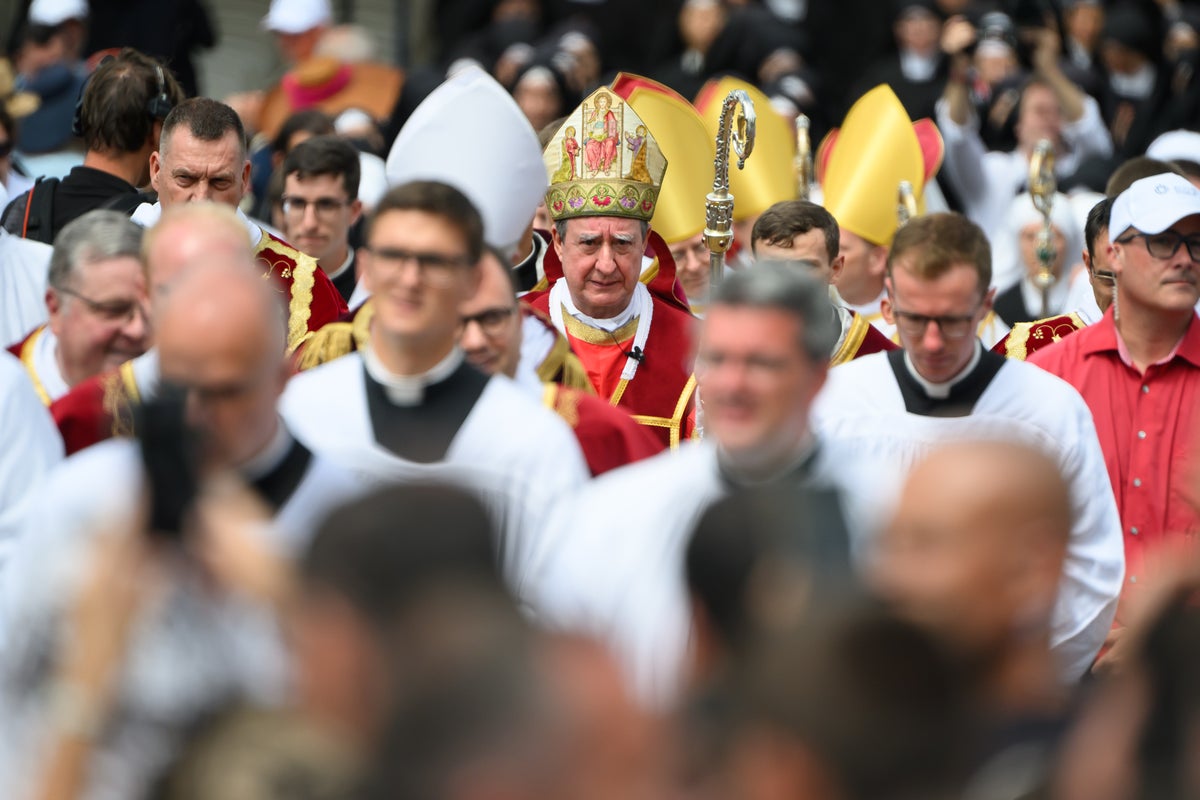
On July 1, 2026, SSPX Bishop Alfonso de Galarreta laid hands on four new candidates at the group’s international seminary. He did this despite a direct, personal letter from Pope Leo XIV warning that consecrating bishops without papal approval is a sin of extreme gravity.
The response from Rome arrived within 24 hours.
Cardinal Víctor Manuel Fernández, chief of the Dicastery for the Doctrine of the Faith, leveled the hammer. The Vatican's decree didn't stop at the men on the altar. It took a sharp, aggressive turn by targeting the entire infrastructure of the society.
- The Six Bishops: Automatic excommunication (latae sententiae) for the two consecrators and the four newly ordained men.
- The Priests: All 751 SSPX clergy are officially designated as schismatics.
- The Sacraments: The Vatican completely revoked faculties for confessions and marriages. In the eyes of Rome, these sacraments administered by SSPX priests are now completely invalid.
- The Laity: Regular churchgoers who formally align with the SSPX's doctrinal defiance are explicitly warned that they are also excommunicated.
What Most People Get Wrong About the SSPX
Many commentators paint the SSPX as a simple, fringe group that just likes the Latin Mass. That is a fundamental misunderstanding.
The roots of this fight go back to the Second Vatican Council (1962–1965). French Archbishop Marcel Lefebvre founded the SSPX in 1970 because he believed the council's modernizing reforms were a betrayal of historical Catholicism. The group didn't just reject the vernacular Mass; they rejected the council's teachings on religious liberty, ecumenism, and the idea that other religions hold pieces of spiritual truth.
To the SSPX, they aren't rebels. They see themselves as the true remnant preserving authentic Catholicism while Rome wanders into secular compromise.
This isn't the first time they've crossed this line. Lefebvre pulled the exact same stunt in 1988, consecrating four bishops and triggering a previous wave of excommunications. Pope Benedict XVI later lifted those personal penalties in 2009 to try and build a bridge. Pope Francis even granted them temporary faculties to hear valid confessions during the Year of Mercy—a concession he later extended.
All of that progress just went up in smoke. By repeating the 1988 offense without a papal mandate, the SSPX forced Pope Leo’s hand.
The Brutal Reality for the Pews
If you're an ordinary Catholic who prefers the traditional liturgy, this decree puts you in an impossible position.
The Vatican made a distinction that complicates things for regular churchgoers. If you attend an SSPX chapel purely for spiritual or liturgical reasons, but you still recognize the Pope's authority, you aren't automatically barred from the Church. But if you embrace their stance that Rome is in error, you're officially outside the tent.
Worse, the invalidation of confessions and marriages introduces absolute chaos into the lives of families who rely on these chapels. A marriage that Rome considers invalid affects inheritance, annulments, and standing in mainstream parishes.
Mainstream bishops are already setting up alternative Latin Masses to siphon off the faithful who want tradition but fear schism. The SSPX leadership, however, is dug in. They argue that a "state of necessity" justifies their survival tactics, claiming canon law allows emergency actions when the faith itself is under threat.
Your Next Steps
If this fracturing of the Church affects your parish life or leaves you confused about valid sacraments, don't rely on internet forums or heated social media threads to figure out where you stand.
- Read the official document: Look up the formal decree issued by the Dicastery for the Doctrine of the Faith to understand the exact canonical language used regarding "formal adherence."
- Check your local diocese: Mainstream bishops are updating listings for diocesan Latin Masses (celebrated under strict, approved conditions) for those who want the old liturgy without the canonical risk.
- Consult a canon lawyer: If you or your children received sacraments through an SSPX chapel recently, seek direct guidance from a diocesan canonist to clarify your sacramental status under the new rules.