Talk is cheap. When it comes to regional geopolitics, it's downright free. For years, Beijing's top diplomats have traveled throughout Southeast Asia with a highly specific script. The core message is always the same: China doesn't want to become a regional hegemon. It won't bully its neighbors. It wants shared prosperity, not domination.
It sounds great on paper. But if you look at what's actually happening on the water, the script doesn't match the reality. Southeast Asian nations are caught between China's public relations charm offensive and its highly aggressive maritime strategy. The gap between what Beijing says and what it does has never been wider.
The Rhetoric of Non-Hegemony Meets Maritime Reality
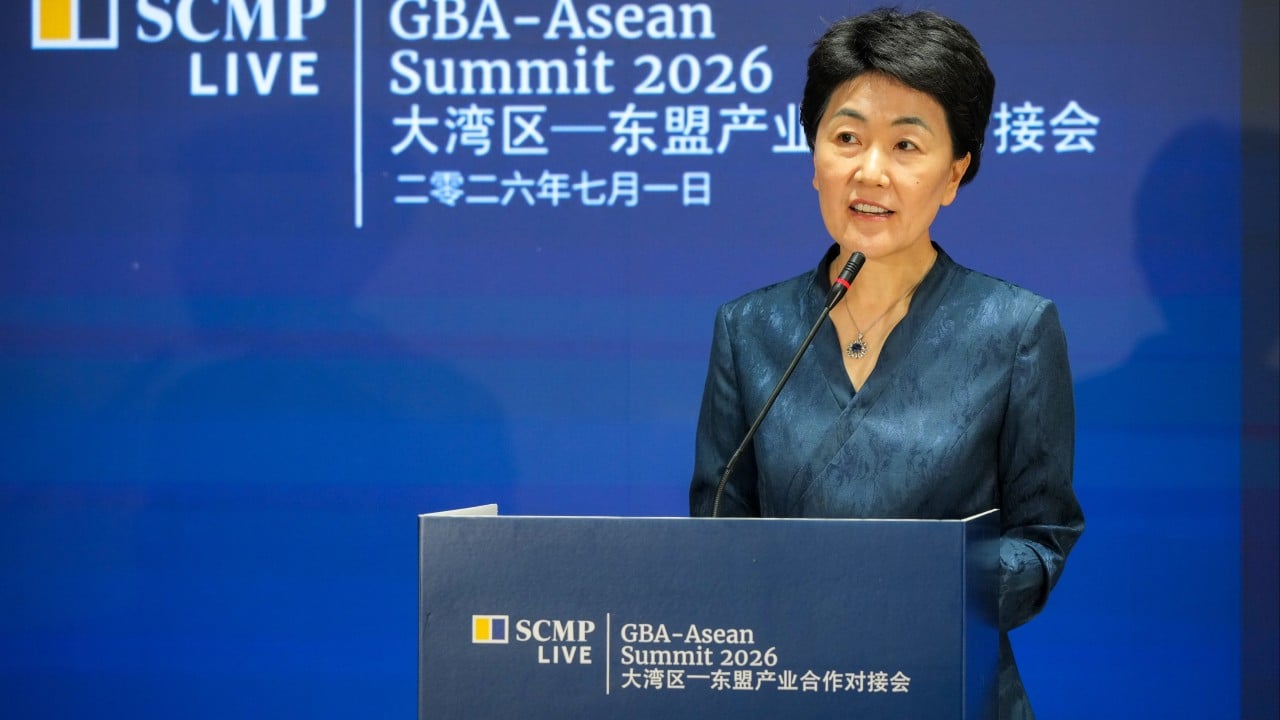
Chinese state media and high-ranking officials frequently remind the Association of Southeast Asian Nations (ASEAN) that China is a "good neighbor, good friend, and good partner." They explicitly state that Beijing rejects power politics. At major summits, the official line emphasizes that China will never seek a sphere of influence or take advantage of its massive size to squeeze smaller states.
But talk to anyone managing maritime security in Manila, Hanoi, or Jakarta, and you'll get a very different story.
While diplomats offer handshakes in air-conditioned conference rooms, coast guard cutters and maritime militia vessels are physically blocking Southeast Asian supply ships. The South China Sea has turned into a high-stakes arena of gray-zone tactics. We aren't talking about theoretical disagreements. We're talking about water cannons shattering the windshields of Philippine resupply boats at Second Thomas Shoal. We're talking about unilateral fishing bans that cut off Vietnamese fishers from their historical livelihoods.
This is the central contradiction of modern Asian geopolitics. Beijing expects its neighbors to accept its peaceful intentions blindly, even as it militarizes artificial islands right in their backyards.
Why the Charm Offensive Is Falling Flat
You can't build trust when your security strategy relies on intimidation. Beijing's message isn't landing anymore because ASEAN states judge security by capabilities and actions, not promises.
The Double Standard on International Law
Beijing claims it wants a rules-based order, but only on its own terms. It completely ignored the 2016 arbitral tribunal ruling in The Hague, which invalidated its expansive "nine-dash line" claims. When a superpower decides which international laws apply to it and which don't, neighboring countries naturally get nervous.
The Code of Conduct Stalemate
Negotiations for a binding South China Sea Code of Conduct (COC) have dragged on for over two decades. Why? Because Beijing wants to use the agreement to restrict Southeast Asian nations from conducting military drills with external powers like the United States or Japan. It also wants to limit joint oil and gas exploration with foreign firms. ASEAN members see right through this. They know that signing such a deal would basically hand China a veto over their own foreign policies.
The Irony of "External Interference"
Beijing constantly warns ASEAN to beware of "external interference," pointing the finger directly at Washington. The logic is simple: if the US leaves the region, China and ASEAN can settle things peacefully. But Southeast Asian capitals know exactly what an unweighted relationship with Beijing looks like. Without a global balance of power, smaller nations lose their leverage entirely. They don't want to choose between Washington and Beijing; they want a crowded room where no single power can dictate the rules.
The Strategic Fractures Within ASEAN
It's a mistake to treat ASEAN as a single, unified block. Beijing knows this and uses it to its advantage. The bloc is fundamentally split on how to handle its giant neighbor, making a unified front nearly impossible to maintain.
- The Frontline Claimants: The Philippines and Vietnam bear the brunt of China's maritime assertiveness. Manila has taken a loud, transparent approach, filming and exposing Chinese maneuvers to the world. Vietnam plays a quieter but equally firm game of upgrading its own island outposts.
- The Hedgers: Malaysia and Indonesia try to balance their deep economic ties with China against their maritime sovereignty. They criticize aggressive acts but prefer quiet diplomacy to public confrontations.
- The Economic Dependents: Landlocked Laos and Cambodia rely so heavily on Chinese investment and loans that they consistently block strong, unified ASEAN statements regarding the South China Sea.
This internal division means ASEAN's collective response is usually watered down. It's a feature of the system, not a bug, and Beijing plays these internal dynamics beautifully.
What Happens Next
If Beijing genuinely wants to convince Southeast Asia that it doesn't harbor hegemonic ambitions, it has to change its behavior. Words won't cut it anymore. The region is watching closely, and the next steps are practical, not diplomatic.
First, stop the aggressive gray-zone tactics against Philippine and Vietnamese vessels. Professional navies and coast guards don't use swarming tactics or ramming maneuvers against their neighbors.
Second, finalize a South China Sea Code of Conduct that is legally binding, transparent, and fully aligned with the United Nations Convention on the Law of the Sea (UNCLOS). The agreement cannot be a tool to push out other global trading partners or restrict the sovereign rights of ASEAN members.
Finally, accept that Southeast Asian nations have the right to choose their own security partners. Pursuing ties with the US, Australia, or Japan isn't an act of aggression against China; it's a direct response to the anxiety that Beijing's own heavy-handed actions have created. Until China addresses these core issues, its anti-hegemony rhetoric will continue to ring hollow across the region.