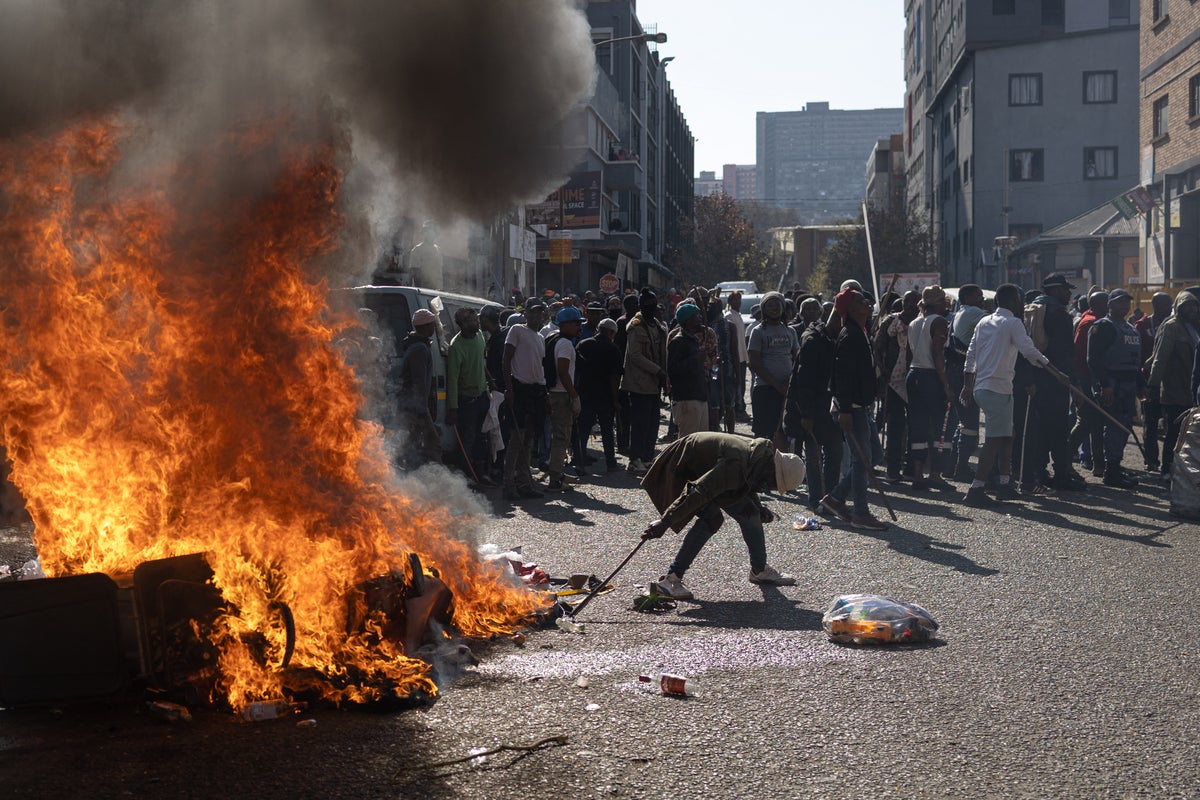
Nelson Mandela stood before a jubilant crowd in 1994 and promised a "rainbow nation at peace with itself and the world." It was a beautiful vision. Today, that vision is choking on tear gas and burning tires.
If you want to understand why South Africa's major cities just saw thousands of angry protesters marching through the streets, you have to look past the political speeches. An unofficial June 30 deadline—concocted by aggressive vigilante groups demanding that all undocumented foreign nationals pack up and leave—has triggered an absolute pressure cooker.
Governments like Zimbabwe, Malawi, and Uganda are literally organizing emergency buses and planes to evacuate their citizens. More than 25,000 migrants have fled the country or are currently camping outside consulates, terrified for their lives. The reality on the ground isn't just a political disagreement. It's a full-blown humanitarian crisis that exposes the deep, structural failures of the post-apartheid era.
The Scapegoating of the Vulnerable
Let's look at the numbers. According to South Africa's 2022 census, immigrants make up roughly 4% of the population. That's a tiny minority. Yet, if you listen to the rhetoric echoing through Durban, Johannesburg, and Cape Town, you'd think foreign nationals were running a coordinated takeover.
Grassroots movements like March and March—founded in 2024—and older vigilante networks like Operation Dudula have weaponized local frustration. They claim they're just "enforcing the law" and pushing for social well-being. But the actions on the ground tell a completely different story.
- Foreign-owned shops looted and burned.
- Identity document "verifications" forced by private citizens at workplaces.
- Vigilantes blocking pregnant women and sick children from entering public clinics.
It's easy to blame the person next to you when you can't feed your family. South Africa's real unemployment rate sits at a staggering 30% to 43%, depending on the metric and region you look at. Infrastructure is crumbling, rolling blackouts have crippled local businesses, and violent crime is a constant threat.
But migrants didn't cause the state's failure to deliver basic services. They didn't cause the corruption that drained municipal budgets. They're just an easy target.
When Political Failures Fuel Vigilantism
The High Court of South Africa tried to step in. In late 2025, the court found Operation Dudula guilty of intimidation, harassment, and incitement of hate speech. The ruling legally obligated the government to implement a National Action Plan to combat xenophobia.
Did it work? Not really.
President Cyril Ramaphosa regularly gives speeches insisting that immigration enforcement belongs to the state, not private citizens. But his words lack teeth. When politicians look for votes, they often pander to anti-immigrant sentiment instead of fixing the broken borders or solving the jobs crisis.
This creates a dangerous vacuum. Groups like March and March, led by figures like Jacinta Ngobese-Zuma, step right into it. They've spent months targeting everything from primary schools to government hospitals, building up to the June 30 deadline. Now that the date has passed, organizers promise weekly protests until every undocumented migrant is gone.
The Myth vs The Reality of Migration
A lot of locals genuinely believe that migrants are stealing jobs and driving up crime rates. It's a sentiment shared by poor communities and unemployed youth who feel completely abandoned by the African National Congress (ANC) government.
Independent research, however, routinely debuts a different reality. Most migrants are micro-entrepreneurs. They open small corner shops, informal markets, and repair stalls that actually inject money into township economies. They buy goods from South African wholesalers and, in many cases, employ locals.
Furthermore, the idea that wiping out 4% of the population will suddenly fix a 40% unemployment rate is mathematically absurd. It's a dangerous distraction from the real issue: a stagnant economy that isn't growing fast enough to absorb millions of young people entering the workforce every year.
What Needs to Happen Next
The current trajectory is unsustainable. If the state continues to tolerate citizen-led groups acting as border police, the violence will only get worse. Here is what actually needs to happen to stabilize the situation:
- Enforce Judicial Orders: The government must aggressively implement the 2025 High Court mandate, creating early-warning systems to stop xenophobic attacks before they start.
- Hold Vigilante Leadership Accountable: Protesting is a constitutional right, but extortion, intimidation at hospitals, and forced evictions are criminal offenses. Leaders inciting violence must face prosecution.
- Overhaul the Department of Home Affairs: The backlog in asylum seeker permits and corruption at border posts makes legal regularisation almost impossible for migrants who want to follow the rules.
If you're tracking the stability of the region, don't look away just because the June 30 deadline has passed. The underlying economic misery hasn't changed, which means the fuse is still lit.
To see how these tensions are playing out on the streets and hear directly from the protest organizers and affected communities, watch this detailed broadcast on the South Africa Anti-Immigrant Protest. This video gives a raw look at the massive crowds gathering in Durban and the intense pressure surrounding the recent deadlines.