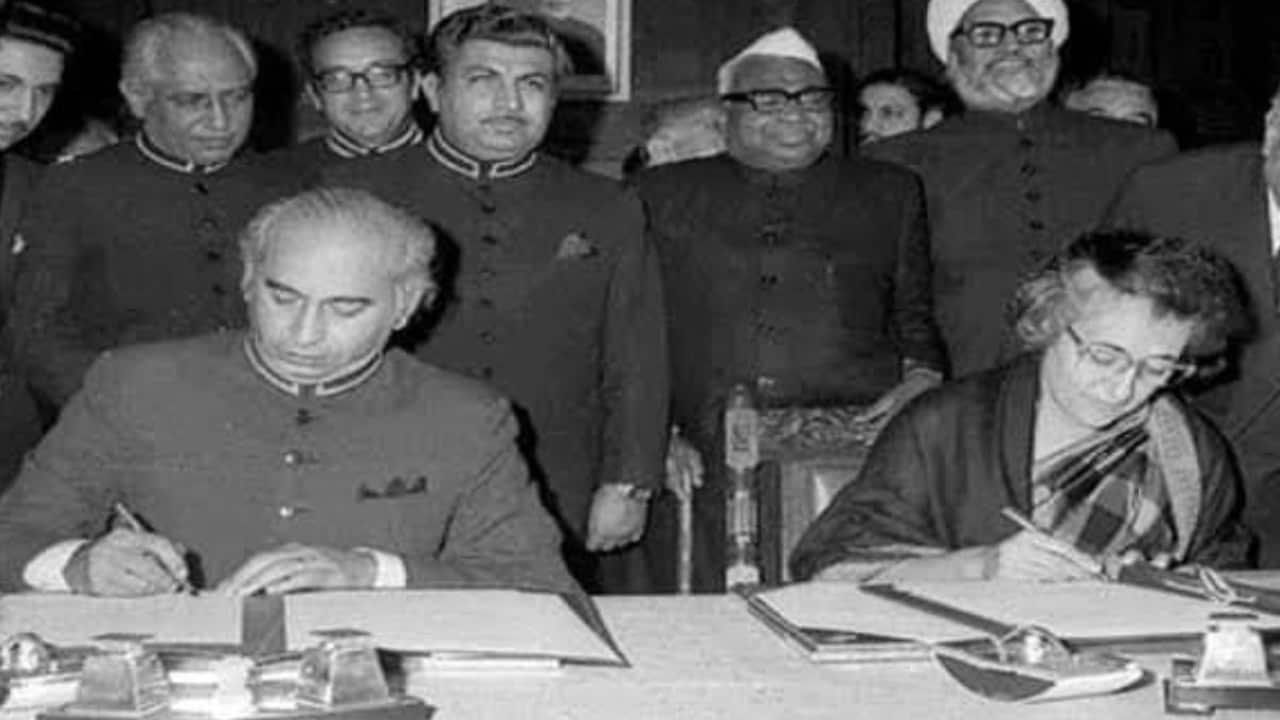
On July 2, 1972, Indian Prime Minister Indira Gandhi and Pakistani President Zulfikar Ali Bhutto signed a piece of paper in a quiet hill station. It was supposed to end decades of bloodshed. Fresh off a crushing defeat in the 1971 war, which saw the creation of Bangladesh and left over 90,000 Pakistani soldiers in Indian custody, Islamabad needed a lifeline. New Delhi thought it had secured a permanent framework for peace.
Instead, the Simla Agreement became a masterclass in how a defeated nation can outmaneuver its victor at the diplomatic table. Learn more on a related topic: this related article.
If you look at the text of the treaty, it seems ironclad. It turned the old 1949 ceasefire line into the Line of Control (LoC) and legally bound both nations to settle their differences exclusively through bilateral negotiations. No third-party meddling. No international forums. No force.
Yet, decades later, the agreement is basically a ghost. Headlines still pop up whenever regional tensions flare, but the reality on the ground tells a story of systematic betrayal. Pakistan didn't just bend the rules of the Simla Agreement; it broke the treaty's foundational pillars. More reporting by The Guardian explores related views on this issue.
The Big Illusion of Bilateralism
The most important clause of the Simla Agreement was bilateralism. Section 1(ii) explicitly states that both countries are resolved to settle their differences by peaceful means through bilateral negotiations.
This was India’s primary strategic objective. New Delhi wanted the United Nations out of the picture. They wanted to bury old UN resolutions from the late 1940s that called for a plebiscite under conditions Pakistan had already failed to meet. Bhutto agreed to this on paper because he had no cards left to play. His country was broken, and India held his army hostage.
But as soon as those 90,000 prisoners of war returned home and Pakistan recovered its lost territory, the narrative shifted.
Every single Pakistani leader since 1972 has routinely broken this promise. Go to the UN General Assembly in New York during any session, and you'll hear the Pakistani delegation demanding international intervention in Kashmir. They’ve tried to pull Beijing, Washington, and Islamic nations into the dispute for decades. By constantly demanding third-party mediation, Islamabad treats the very core of the Simla Agreement as an optional suggestion rather than a binding legal obligation.
Violating the Line of Control
The agreement transformed the old military ceasefire line into the Line of Control. Both sides explicitly pledged that "neither side shall seek to alter it unilaterally, irrespective of mutual differences and legal interpretations." They also promised to refrain from the threat or the use of force in violation of this line.
Then came 1999.
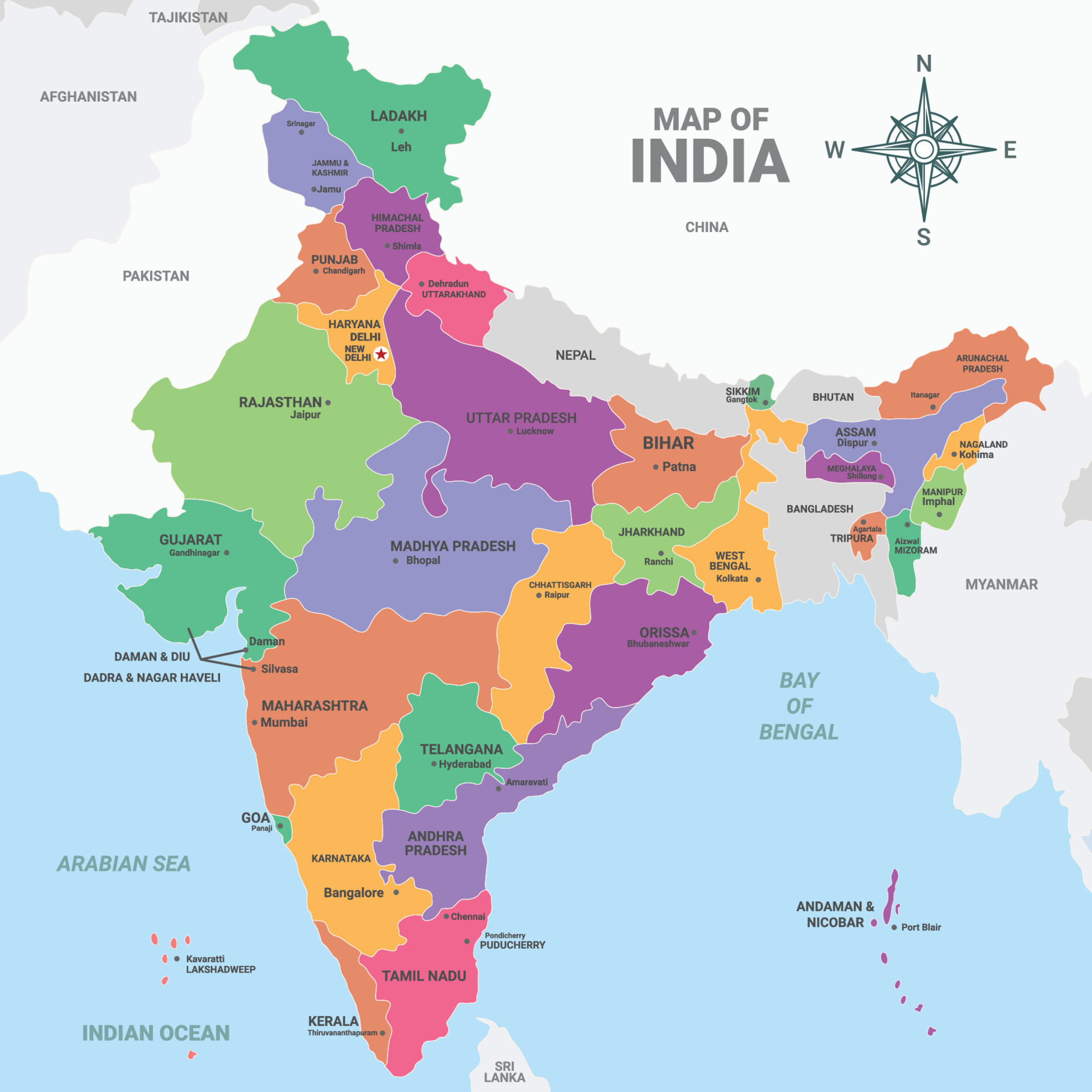
The Kargil War wasn't a minor border skirmish. It was a massive, planned military incursion. Pakistani troops, disguised as northern light infantry and militants, crossed the LoC to seize strategic heights overlooking India's National Highway 1A.
[Indian Territory] <--- (LoC Crossed by Pak Troops) <--- [Kargil Heights]
Kargil was a direct, unambiguous violation of the Simla Agreement. It destroyed whatever institutional trust was left. Pakistan tried to use surprise military force to unilaterally alter the status quo of the LoC, exactly what they swore they wouldn't do in 1972.
The Cross-Border Proxy War
Section 1(ii) of the treaty also states that both sides "shall prevent the organisation, assistance or encouragement of any acts detrimental to the maintenance of peaceful and harmonious relations."
By the late 1980s, Islamabad abandoned this entirely.
Instead of conventional warfare—which they knew they couldn't win after 1971—they shifted to a strategy of a proxy war. The subversion in the Kashmir Valley throughout the 1990s and 2000s, the attack on the Indian Parliament in 2001, and the 2008 Mumbai attacks carried out by Lashkar-e-Taiba were all operations built on infrastructure that the Simla Agreement prohibited. Providing safe havens, funding, and training to militant groups to cross the LoC directly violates the pledge to prevent acts detrimental to peace.
The Historic Mistake at the Diplomatic Table
Why did India let this happen? It comes down to a classic mismatch in diplomatic calculation.
Indira Gandhi operated under the assumption that generosity would build a lasting peace. She believed that by returning over 13,000 square kilometers of captured Pakistani territory and releasing the prisoners of war without demanding a final, formalized border resolution on Kashmir, she was empowering a civilian leader to steer Pakistan away from military dictatorship.
Bhutto played on this empathy. He reportedly told Gandhi in private conversations that he couldn't formalize the LoC as an international border right away because his domestic audience would overthrow him. He begged for time to prepare his public. Gandhi took him at his word.
It was a major strategic miscalculation. Bhutto went home, consolidated his power, and eventually faced his own domestic demise anyway when General Zia-ul-Haq took over and accelerated the radicalization of the state apparatus. The promise of gradual normalization evaporated.
Where Things Stand Right Now
Decades of these violations have eroded the treaty to a point of near-irrelevance. Recent years have seen the final diplomatic unraveling. Following India's domestic legislative changes regarding Jammu and Kashmir's special status, the diplomatic architecture has fractured completely, with retaliatory suspensions and threats of total abandonment flying from both capitals.
When a state selectively honors only the parts of a treaty that suit its immediate survival, the agreement ceases to be an instrument of peace. It becomes a historical artifact. The lesson of July 2, 1972, is simple: signatures on a page are only as strong as the political will to enforce them, and goodwill without verification is a dangerous strategy in geopolitics.
If you want to understand the modern security environment of South Asia, stop reading the text of old treaties. Look instead at the reality of the borders, the structural asymmetry of the conflict, and the decades of broken promises that brought the region to this point.