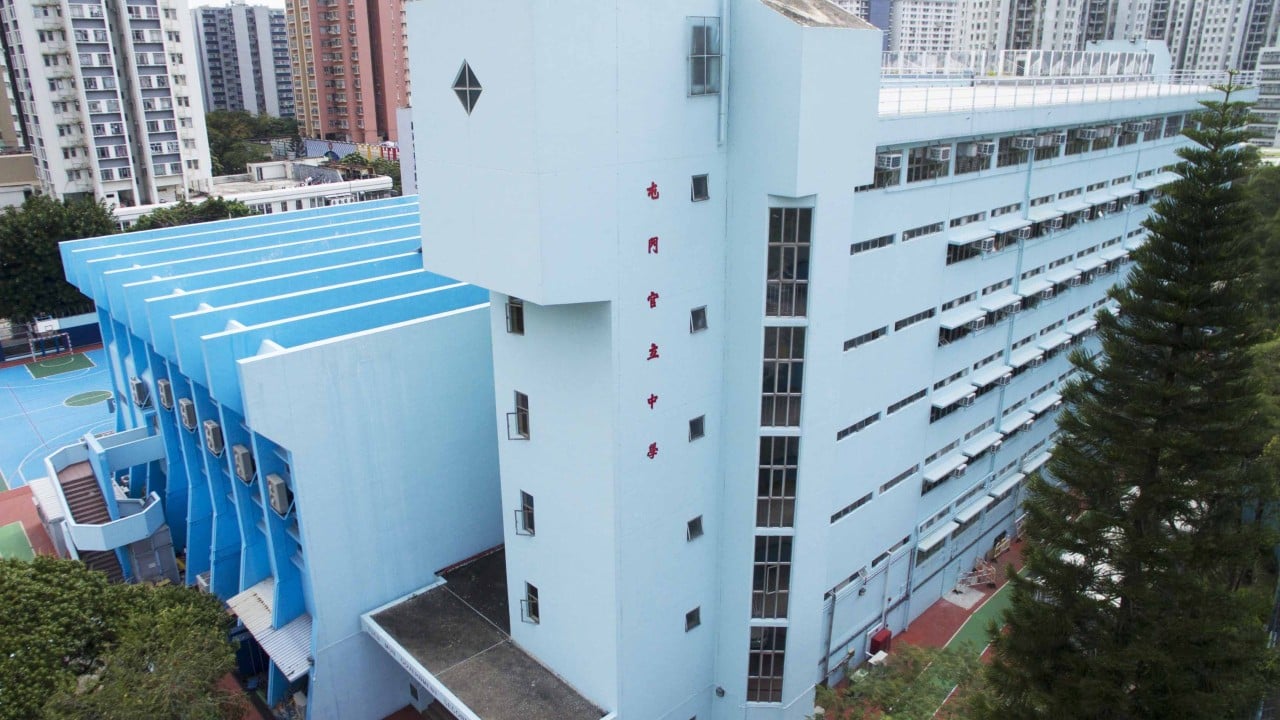
A chaotic Friday afternoon rush shouldn't end with a teenager fighting for his life in an intensive care unit. Yet that's exactly what happened at Tuen Mun Government Secondary School when a routine dismissal bell turned into a nightmare. A 16-year-old boy is now in critical condition with a suspected brain hemorrhage after trying to climb into his classroom through a window.
Most people look at a headline like this and assume it's just a case of kids being reckless. They blame the teenager for climbing through a window instead of waiting in line. That perspective completely misses the underlying crisis brewing in our daily school environments. When hallways become bottlenecks and classrooms turn into gridlock, teenagers make impulsive decisions to bypass the crowd.
This incident isn't a random freak accident. It's a loud warning about the physical pressure cooker environment of modern school campuses during peak hours.
The Real Story Behind the Tuen Mun School Incident
Let's look at what actually happened shortly before 3:00 PM on that Friday. The final bell was about to ring or had just rung. Dozens of students rushed back toward their home classrooms to grab their school bags and head home for the weekend. Anyone who has stepped foot inside a public secondary school during dismissal knows the absolute chaos of this window of time.
The hallway outside the classroom was completely blocked by a massive wall of students. Frustrated by the gridlock and desperate to grab his bag, the 16-year-old decided to bypass the corridor entirely. He stepped onto the exterior ledger or ledge to climb through the open classroom window. It's a shortcut that students have probably used or contemplated before when corridors freeze up.
While he was navigating the window frame, a 14-year-old classmate came up from behind. In the scramble, the younger student knocked into him. The impact sent the 16-year-old tumbling backward into the classroom.
Initial panic led to wild rumors about violent schoolyard bullying. The police even classified the case under the heavy label of wounding, pointing the investigation toward the Tuen Mun district crime squad. But the emerging details paint a different picture. This wasn't a malicious ambush. It was a tragic, crowded accident born out of poor traffic flow and teenage impatience.
The immediate physical aftermath seemed deceptively minor. The boy landed on his buttocks. He scraped his left middle finger. He didn't break any limbs, and he didn't instantly pass out. But within minutes, the hidden trauma manifested. He complained of severe dizziness and intense nausea before losing consciousness on the school floor. Paramedics rushed him to Tuen Mun Hospital, where doctors discovered the true horror: a major intracranial bleed.
How a Simple Fall on the Buttocks Causes a Brain Hemorrhage
One of the most baffling aspects of this case for the general public is the medical reality of the injury. How does a teenager fall on his rear end inside a classroom and end up with a life-threatening brain hemorrhage? It sounds impossible. You expect a broken tailbone or a bruised hip, not emergency neurosurgery.
The answer lies in the physics of blunt force trauma and spinal transmission.
When a human body falls from a height and lands squarely on its buttocks, the kinetic energy doesn't just vanish into the floor. The force travels upward. It punches through the pelvis, races up the spinal column, and hits the base of the skull with immense velocity. This is a classic deceleration injury.
Inside the skull, the brain sits suspended in cerebrospinal fluid. When that massive shockwave hits the skull from the spine, the brain violently shifts. It slams against the hard, bony interior walls of the cranium. This movement can tear the delicate bridging veins or small arteries that run along the surface of the brain.
Medical experts refer to this as a contre-coup injury. The damage occurs opposite to or far away from the point of impact. In this case, the impact was at the base of the spine, but the damage shattered the blood vessels inside the head.
The onset of symptoms explains why the boy seemed fine immediately after the fall. Intracranial bleeding often builds up slowly. As blood leaks out of the torn vessels, it creates a hematoma inside the closed skull. Because the skull cannot expand, the growing pool of blood puts intense pressure on the brain tissue.
The initial signs of this pressure are exactly what the boy experienced:
- Sudden, overwhelming dizziness as balance centers are compromised.
- Intense nausea and vomiting triggered by rising intracranial pressure.
- Rapid loss of consciousness as the brain stem gets compressed.
By the time the boy fainted, the medical situation had already turned into an extreme emergency. Every minute that passes without pressure relief risks permanent neurological damage or death.
Why Dismissing This as a Freak Accident is a Mistake
School administrators love to label these events as isolated incidents that nobody could predict. They issue statements about counseling teams, express deep concern, and promise to support the family. Then they go right back to business as usual.
That approach is dangerous. If we treat this Tuen Mun incident as a one-off stroke of bad luck, we're ignoring the structural design flaws that caused it.
The root cause here is an absolute failure in school crowd dynamics. School buildings are often designed with static occupancy numbers in mind. Architects calculate how many students can sit in a room, but they rarely optimize for the fluid movement of hundreds of hyperactive teenagers moving simultaneously.
When a school forces hundreds of kids into narrow corridors all at once to retrieve bags, it creates a stampede mentality. Space disappears. Tempers flare. Normal pathways become completely unusable. When human beings encounter a blocked path, their survival instinct is to find an alternative route. For a teenager, that alternative route is an open window.
We also have to look at the physical mechanics of the classroom windows themselves. Why can a student easily climb through a window in a modern school building? Most commercial structures use window limiters or restrictors that prevent them from opening wide enough for a human body to pass through. If these windows lacked functional safety latches or restrictors, the school failed in its basic duty of care.
Legal Realities of School Yard Wounding Cases
The involvement of the Tuen Mun district crime squad and the classification of "wounding" has terrified parents across the city. Wounding is a serious criminal offense. It carries heavy penalties under Hong Kong law, even for juveniles.
Because the classmate involved is 14 years old, he has reached the age of criminal responsibility. The law treats individuals aged 14 and older as capable of committing criminal acts. However, the legal system handles them through a specific framework that balances accountability with rehabilitation.
For a wounding charge to stick in a courtroom, prosecutors usually need to prove intent or extreme recklessness. If the 14-year-old simply stumbled or bumped into his classmate while trying to squeeze through the same crowded area, proving criminal intent becomes almost impossible. The defense will argue that this was a pure accident caused by a hazardous environment, shifting the moral blame back onto the institution.
Even if no criminal charges are ultimately filed, the civil liabilities are massive. The school and the Education Bureau face serious scrutiny over supervision. Where were the teachers when this dismissal rush was happening? Why was there no staff presence to police the corridors and stop students from scaling windows?
Schools operate under the legal principle of in loco parentis, meaning they stand in the place of a parent. They have a legal obligation to maintain a safe environment. Leaving a crowded corridor unsupervised to the point where kids are climbing through windows is a massive breach of that duty.
Immediate Safety Adjustments Every School Must Make Now
We can't wait for a bureaucratic task force to spend six months writing a report while another student gets hurt. Schools need to change how they manage daily dismissals immediately.
First, get rid of the simultaneous dismissal rush. Staggering the end of the day by just five minutes between different grade levels completely alters the crowd density in the hallways. If Form 1 and Form 2 leave five minutes before Form 3 and Form 4, the crowd volume cuts in half. The bottlenecks vanish, and the urge to take dangerous shortcuts disappears.
Second, install heavy-duty window restrictors on every single classroom window above the ground floor. No student should ever be able to open a school window wide enough to climb through. It's a cheap, mechanical fix that entirely removes the physical possibility of a window fall. If a window can only open four inches to let fresh air in, this accident never happens.
Third, re-engineer how school bags and personal belongings are stored. Forcing students to scramble back into crowded classrooms at the absolute peak of dismissal traffic is a logistical nightmare. Move lockers to open areas or change the schedule so that bag collection happens during a dedicated, calm period before the final bell rings.
The boy in Tuen Mun Hospital is fighting a brutal battle because of a chaotic hallway scramble. Let's stop acting like this was an unavoidable twist of fate. It was a structural failure, and it's time to fix the environment before the next bell rings.



.jpg)