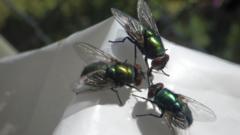
Imagine opening your backdoor and instantly getting hit in the face by a wall of buzzing insects. This isn't a scene from a horror flick. It's the reality for thousands of coastal residents right now. Entire communities are dealing with what locals describe as a "biblical" surge of flies.
The issue has hit towns like Great Bromley and coastal stretches of Essex and South Wales hard. It's not just a few annoying bugs over a picnic. We're talking hundreds of flies covering kitchen counters, landing on food before it hits the table, and forcing families to eat under mosquito nets indoors.
Local pubs have seen regulars showing up armed with electric zappers. Kitchens are shutting down because staff can't guarantee food hygiene for more than a few minutes. If you think a standard can of supermarket bug spray will solve this, you're wrong. These communities are facing an ecological perfect storm, and the traditional playbook isn't working.
The Real Culprits Behind the Coastal Swarms
Most people assume a fly infestation means someone left a bin open or there's a dead animal nearby. That's a massive misconception. When swarms reach this scale, the source is always environmental and systemic.
Local councils and environmental protection teams have been scrambling to track down the epicenter. Two primary suspects usually emerge during coastal infestations of this magnitude: decaying marine organic matter and agricultural shifts.
Seaweed Accumulation and Weather Patterns
Warm weather combined with specific tidal patterns often leaves massive banks of seaweed rotting on beaches. This decaying kelp creates a high-moisture, nutrient-rich environment. It serves as the ultimate breeding ground for seaweed flies (Coelopa frigida) and beach-dwelling gnats. When temperatures spike, their life cycle accelerates drastically. Eggs turn into breeding adults in days rather than weeks.
The Organic Waste Crisis
Another driving factor is the management of green waste and food caddies. Across the UK, the push for organic waste recycling has flooded residential areas with small, nutrient-dense plastic bins. If households don't seal these bins perfectly, or if councils miss a collection day during a heatwave, they become rapid-fire maggot factories.
What the Authorities Get Wrong About Pest Management
When a town gets plagued by insects, the standard bureaucratic response is to launch an investigation. Officials visit local farms, check recycling plants, and issue statements promising they're "liaising with external partners."
That doesn't help the person who just swatted fifty houseflies out of their baby's nursery.
The truth is, traditional pest control fails when dealing with open-air, macro-environmental swarms. You can't spray an entire coastline or a five-mile radius of residential properties with industrial pesticides without destroying the local ecosystem. It kills bees, poisons birds, and violates environmental laws.
Residents are basically left to fend for themselves while the official bodies pass the buck between environmental health, local councils, and the Environment Agency.
How to Reclaim Your Home from a Mass Infestation
If you're living through one of these swarms, relying on basic store-bought flypaper isn't going to cut it. Those tiny yellow strips get full within an hour. You need a multi-layered defense strategy to keep your living space liveable.
1. Seal the Perimeter with Physical Barriers
Don't bother opening windows to "air out" a hot house unless you have mesh screens installed. Standard fly screens are cheap and attach via velcro or magnetic strips. If the infestation is severe, look into commercial-grade strip curtains for your main exterior doors.
2. Ditch the Chemicals, Use Liquid Traps
Chemical aerosols are toxic to breathe in continuously and only kill the flies currently in the air. Instead, construct heavy-duty liquid traps.
Mix apple cider vinegar, a tablespoon of sugar, and a few drops of dish soap in wide bowls. The sweet scent draws them in, and the dish soap breaks the surface tension of the liquid, causing the flies to sink instantly. Place these outside your entry points to catch them before they get inside.
3. Starve Them Out
A fly can find sustenance in things you wouldn't even notice. A damp sponge by the sink, a drop of juice spilled under the fridge, or moist soil in a potted plant can keep a population thriving.
- Keep all fruit inside the refrigerator.
- Wash pet bowls immediately after they finish eating.
- Pour a small amount of bleach or boiling water down your drains at night to kill any larvae nesting in the grease traps.
The Long Road Ahead for Coastal Communities
We have to face the fact that these infestations aren't going away anytime soon. As summers get hotter and weather patterns become more erratic, coastal ecosystems will continue to shift. Towns will have to completely rethink how they manage waste, beach cleanliness, and urban pest control. Until councils implement systemic solutions like automated beach-clearing programs or modified waste collection schedules during peak heat, the burden falls squarely on residents.
Get your window mesh installed now. Stock up on apple cider vinegar. Don't wait for the council to solve a problem that's already buzzing inside your kitchen.