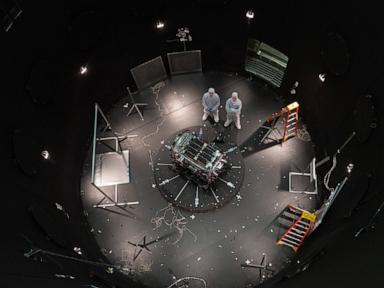
NASA just made a frantic, historic gamble in orbit. On Friday, July 3, 2026, a strange, three-armed robotic spacecraft blasted off from an atoll in the Pacific’s Marshall Islands. Mounted on a Northrop Grumman Pegasus XL rocket dropped from the belly of a carrier aircraft, its goal is simple yet incredibly nerve-wracking: intercept and save a dying $500 million space telescope before it plummets into the atmosphere and burns to ashes.
The target is the Neil Gehrels Swift Observatory. Since 2004, this telescope has acted as the ultimate cosmic first responder, capturing explosive gamma-ray bursts across the universe. It wasn't built to be serviced. It doesn't have a docking port. Yet, NASA is spending $30 million on a high-stakes salvage operation because the clock has officially run out.
The Hidden Culprit for Swift’s Downfall
Most people assume satellites just stay up there until we decide to turn them off. That's a massive misconception. Low Earth orbit is a messy place, and lately, the sun has been throwing an absolute tantrum.
Since 2024, intense solar activity and violent solar flares have pummeled our upper atmosphere. This extra energy heats the air, causing the atmosphere to puff up and swell outward. For satellites cruising in lower orbits, it's like suddenly driving through thick mud. The atmospheric drag on Swift has been brutal.
Instead of its comfortable historical altitude of around 600 kilometers, the 1.6-ton telescope has drastically sunk to roughly 224 miles (360 kilometers) above the ground. If nothing changes, the telescope hits the point of no return—185 miles—by October and will incinerate by the end of the year. To preserve its remaining hardware, NASA took the desperate step of putting Swift into hibernation back in February, shutting down its instruments to buy engineers a tiny bit of extra time.
Enter the Orbit Tugboat
NASA didn't turn to a traditional defense giant for this rush job. Instead, they handed a $30 million contract to an agile startup, Katalyst Space Technologies, back in September 2025. They gave the company exactly nine months to build a working space robot.
The resulting rescue vehicle, named Link, is essentially an autonomous space tugboat equipped with three robotic arms.
[ Pegasus Rocket Launch ] -> [ Link Autonomous Tugboat ] -> [ Rendezvous with Swift ]
The operational plan requires incredible precision. Here is exactly how the next few weeks will play out:
- Systems Check: Operators will spend the first couple of weeks checking Link's health and testing its thrusters.
- The Chase: Link will take roughly a month to rendezvous with the falling telescope.
- The Capture: Using its three specialized arms, Link must grab the completely uncooperative, smooth exterior of Swift with centimeter-level accuracy.
- The Heavy Lift: Once attached, Link will fire its own engines over a span of several months, pushing Swift's orbit back up to a safe 373 miles (600 kilometers).
If it works, Swift could be fully operational again by September, adding another decade to its lifespan. If it fails, the telescope is lost forever.
Why Replacing Swift Isn't an Option
You might wonder why we don't just let an old satellite go and launch a shiny new one. The reality is that modern astrophysics budgets are completely maxed out. NASA simply doesn't have the cash to build a replacement right now.
While heavy hitters like the James Webb Space Telescope or the upcoming Roman Space Telescope capture stunning, deep-field images, they are slow to move. Swift's secret weapon is speed. It can pivot and point at a newly detected explosion in less than a minute. Without Swift to spot the initial flashes and send out coordinates, our multi-billion-dollar observatories would basically be flying blind to transient cosmic events.
Shifting From Disposable to Serviceable
The implications of this mission stretch far beyond a single telescope. Historically, humanity has treated space hardware like disposable plastic cups—use it until it dies or runs out of fuel, then throw it away.
This mission flips that logic on its head. If an agile startup can successfully intercept and rescue a non-cooperative satellite on a tiny budget and a nine-month timeline, the entire economics of space changes.
The stakes are enormous because Swift is just the test case. NASA’s iconic Hubble Space Telescope is suffering from the exact same solar drag problem, sinking closer to Earth with every passing flare. If Link pulls off this salvage job, it establishes a reliable blueprint to save Hubble and dozens of other critical aging satellites next.
What Happens Next
Watch the tracking data coming out of Wallops Flight Facility and the Marshall Islands over the next 30 days. The true test isn't the launch; it's the slow, autonomous dance of proximity operations. We'll know by August if Link's robotic arms can securely grip a tumbling piece of 20-year-old space hardware without accidentally sending both vehicles into a catastrophic spin.
The era of orbital roadside assistance has officially begun. Let's see if we can actually pull it off.