The Arctic Circle isn't known for its hospitality, but things just got significantly colder in the Norwegian Sea. If you think the ongoing tension between NATO and Russia is confined to the mud and trenches of eastern Europe, think again. The high seas are rapidly becoming a friction point where a single miscalculation could spark something nobody wants.
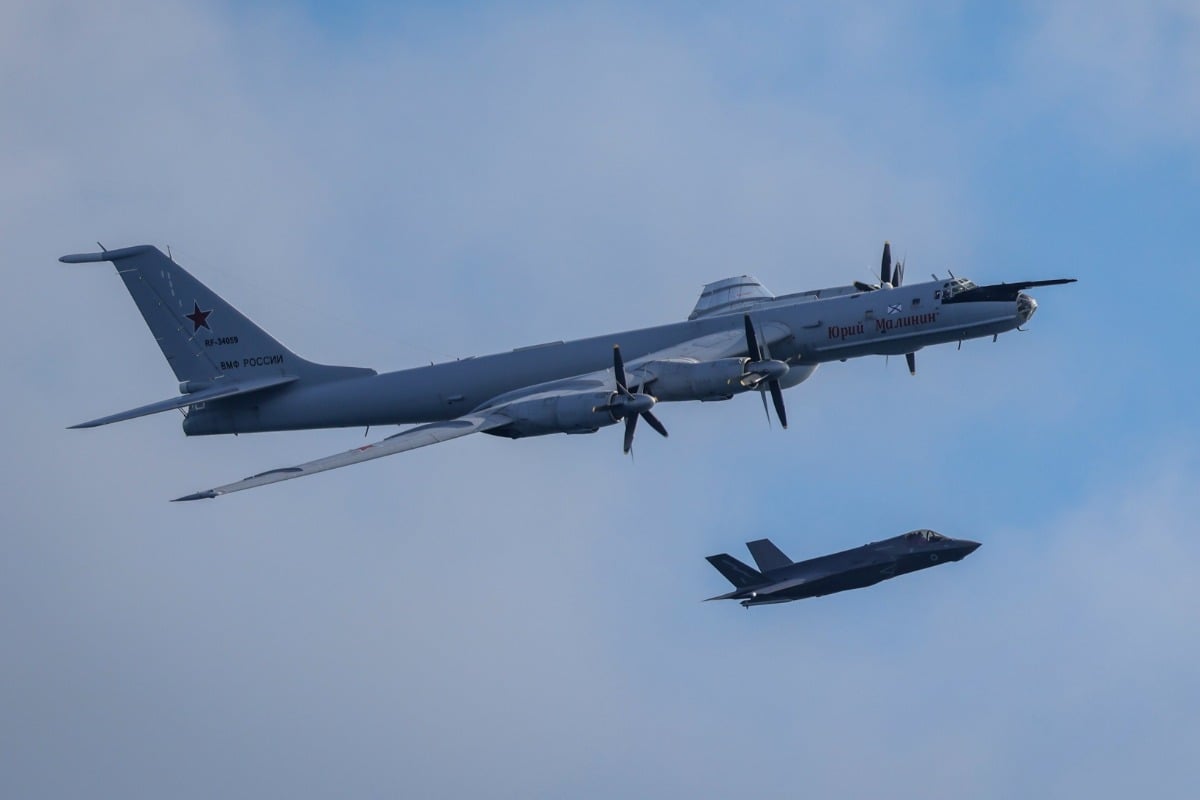
Last Thursday, the Royal Navy found itself in a high-stakes standoff. A Russian Tu-142 maritime patrol aircraft, better known by its NATO reporting name as the Bear-F, decided to test the limits of international law. It didn't just fly close to Britain’s flagship carrier strike group—it got aggressively, unnecessarily close.
This wasn't a standard, polite flyby where pilots wave at each other from miles away. The Russian sub-hunter buzzed the flagship HMS Prince of Wales at a low altitude. Then, it upped the ante by dropping a massive payload of sonobuoys directly into the waters near the carrier formation. The Ministry of Defence (MoD) slammed the move as "unsafe and unprofessional."
Here is what went down, why it matters, and why Russia is suddenly taking such brazen risks against NATO’s flagship assets.
The Arctic confrontation you didn't see on the news
The UK Carrier Strike Group was operating off Iceland under NATO command as part of Operation Firecrest. This deployment represents a major milestone, marking the first time NATO has run air policing operations directly from a European aircraft carrier.
With 1,500 British personnel on board, the strike group includes:
- HMS Prince of Wales: The Royal Navy's largest warship and current flagship.
- HMS Duncan: A Type 45 guided-missile destroyer built specifically for high-intensity anti-air warfare.
- F-35B Lightning jets: Fifth-generation stealth fighters.
- Merlin and Wildcat helicopters: Configured for anti-submarine warfare and utility.
- RFA Tidespring: A massive fleet replenishment tanker keeping the entire group fueled.
While navigating the Norwegian Sea, radar operators picked up a fast-moving contact approaching on a direct path toward the fleet. It was a Bear-F. British forces immediately tried to establish communication with the Russian plane using international radio frequencies.
The Russian crew ignored the calls. Completely silent.
Instead of veering off, the Bear-F pushed lower and closer to the HMS Prince of Wales. As it flew past, it deployed tens of sonobuoys into the sea. These are floating acoustic sensors designed to drop a hydrophone into the water to listen for submarines.
The provocation was loud and clear. In response, two British F-35B stealth fighters launched from the flight deck of the Prince of Wales, intercepted the massive Russian aircraft, and escorted it out of the area.
The real motive behind the sonobuoy drop
Most media reports focus on the dramatic visual of fighter jets intercepting a bomber. But the real story is under the water.
Why would a Russian patrol plane drop a large number of sonobuoys right next to a NATO carrier strike group? It wasn't an accident, and it wasn't just to be annoying.
"We should be clear-eyed about the fact that the threat from Russia exists in every domain, under the water, on the water, on the land, in the sky," Defence Secretary Dan Jarvis noted after visiting the flagship.
Russia is obsessed with tracking NATO submarines. A carrier strike group never travels alone; it's always accompanied by an attack submarine lurking deep below the surface to protect the carrier from underwater threats. By dropping a grid of sonobuoys directly in the path of the British fleet, the Bear-F was actively trying to flush out, map, and track whatever British or allied submarine was escorting the HMS Prince of Wales.
Furthermore, this happens against a backdrop of escalating shadow warfare. Just weeks ago, Royal Marines had to board a Russian shadow-fleet oil tanker in the English Channel. Earlier, British military assets were deployed to stop Russian submarines from lingering around critical underwater internet cables and pipelines in UK waters.
Russia wants to map NATO's underwater capabilities in the High North. They are using aggressive tactics to do it because they know the geopolitical temperature is rising. This confrontation occurred just days before a major NATO meeting in Ankara, where member states are finalizing a 70 billion euro military assistance package for Ukraine. Moscow is sending a message: We see your fleet, and we can touch your fleet.
Why this intercept was different
Aircraft intercepts happen all the time. Royal Air Force Typhoons regularly scramble from RAF Lossiemouth under the Quick Reaction Alert system to shadow Russian planes flying down the Norwegian coast.
But this Arctic encounter was different for three distinct reasons.
First, the proximity was genuinely dangerous. Flying a heavy, propeller-driven maritime patrol plane at a low altitude close to a moving aircraft carrier without radio contact invites disaster. A pilot error or a mechanical twitch could easily result in a catastrophic collision.
Second, the deployment of sonobuoys in the immediate vicinity of a foreign warship is an escalatory step. It turns a routine reconnaissance flight into an active, aggressive intelligence-gathering operation inside a NATO naval formation.
Third, it marks a test of NATO’s new carrier-centric air strategy in the Arctic. Russia wanted to see exactly how fast the F-35Bs could launch from the deck of the Prince of Wales, what their radar signatures looked like when tracking a target, and how the British fleet coordinated its air defense.
What happens next
If you think this will cause NATO to back down, think again. The High North is becoming a central theater for strategic deterrence. The UK and its northern allies understand that security in the Atlantic depends entirely on keeping the Norwegian Sea secure.
Don't expect the Royal Navy to change its deployment schedule. If anything, this incident will likely trigger more robust defense measures during future exercises. You can expect to see tighter air defense bubbles around these carrier groups and an even faster trigger finger when it comes to scrambling escort fighters.
For the average observer, it's a stark reminder that peace in the European theater is incredibly fragile. The lines of confrontation aren't just drawn on maps in Ukraine; they are being actively tested by elite pilots and stealth fighters over the freezing waters of the North Atlantic.
Keep your eyes on the Arctic. The cat-and-mouse games being played beneath the waves and in the skies above are only going to get tighter, faster, and more volatile.