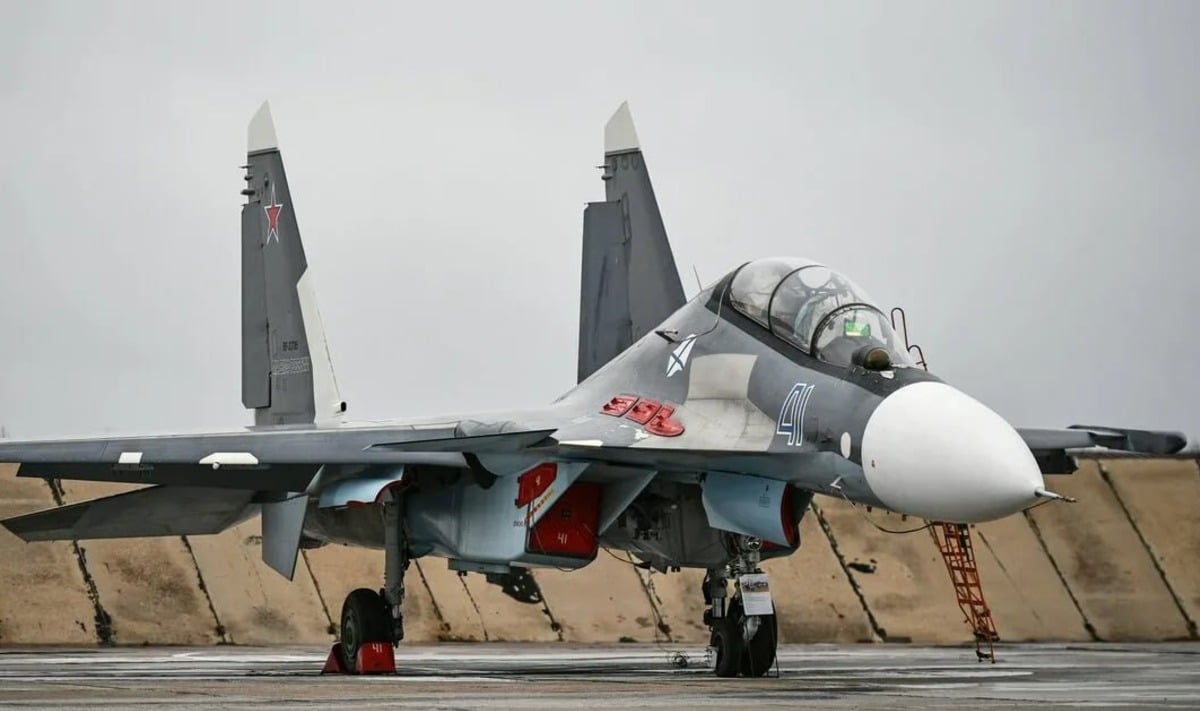
Russia thought its aircraft shelters in occupied Crimea were safe. They aren't. Within a single week, Ukrainian long-range drones proved that even reinforced hangars cannot safeguard the Kremlin's prize fighter jets.
The Security Service of Ukraine, better known as the SBU, just completed its second major strike within seven days against the Saky military airfield. They didn't stop there. They also struck the Hvardiiske airfield, targeting a critical storage hub for Iranian-designed Shahed drones. The preliminary damage reports look devastating for Moscow. At least seven advanced warplanes are either scrap metal or severely damaged.
This isn't a random sequence of opportunistic attacks. It represents a systematic, calculated effort to strip Russia of its air superiority in the southern theater. Let's look at exactly what happened, why Russian defenses failed so spectacularly, and what this tells us about the current phase of the war.
The Double Tap at Saky Airfield
Saky airbase is one of the most vital logistical hubs for the Russian military in occupied Crimea. It serves as the primary launching pad for tactical aviation units that terrorize southern Ukraine. From this tarmac, Russian jets regularly take off to launch precision-guided bombs and cruise missiles at civilian infrastructure and frontline positions.
Ukraine hit this exact base on July 1. You would think the Russian command would immediately scramble to reinforce their security posture. Instead, on July 3, SBU drones bypassed local air defenses again.
This second wave targeted seven specific hangars holding an array of advanced aircraft. The hangars housed Sukhoi Su-30, Su-30SM, and Su-24 frontline bombers. SBU sources report that at least seven aircraft were destroyed or damaged during the pre-dawn raid. Think about the math here. Each of these jets carries a price tag ranging between $30 million and $50 million depending on its configuration. Losing seven of them in a single morning represents a massive financial and operational blow to the Russian air force.
Dissecting the Hvardiiske Drone Strike
While Saky burned, a separate group of Ukrainian drones hit the Hvardiiske military airfield. This site serves a slightly different purpose for the occupation forces. Hvardiiske acts as a major logistics hub for long-range drone strikes against western and central Ukraine.
The SBU targeted two specific hangars at Hvardiiske. These structures didn't hold fighter jets. Instead, they served as warehouses for Shahed kamikaze drones and specialized aviation equipment. By blowing up these facilities, Ukraine managed to disrupt the immediate supply chain for Russia's nightly aerial terror campaigns.
It forces Russia to alter its launch locations. Moving these operations deeper into the Russian mainland increases flight times, gives Ukrainian air defense teams more warning, and strains Russian logistics.
Zelenskyy's Forty Day Campaign Is Moving Fast
These back-to-back airfield strikes aren't isolated incidents. They form the core of a coordinated strategy. On June 26, Ukrainian President Volodymyr Zelenskyy approved a high-pressure, 40-day campaign designed to target Russian military infrastructure deep behind the front lines.
The SBU, under the direction of acting head Yevheniy Khmara, has taken the lead on these deep-reconnaissance drone operations. The goal is simple. Ukraine wants to force Russia into a position where continuing the war becomes unsustainable.
By striking high-value assets like $50 million fighter jets and localized drone depots, Ukraine achieves a highly asymmetrical economic victory. A fleet of long-range strike drones costs a fraction of a single Sukhoi fighter. Trading cheap drones for advanced tactical bombers is a winning strategy for Kyiv.
The Myth of the Hardened Russian Hangar
For over two years, military observers wondered why Russia refused to build proper, hardened concrete shelters for its aircraft. Most Russian bases featured open-air revetments or simple, flimsy metal hangars. These structures offered protection from the elements, but they did absolutely nothing to stop shrapnel or direct hits.
Recently, Russia attempted to address this vulnerability. They constructed light shelters over their most valuable jets at Saky. The July 3 strikes proved these new shelters are virtually useless against modern Ukrainian drone tactics.
Ukrainian engineers have modified their strike drones to utilize advanced payload delivery. Some drones carry high-explosive fragmentation warheads that detonate just above the target, showering thin metal roofs with thousands of high-velocity shrapnel pieces. Others carry delayed-fuse incendiary charges designed to melt through metal structures and ignite the fuel tanks of the jets sitting inside. Once a jet catches fire inside a enclosed hangar, the structure turns into an oven. The warplane is entirely destroyed.
The Irony of the Crimean Wake Up Drills
The timing of these airfield strikes exposes severe gaps in Russian military readiness. Just days before the attacks, Russian forces inside Crimea conducted large-scale command-post exercises. The drills carried a highly ironic name: "Crimean Wake-Up."
According to reports from independent military analysts, these exercises specifically simulated a coordinated Ukrainian assault on the peninsula. The Russian command modeled scenarios involving incoming long-range missiles, fast attack boats, and waves of kamikaze drones. The goal was to test how quickly local garrison units and air defense networks could react to a massed strike.
The real-world wake-up call came sooner than they expected, and the results were disastrous for Moscow. Despite running simulated drills to prepare for this exact style of warfare, the SBU still managed to slip dozens of drones past the S-400 radar networks protecting the airfields. It shows a deep disconnect between what Russian military doctrine claims its forces can do and how those forces actually perform under pressure.
What Happens Next
If you want to understand how this changes the battlefield, keep your eyes on satellite imagery over the coming weeks. The strategic implications of these strikes will ripple through the air war very quickly.
First, look for signs of Russian aircraft relocation. Russia will likely pull its remaining operational jets out of Crimea entirely. They will probably move them back to bases within the borders of the Russian Federation, such as Krymsk or Morozovsk.
This move will create immediate tactical problems for Russian pilots. Flying from mainland Russia to the front lines in Kherson or Zaporizhzhia requires significantly more fuel. It limits the time a pilot can spend loitering over the battlefield looking for targets. It also shortens the operational lifespan of the aircraft engines because they accumulate flight hours at a much faster rate.
Second, monitor the frequency of Russian glide-bomb attacks. If Ukraine successfully degraded the Su-34 and Su-24 fleets at Saky, the volume of aerial bombs hitting Ukrainian frontline positions should drop noticeably in the southern sector.
Don't expect Ukraine to slow down. The 40-day campaign is still active. The SBU has made it clear that any military asset within drone range is a valid, high-priority target.
To track the real impact of these developments yourself, you can take a few practical steps. Watch open-source intelligence accounts on social platforms for updated Maxar or Planet Labs satellite images of the Saky and Hvardiiske airbases. These images will show the exact burn scars and structural collapses. You should also watch for changes in Russian flight patterns recorded by regional radar tracking channels. The air war over Crimea is shifting rapidly, and Moscow is running out of places to hide its fleet.