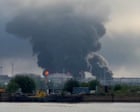
A massive fireball lit up the sky over St Petersburg's Kirovsky district, more than 850 kilometers away from Ukraine's border. The St Petersburg Oil Terminal, a crown jewel of Russia's energy export machine, was burning. Kyiv didn't use expensive Western cruise missiles for this strike. They used a swarm of cheap, long-range attack drones. This overnight blitz on July 4, 2026, proves something the Kremlin has tried desperately to deny. No corner of European Russia is safe anymore.
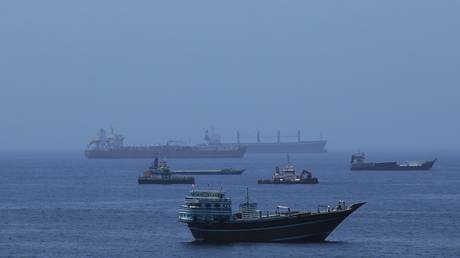
For years, Vladimir Putin treated his hometown of St Petersburg as a fortified sanctuary. The city's critical maritime infrastructure operated under the assumption that the war was a distant reality happening thousands of miles to the south. That illusion is officially dead. Ukraine's recent operation represents a massive logistical shift, demonstrating that the Baltic Sea is now a fully active theater in this war.
If you are tracking the economic underpinnings of this conflict, this strike matters immensely. It isn't just a symbolic victory for Ukraine. It strikes at the heart of Russia's financial lifeline, disrupting the very energy revenues that keep the Russian military machine funded.
The Destruction at the St Petersburg Oil Terminal
Eyewitness footage circulating on independent channels showed thick, oily black smoke billowing from the terminal area. The St Petersburg Oil Terminal is a massive facility. It covers roughly 37 hectares on the Gulf of Finland and handles between 10 million and 12.5 million metric tons of petroleum products every single year.
The facility relies on a sprawling network of 21 to 32 storage tanks with a total capacity of nearly 397,000 cubic meters. Drones slammed directly into this infrastructure, igniting a blaze that local emergency crews struggled to contain. St Petersburg Governor Alexander Beglov tried to downplay the incident, claiming the aftermath had been dealt with and that nobody was hurt. But the smoke rising over the city told a completely different story to the local population.
Ukraine's drone tech has advanced significantly. These aren't the basic quadcopters seen early in the war. These are sophisticated, low-flying fixed-wing drones capable of navigating hundreds of kilometers through dense Russian air defense networks. By flying low and utilizing smart pathfinding, these drones bypassed layers of radar to hit the exact coordinates of the terminal's tank farm.
Expanding the Target List to Vysotsk and Kronstadt
The oil terminal in the city center wasn't the only target during the July 4 operation. The strike was part of a coordinated, multi-pronged aerial offensive across the entire Leningrad region.
Further northwest, about 170 kilometers from St Petersburg along the Baltic coast, lies the port of Vysotsk. This critical maritime hub handles huge volumes of coal, grain, liquefied natural gas, and oil. Leningrad Region Governor Alexander Drozdenko reported that a massive swarm of 72 drones had been active across the area. While Russian officials claimed they shot down the majority of the incoming threats, local reports confirmed that drone strikes reached the vicinity of the Vysotsk port facilities, creating panic among workers and shipping operators.
Even more alarming for the Kremlin was the targeting of Kronstadt. Kronstadt is an island naval base that serves as the headquarters and primary repair yard for Russia's Baltic Fleet. Ukrainian President Volodymyr Zelenskyy confirmed the strike on Telegram, explicitly labeling Kronstadt as a key military target. Ukraine previously poked at Kronstadt in June, but this subsequent hit shows that Kyiv is determined to keep the Russian navy pinned down in its own ports.
The Strategy Behind Long Range Sanctions
President Zelenskyy described these deep-strike operations as Ukraine's "long-range sanctions." The logic is simple and brutal. If the international community cannot completely stop the flow of Russian oil through paperwork and maritime price caps, Ukraine will stop it physically with explosives.
Every barrel of oil refined or shipped through the Baltic Sea generates cash that directly finances artillery shells, cruise missiles, and soldier salaries. By striking these terminals, Ukraine forces Russia into a terrible dilemma.
- The Air Defense Dilemma: Russia has a limited supply of advanced air defense systems like the S-400 and Pantsir-S1. If they deploy these systems to protect oil terminals in the north, they must strip them away from active front lines in Ukraine or from military airfields in the south.
- The Insurance Nightmare: International shipping companies face soaring insurance premiums when operating in active conflict zones. Striking Baltic ports sends a clear message to global shipping firms that loading Russian oil carries massive operational risks.
- Logistical Chokepoints: Rail lines and river barges feed these massive Baltic terminals. When a terminal burns, the entire supply chain backs up all the way to the domestic refineries, creating a massive headache for Russian logistics managers.
Russia Mounts an Energy and Fuel Crisis
Despite Vladimir Putin's public insistence that these strikes are "not critical," the domestic reality inside Russia suggests otherwise. The country is in the middle of a compounding fuel crisis.
Long-range drone attacks throughout 2026 have systematically chipped away at Russia's domestic refining capacity. The strikes have caused widespread petrol shortages across Russia's 11 time zones. The situation has grown so severe that local authorities in occupied Crimea recently suspended all gasoline sales to civilians to preserve remaining fuel reserves for the military.
Even south of St Petersburg, the panic is spreading. In the Pskov region, Governor Mikhail Vedernikov reported that over 30 drones were shot down overnight, with fragments damaging a manufacturing factory in the town of Velikiye Luki. Meanwhile, the border city of Belgorod suffered near-total power outages following parallel drone strikes on its electrical grid. The war is no longer a distant television broadcast for the average Russian citizen; it is directly impacting their ability to fill up their cars and keep their lights on.
The Information War Over Kostiantynivka
While drones rained down on Russian infrastructure, a parallel battle of narratives raged on the eastern front lines. Just a day prior to the St Petersburg strikes, the Russian defense ministry made a loud public declaration to President Putin, claiming their forces had fully captured the strategic eastern city of Kostiantynivka in the Donetsk region.
Kostiantynivka is an industrial city that serves as a core defensive anchor for Ukrainian forces holding the remainder of the industrial Donbas. Losing it would be a severe blow to Ukraine's defensive lines. However, the Ukrainian General Staff and President Zelenskyy directly shot down the Russian claims, calling them an outright fabrication designed to manufacture a positive news cycle for Moscow.
Zelenskyy mocked the Kremlin's claims on social media, stating that if Russia truly controlled the city, Putin would have no problem meeting him there to negotiate an end to the war. The Ukrainian 19th Army Corps remains dug into defensive positions inside the town and on its immediate approaches. This back-and-forth highlights the extreme desperation of the Kremlin to project military dominance on the ground while its economic engine takes a beating from the air.
The Future of the Baltic Sea Conflict
Ukraine's ability to strike deep into the Baltic region marks a permanent shift in the geography of the war. Russia can no longer view its northern shipping lanes as secure routes for generating war revenue.
Expect Ukraine to scale up the frequency and intensity of these long-range operations. As their domestic production of long-range drones expands, they will continue targeting vulnerable oil depots, port facilities, and naval bases across western Russia.
For international observers and energy markets, the message is clear. The stability of Russian energy exports is gone. Companies relying on Baltic shipping routes must prepare for ongoing disruptions, higher security costs, and unpredictable supply chains as Ukraine continues to press its asymmetric aerial campaign deep into Russian territory.