International football tournaments always find a way to strip back the corporate sheen and expose the raw, sometimes ugly realities underneath. The elimination of the Netherlands from the 2026 World Cup did exactly that in the span of less than twenty-four hours. What started as a tactical collapse on a hot night in Monterrey quickly spiraled into a deeply personal exit for a legendary manager and a sickeningly familiar social crisis for three young players.
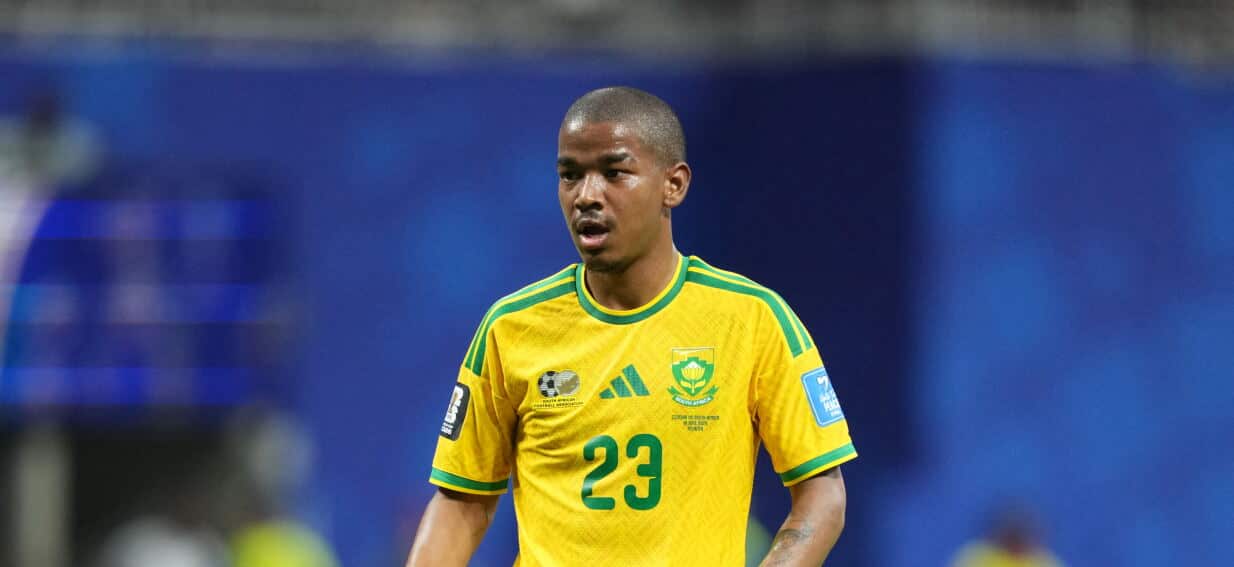
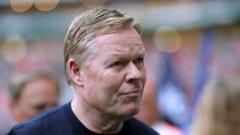
When Morocco won the round of 32 penalty shootout three to two after a grueling one to one draw, the immediate focus was on the pitch. The Dutch had capitulated late. They threw away a lead that felt safe. But the fallout from that match has completely transcended the sport. Ronald Koeman stepped down as head coach of the Oranje. Almost simultaneously, the Dutch football association had to put out a statement condemning a barrage of vile online racist abuse targeted at Justin Kluivert, Quinten Timber, and Crysencio Summerville, the three players who failed to score their spot-kicks.
This isn't just another story about a manager getting fired or walking away after a poor tournament. It's a snapshot of a broken culture where athletic failure is met with racial hostility, and where the human beings inside the tracksuits are completely forgotten.
The Human Reality of the Ronald Koeman Decision
International managers are usually treated like public property. Fans dissect their formations, journalists pick apart their press conferences, and punditry assumes their entire existence revolves around the national team. Koeman completely flipped that script with his departure announcement on Instagram.
He didn't run away from the sporting failure. He explicitly stated that as head coach, the responsibility rested entirely with him. But he gave a reminder that football is an incredibly small thing compared to actual life. His wife, Bartina, has been fighting breast cancer.
Think about the psychological toll of that situation. You are trying to guide a demanding football nation through a high-pressure World Cup campaign in North America while the person you love most is fighting a brutal health battle back home. Koeman noted that Bartina had supported and encouraged him every single day to finish his work with the national team. That reflects an unbelievable amount of personal strength from both of them.
The 63-year-old manager hinted heavily that this might be the end of his coaching career altogether. Health is priceless. When life forces a perspective shift of that magnitude, sitting on a bench shouting tactical instructions starts to feel incredibly trivial. Koeman gave his life to Dutch football as a magnificent defender and twice as its manager. Leaving now on his own terms to protect his family and focus on what truly matters is the most dignified choice he could have made.
The Tactical Empty Shell in Monterrey
We need to look honestly at what happened on the pitch because it explains why the atmosphere turned so toxic so fast. The performance against Morocco was an ideological disaster for a country that prides itself on footballing philosophy.
Dutch football is historically synonymous with control, expression, and attacking intent. Under Koeman, the team that faced Morocco felt completely hollow. They set up in a rigid defensive shape that completely lacked the traditional Oranje spark. They managed a pathetic two shots on target across 120 minutes of football. You simply cannot expect to advance deep into a World Cup with that level of timidity.
Even figures like Zlatan Ibrahimovic weighed in quickly, openly criticizing Koeman for abandoning the country's foundational attacking identity. The plan seemed to be entirely about containment, hoping a single moment of quality would save them. For a while, it looked like it might work.
Cody Gakpo scored in the 72nd minute to put the Netherlands ahead. It was an incredibly emotional moment. Gakpo was playing just days after learning about the tragic loss of his unborn son. When he fell to the turf, overcome with tears, it felt like the defining image of a resilient team finding a way through immense personal grief.
Then everything broke. Instead of managing the final minutes with composure, the Dutch ran completely out of steam and drifted into survival mode. In the first minute of stoppage time, Issa Diop found space to glance home a dramatic equalizer for Morocco.
The momentum shifted entirely. Extra time became a slow march toward the inevitable. By the time the whistle blew for penalties, the Dutch players looked completely drained, both physically and emotionally.
The Shootout and the Vile Response
Penalty shootouts are a lottery, but they also reveal technical and psychological preparation. The Dutch failed miserably at the spot.
Teun Koopmeiners and Wout Weghorst converted their penalties, but the rest of the order collapsed. Justin Kluivert missed. Quinten Timber missed. Finally, Morocco's veteran goalkeeper Yassine Bounou made a spectacular save to block Crysencio Summerville's attempt. Ismael Saibari then stepped up, smashed his penalty into the net, and sent Morocco into the round of 16 against Canada.
Missing a penalty in a major tournament is a professional nightmare that follows a player for the rest of their career. It should be met with sporting critique or empathy. Instead, the immediate aftermath on social media platforms was a toxic flood of discriminatory, hateful, and racist comments directed at Kluivert, Timber, and Summerville.
The KNVB released a statement expressing deep disgust at the abuse. Nigel de Jong, the technical director of the federation, didn't hold back either. He acknowledged the tournament campaign was a massive disappointment, emphasizing that the internal objective was to reach at least the semifinals and fight for the trophy. They fell miles short of that standard. But De Jong made it clear that athletic failure never excuses bigotry.
The Institutional Failure of Social Media
We keep having this exact conversation every time a major football tournament reaches a knockout stage. We saw it with England at the Euros in 2021. We are seeing it again in 2026 with the Dutch national team. Black players miss penalties, and the algorithms of major tech platforms instantly facilitate a wave of racial targeting.
The current system relies entirely on reactive moderation. A player gets abused, the football association complains, a few accounts get deleted hours later, and the cycle repeats. It is completely ineffective.
Football associations are put in a position where they can do little more than issue strongly worded statements. They can't police platforms based in Silicon Valley. The players are left to navigate the emotional wreckage completely unprotected. These are young athletes representing their country on the global stage, forced to log into their phones and see their humanity stripped away because they missed a target by a few inches.
Where the Dutch National Team Goes Next
The KNVB faces an incredibly tight timeline to rebuild. The post-World Cup evaluation is already happening, and they need to find a successor for Koeman quickly. The UEFA Nations League campaign starts in September.
Nigel de Jong has a massive task on his hands. He needs to find a manager who can restore the tactical identity of the team, but more importantly, he has to rebuild a shattered squad harmony. Rumors are already circulating that senior figures like Virgil van Dijk might consider international retirement after this failure. The emotional toll of this tournament has left a massive scar on the entire Dutch setup.
The next manager shouldn't just be a good tactician. They need to be an elite man-manager capable of protecting a young generation of talent that feels alienated by a segment of their own fan base.
Immediate Practical Steps for Football Authorities
To actually change this cycle, football governing bodies and federations need to stop pretending that statements of solidarity are enough. Action is required right now.
- Federations must establish dedicated digital security teams that take absolute control of players' public social media feeds during major tournaments, filtering out explicit content before it ever reaches the athlete's screen.
- The KNVB should collaborate directly with tech platforms to implement strict identity verification requirements for accounts wishing to comment on official sporting events or player profiles.
- Internal mental health support structures within the national team must be permanently expanded to deal specifically with the unique trauma of online racial targeted harassment.
The Ronald Koeman resignation leaves a massive sporting vacuum in Dutch football. But the response to the Morocco defeat shows that the biggest challenge facing the Oranje isn't finding a new coach who can play attractive football. It's creating an environment where players aren't subjected to vile hatred when things go wrong on the pitch.