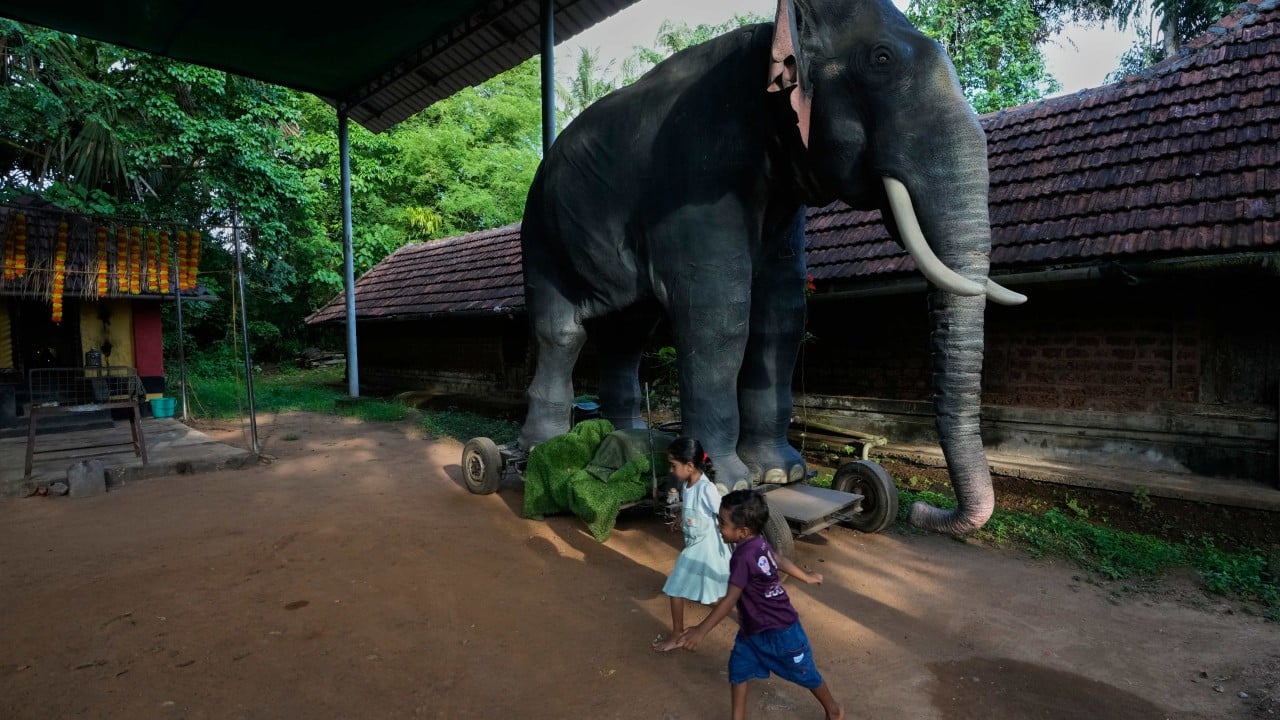
Walk into a typical backyard workshop in Chalakudy, Kerala, and you might expect to see car chassis or sheet metal. Instead, you're greeted by a life-size, eleven-foot-tall elephant with ears that flap, eyes that blink, and a trunk that can spray water on command.
It's not alive. It's made of fiberglass, iron, and rubber.
These animatronic beasts are stepping out of workshops and directly into the courtyards of Hindu temples across southern India. Driven by animal welfare concerns and funded heavily by organizations like PETA India, around 40 of these mechanical tuskers are already in active service. They don't poop. They don't eat. Crucially, they don't go on lethal rampages.
Yet, this shift has ignited a fierce, passionate debate. For some, it's an act of pure compassion that saves magnificent animals from a lifetime of torture. For others, it's a sterile, modern assault on centuries-old religious traditions. This isn't just about technology replacing flesh and bone. It's a fundamental clash over what it means to honor the divine.
The Reality Behind the Elephant Cult in Kerala
To understand why this is such a massive deal, you have to realize that elephants aren't just animals in Kerala. They're religious superstars. Festivals like the iconic Thrissur Pooram feature dozens of tuskers lined up side-by-side, draped in gold ornaments, surrounded by thousands of cheering devotees, deafening drums, and massive fireworks.
Devotees revere them as living embodiments of Ganesha. But behind the glamour lies an uncomfortable truth.
Wild elephants are social creatures that walk up to 30 miles a day in tight-knit family structures. Captive temple elephants live in a completely different world. They spend decades chained to concrete floors. They stand for hours in scorching heat, surrounded by chaotic noise that breaks their sensitive hearing.
Worse, almost all temple elephants in Kerala are adult males. This brings a major biological complication: musth.
Musth is a periodic condition where a male elephant's testosterone levels skyrocket, making them intensely aggressive. In the wild, they vent this energy. In captivity, they're shackled tighter. When these stressed, giant animals snap, the results are catastrophic. In 2024 alone, nine people were killed by elephant rampages at Kerala temple festivals. Over a fifteen-year period, captive elephants killed 526 people in the state.
It's a powder keg. Everyone knows it, but nobody wanted to change the formula until recently.
Engineering a Mechanical Alternative
The shift started getting real in 2023 when the Irinjadappilly Sree Krishna Temple in Thrissur made a bold move. They accepted an 800-kilogram robotic elephant named Irinjadappilly Raman, donated by PETA India and a group of devotees.
The masterminds behind these animatronics are local engineers and artists like Prasanth Prakashan and Sooraj Nambiat. Prakashan, a mechanical engineer by trade, used to build animatronics for malls, carnivals, and theme parks. A viral video of his work caught the attention of animal rights activists, and a new industry was born.
Building a fake elephant that can pass muster with traditional worshippers isn't easy.
[Anatomy of a Mechanical Temple Elephant]
- Skeleton: Heavy iron frame to support weight
- Exterior: Fiberglass mold covered in puddled rubber
- Movement: Five distinct electric motors
- Control: Head, eyes, and ears are automated; the trunk is operated manually
- Cost: Roughly $6,000 (around 5 lakh INR)
- Features: Can carry up to five people, sprays water
The artists obsess over the smallest details. They paint the fiberglass to look like wrinkly skin. They shape the veins that pop out from the fanning ears.
Prakashan admits it's not a perfect duplicate. You can't replicate the fluid grace of a real animal. Right now, the robots can't walk forward either. They stand stationary while their upper bodies move. But they're getting better. Prakashan is actively working on a walking prototype.
What the Ancient Texts Actually Say
The most common argument against these robots is that they break sacred tradition. Traditionalists claim that a fake animal invalidates the rituals.
But high-ranking religious figures are pushing back against that narrative. Rajkumar Namboothiri, the head priest of the Irinjadappilly Sree Krishna Temple, openly states that tantric texts—the ancient instruction manuals for temple rituals—don't actually require live elephants.
According to Namboothiri, the practice of using elephants didn't descend from the gods. It came from medieval kings. Hundreds of years ago, royals used elephants in their cavalries and brought them to temples as a show of wealth and power. The animals were also practical vehicles for carrying deities during processions because they were tall enough for massive crowds to see.
Times have changed. Centuries ago, those elephants went back to vast forests when the festival ended. Today, they return to concrete yards, traffic jams, and relentless heat. Namboothiri argues that forcing a wild animal to live in a concrete jungle isn't holy. It's abuse. He believes portable palanquins and chariots can easily replace the height advantage of a live tusker.
The Backlash and the Big Business of Devotion
If the religious texts don't mandate live animals, why is the resistance so fierce?
Follow the money. Captive elephants are incredibly lucrative. Elephant owners rent out their tuskers for festivals during the peak season, which lasts about 45 to 50 days a year. A single premier tusker can pull in thousands of dollars per day. It's a massive network of handlers, brokers, and festivals wrapped up in what wildlife biologists call religious tourism.
Take K. Mahesh, who has owned his elephant for 25 years. He rents his animal out regularly and treats him like a family pet. Mahesh argues that if you don't believe elephants are sacred, a robotic substitute completely misses the point. To him and many others, the living presence of the animal is the soul of the festival.
Because of this deeply entrenched attitude, the people building the robots are facing severe social backlash. Sooraj Nambiat, the artist who collaborates on these builds, recently noted that he can no longer attend local temple festivals. Traditionalists in his community resent his work, viewing him as a traitor trying to destroy their heritage.
He maintains he isn't trying to ruin tradition. He's trying to save the species. If the commercial exploitation doesn't stop, future generations simply won't have wild elephants left to revere.
The Growing Divide Between Small and Large Temples
The adoption of robotic elephants reveals a clear economic and administrative divide. Smaller shrines are leading the charge toward automation.
For a small temple administrator, a real elephant is a massive liability. You have to pay astronomical rental fees, feed the animal, provide specialized veterinary care, and pay for expensive liability insurance in case something goes wrong. If an elephant goes on a rampage and destroys property or kills a devotee, the temple management faces ruin.
K.I. Purushottaman, president of the Cheekamundi Sri Mahavishnu Temple, says their new robotic elephant brought immense peace of mind. They no longer live in fear of a sudden, fatal attack during a crowded ceremony.
Larger, wealthy temples like the Guruvayur Sree Krishna Temple operate on a completely different scale. Guruvayur houses nearly 50 live elephants in a dedicated sanctuary. They host annual elephant races and lavish feeding rituals. For these mega-temples, abandoning live elephants would mean dismantling a massive part of their identity and tourist draw.
Change won't happen overnight across the board. Instead, we're seeing a two-tiered system emerge. Large traditional venues keep their live herds under intense scrutiny, while smaller community temples choose safety and a clear conscience.
Actionable Next Steps for Temple Visitors and Donors
If you care about animal welfare but still want to respect local cultures, you don't have to completely boycott Indian festivals. You can vote with your feet and your wallet.
- Support Ethically Managed Festivals: Before traveling to a temple festival, research whether they use live tuskers or have transitioned to animatronics or traditional chariots. Give your attendance and donations to temples making the humane switch.
- Report Mistreatment: If you visit a site and see an elephant with visible wounds, heavy chains that restrict basic movement, or signs of extreme distress like constant head-bobbing, document it. Report the findings to local animal welfare groups and PETA India.
- Fund Animatronic Transitions: Nonprofits are actively looking for donors to sponsor the $6,000 cost of building and gifting these robots to temples willing to retire their live animals. Direct your charitable giving toward these tangible engineering solutions.
The era of turning a blind eye to the suffering of captive temple elephants is ending. Whether traditionalists like it or not, these fiberglass replacements are proving that devotion doesn't require a heartbeat to be meaningful.