Spearing a fish and holding onto it while a two-meter predator cruises nearby is a recipe for disaster. That is exactly what happened off the coast of Tasmania on Saturday morning, and it serves as a stark reminder of how quickly a routine dive can turn chaotic.
A 31-year-old local diver was swimming with two companions at Coal Point, located in Adventure Bay on the eastern side of Bruny Island. They were about 50 meters offshore and eight meters deep when the ocean reminded them who really owns the water. The group was spearfishing on scuba gear. The diver had just speared a fish and was in the middle of retrieving it when a broadnose sevengill shark struck, biting down hard on his lower forearm.
The victim managed to fight his way back to the surface and swim to shore. His diving partners quickly helped him out of the water and dialed emergency services around 9:10 AM. Thanks to their quick actions, the Westpac Rescue Helicopter airlifted the man to the Royal Hobart Hospital in a stable condition. His injuries, while serious, were not life-threatening. The police launch Dauntless immediately began patrolling the area, though no further sightings of the shark have been reported.
This was not a random act of malice by a monster. It was a classic case of mistaken identity fueled by the primal trigger of an underwater kill.
The bloody reality of spearfishing on scuba
Let's look at what went wrong here. Spearfishing while using scuba gear changes the game completely compared to traditional freedive spearfishing. When you breathe through a regulator, you create a wall of loud, rhythmic bubbles that can either scare marine life away or pique the curiosity of opportunistic predators. But the real trigger happens the second your spear hits the target.
A speared fish thrashes violently. It emits low-frequency vibrations that act like a dinner bell for every shark within a kilometer. Blood and bodily fluids rapidly pump into the water column. If you hang onto that fish or take too long to secure it, you are essentially holding a vibrating neon sign that says free lunch.
Witness accounts from Adventure Bay confirm the shark went for the diver right as he was retrieving his catch. The shark did not hunt the human. It hunted the injured fish and the diver's arm happened to be in the impact zone.
Many veteran divers look down on spearfishing on scuba because it removes the stealth element and keeps you underwater far longer than your breath-hold allows. This extended bottom time increases your chances of crosspaths with large marine life. When you combine blood in the water with an extended presence on the sea floor, an encounter becomes highly probable.
Meet the prehistoric predator of Adventure Bay
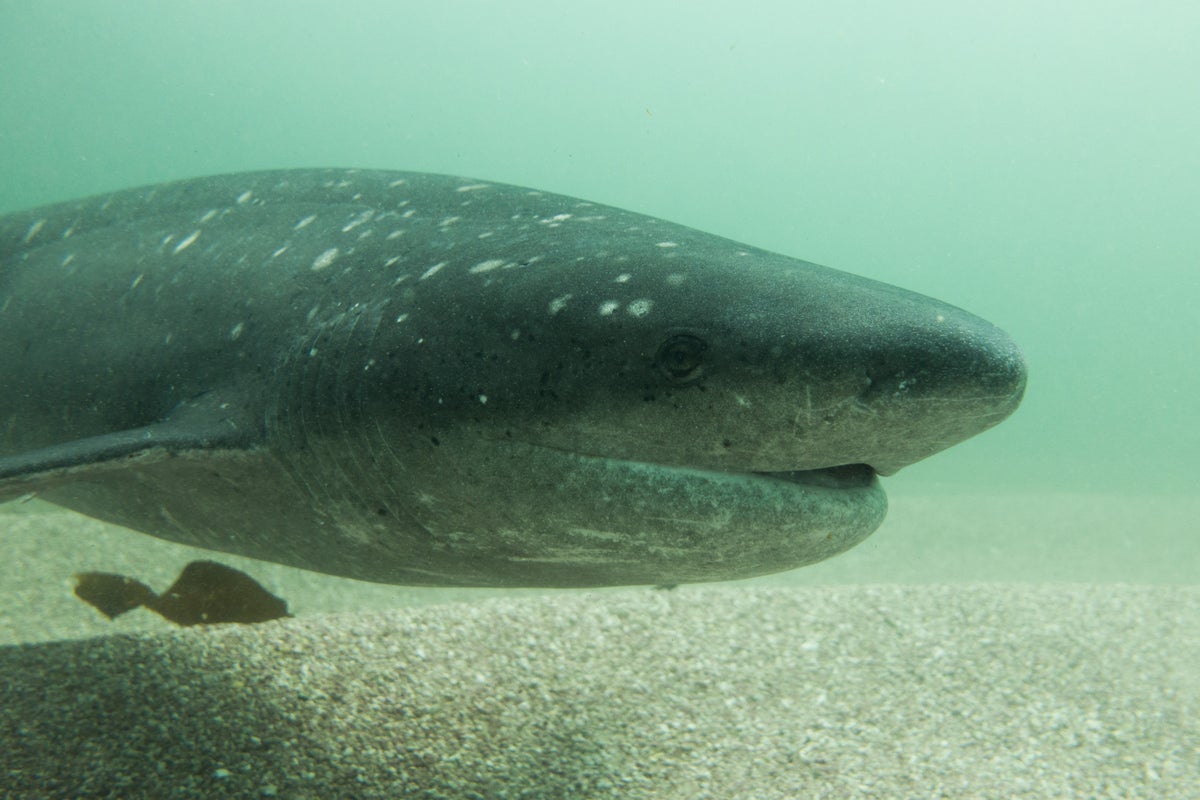
Most media reports on Australian shark incidents immediately make people think of Great Whites, Tiger sharks, or Bull sharks. But Tasmanian waters host a different kind of survivor. Authorities believe a two-meter broadnose sevengill shark caused the bite at Coal Point.
Sevengills are built differently. While most modern sharks have evolved to have five gill slits, this species retains seven, linking it directly to ancestors from the Jurassic period. They do not have the classic high-speed silhouette of a Great White. Instead, they feature a heavy, thick body, a blunt snout, and a single dorsal fin set far back near the tail.
These sharks spend most of their time cruising slowly along the rocky sea floor, making them common encounters for shore divers in temperate regions. Do not let their sluggish appearance fool you. They are highly efficient, cooperative hunters when they need to be, known to target seals, cetaceans, and other sharks.
A three-metre shark was spotted near a boat ramp right in Adventure Bay back in March. They live in these waters, and they are always paying attention. When a sevengill smells blood, its opportunistic nature kicks in. It moves in fast to steal the meal before another predator arrives. That is likely the exact sequence that caught the Tasmanian diver off guard.
Tracking the rise in Australian shark encounters
This incident is not an isolated quirk of the map. It fits into a broader, documented uptick in shark encounters across the country. Data from the Australian Shark Incident Database shows that Australia has averaged nearly 29 shark incidents per year over the last decade. Compare that to the 2000s, when the average sat at roughly 16 per year.
The numbers are moving up, and recent months have driven that point home. Just last month, a shark attack at Sydney's Coogee Beach left a 35-year-old woman fighting for her life. Also in June, a man lost his life while fishing off the Western Australia coast. Go back to May, and you find two more fatalities: a 39-year-old man struck on Queensland's Great Barrier Reef, and a 38-year-old man killed near Perth.
Why are the numbers shifting? It is a mix of growing coastal populations, more people entering the water, and changing ocean temperatures pushing baitfish closer to the shorelines. Marine protection efforts have also helped rebuild shark populations in certain zones. More apex predators meeting more humans in the surf equals more incidents.
Despite the rising numbers, the odds of getting bitten are incredibly low. You are far more likely to get injured driving to the beach than you are by a shark once you get there. But low risk does not mean zero risk. When you carry a bloody fish, you artificially spike those odds through the roof.
Crucial survival rules for your next shore dive
You do not need to give up the sport, but you do need to sharpen your protocols. If you are going to spearfish or shore dive in temperate waters like southern Tasmania, you have to follow strict safety boundaries.
First, never dive alone. The 31-year-old diver survived with non-life-threatening injuries because his two buddies were right there to help him back to the beach and call the Westpac Rescue Helicopter. Had he been solo, blood loss or panic could have easily turned this into a fatal statistic.
Second, ditch the fish immediately if a predator shows up. No catch is worth your forearm. If a shark approaches while you have a fish on your spear, release the line or drop the spear gun. Give the shark what it wants and back away slowly without making sudden, frantic movements.
Third, use a float line and a secure fish stringer kept far away from your body. Never attach a dead, bleeding fish to your weight belt or keep it tucked under your arm. Use a trailing float that keeps the catch ten to fifteen meters behind you. If a shark sweeps in to scavenge, it targets the float line, not your torso.
Pay attention to your environment. Watch the behavior of surrounding reef fish. If they suddenly vanish or dart into crevices, something large has entered the area. Keep your eyes on the shadows and do not let your focus get entirely sucked into tracking your next target.
If you spot a shark acting aggressively or circling tightly, abort the dive. Signal your group, stay close together, and exit the water methodically. Report any immediate threats to local authorities by calling Triple Zero.
The ocean belongs to the predators. We are just visiting, and respecting their territory means knowing when to hand over your catch and head back to dry land.