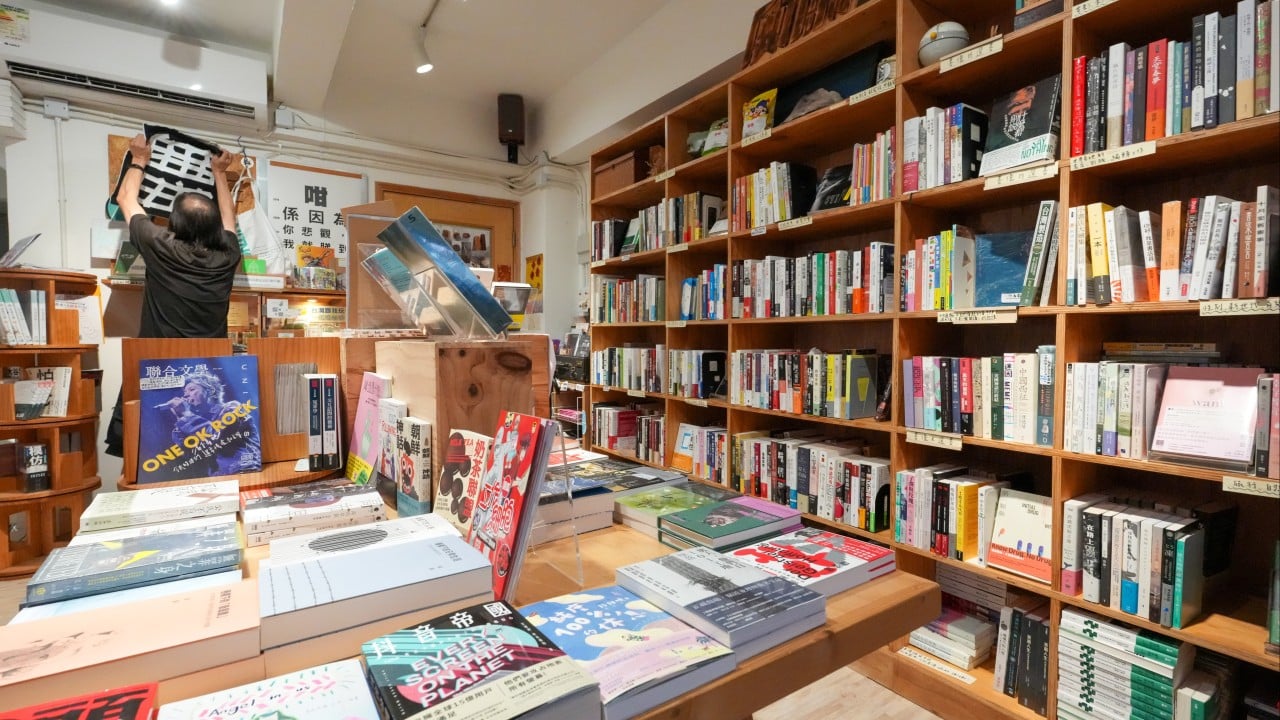
You walk up four flights of narrow, humid concrete stairs in a crumbling tenement building in Prince Edward. You're expecting the dry, sweet scent of old paper. Instead, you're hit with the quiet dread of a lease running out.
This is the physical home of Have a Nice Stay (留下書舍), a tiny independent bookstore started in 2022 by five journalists who lost their jobs when the city's free press was dismantled. On July 14, 2026, they made it official: they are closing their doors for good on August 30.
They aren't the first. They won't be the last.
To the casual observer, the steady death of Hong Kong’s independent book scene is a simple case of bad retail economics. Books are heavy, rent is astronomical, and nobody reads anymore, right?
That's the easy answer. But it's also incredibly naive. The true story of why Hong Kong’s literary underground is evaporating is far more complicated, painful, and messy. It’s a toxic mix of shrinking bank accounts and invisible, shifting political boundaries that the people running these shops call "the red lines".
The Double Whammy of Cash Flow and Creeping Fear
When Have a Nice Stay announced its closure, the owners were refreshingly honest. They didn't blame everything on some grand political conspiracy. They admitted they simply ran out of money. For the past six months, they operated in the red. They tried to run the shop on a "break-even" philosophy—just looking to survive, not to get rich.
But in Hong Kong's brutal retail market, breaking even is a luxury.
[The Balance Sheet of a Hong Kong Indie Bookstore]
Average Rent for Tiny Top-Floor Space: HK$12,000 - $20,000/month
Average Book Profit Margin: 20% to 30%
Books needed to sell just to pay rent: 400 - 600 copies/month
But cash wasn’t the only thing running thin. The owners openly pointed to another, more insidious culprit: "hard-to-grasp red lines".
In Hong Kong today, you don't get a list of banned books from the government. There's no official index of forbidden texts. Instead, the authorities leave the rules deliberately vague. They tell booksellers to simply "follow the law".
How do you follow a law when the boundaries move every single day?
The team at Have a Nice Stay summed up this exhaustion perfectly. They noted that since the government refuses to explicitly state which titles are illegal, they had to make those calls themselves. They didn't have the time or energy to read every single book they stocked, let alone predict which ones might trigger a national security investigation.
They realized they lacked the courage to keep playing this high-stakes guessing game. And honestly, who can blame them?
The Book Fair Ban and the Death of the Lifeline
For decades, the annual Hong Kong Book Fair was the single most important week of the year for local publishers and bookstores. Held every July at the Convention and Exhibition Centre in Wan Chai, it is a massive, chaotic event that draws hundreds of thousands of readers.
For independent shops, the book fair wasn't just a marketing opportunity. It was their economic lifeline.
A successful week at the fair could generate enough revenue to pay a store’s rent for six months. It subsidized their quiet, unprofitable months.
But the 2026 Book Fair, scheduled for mid-July, made it clear that the gates are firmly shut to anyone deemed outside the mainstream.
In late June, two of the city's most respected, long-standing independent bookstores—Yulin Bookstore (榆林書店) and Lok Man Bookstore (樂文書店)—received notices that they were barred from participating. No reasons were given. The Hong Kong Trade Development Council (HKTDC) hid behind standard bureaucratic language, stating they have "sole and absolute discretion" over who gets a booth.
To put this in perspective:
- Yulin Bookstore has been a fixture of the local literary scene since 1997. They had participated in the book fair every single year of their existence.
- Lok Man Bookstore, founded in 1984, was a legendary destination for lovers of literature and independent publications.
Both stores had already ordered hundreds of boxes of new books from Taiwan and local independent press houses, expecting to sell them at the fair. Instead, those boxes sat piled high in their small Mong Kok shops.
The financial blow was fatal. Just days after being disqualified from the fair, Yulin Bookstore announced that it would close its physical shop permanently in April 2027 when its current lease expires.
When the major economic engines of these small businesses are systematically dismantled, they don't need to be officially shut down by police. They simply starve to death.
The Rise of Administrative Waterboarding
If the economic squeeze doesn't get you, the administrative harassment will.
Over the last few years, the Hong Kong government has perfected a technique that local business owners call administrative pressure. If a bookstore stocks titles that touch on civil society, local history, or social movements, they don't always get a dramatic raid by national security police.
Instead, they get a sudden, endless stream of visits from different municipal departments.
- The Building Department shows up to inspect fire exits and partition walls.
- The Food and Environmental Hygiene Department inspects the premises for minor licensing issues.
- The Inland Revenue Department demands audit after audit.
- The Lands Department issues warnings about the public space right outside the shop door.
This is exactly what happened to Mount Zero (見山書店), an incredibly popular indie bookshop nestled in a quiet, leafy alley in Sheung Wan. For months, the shop was hit with weekly complaints from anonymous sources. They were warned about using the paved public alleyway in front of their entrance for author talks. Faced with mounting fines, legal threats, and endless government paperwork, the owner chose to close the shop in March 2024.
It’s death by a thousand paper cuts. It drains your bank account, eats up your hours, and destroys your mental health.
When the Red Line Becomes an Arrest Warrant
For some, the pressure is far more direct.
In March 2026, national security police raided Yiquan Bookshop (一拳書館) in Sham Shui Po. The shop’s founder, Pong I-ming, and three employees were arrested for allegedly selling "seditious" publications, including a biography of jailed media tycoon Jimmy Lai.
Just a few months later, in late June 2026, the police arrested Wong Man-huen, the owner of Hunter Bookstore (獵人書店), and her husband. They were accused of displaying seditious materials and money laundering.
When these high-profile arrests happen, the entire independent retail ecosystem feels the chill. Booksellers are forced to ask themselves a terrifying question: Is a twenty-dollar profit on an indie novel worth a prison sentence?
For most, the logical answer is no. They start to self-censor. Then they stop carrying certain publishers. Eventually, they realize the joy of sharing ideas has been completely replaced by anxiety. So they pack up their shelves, turn off the lights, and walk away.
The Slow Erosion of Hong Kong's Intellectual Living Rooms
When an independent bookshop closes down in a city like Hong Kong, you aren't just losing a retail outlet. You're losing a community center.
In a city dominated by massive, corporate chain stores that sell the same pre-approved bestsellers, indie shops are the only places where local history, poetry, and independent journalism can breathe. They are places where people gather to drink tea, argue about ideas, and feel less alone in a rapidly changing city.
They are the intellectual living rooms of Hong Kong.
With Have a Nice Stay closing in August and Yulin ending its retail run next spring, those living rooms are disappearing. The cultural space is shrinking, replaced by a safe, sterile environment where only government-approved narratives are allowed to exist.
How You Can Support the Remaining Spaces
If you care about independent thought and local culture, sitting back and mourning these closures on social media isn't enough. You have to actively keep the remaining spaces alive. Here is how you can do that right now:
- Buy Directly from the Source
Skip the big online retailers and corporate chains. If you want a book, buy it directly from the physical storefronts of the surviving independent shops. Your money keeps their lights on. - Order Online and Pay for Shipping
Many independent stores operate small online catalog systems. Even if you don't live near Mong Kok or Sham Shui Po, you can order books and pay for delivery. It provides them with steady cash flow. - Attend Pop-Up Events and Workshops
Many of these stores rely on ticketed events, writing workshops, and small craft sales to pay their bills. Show up, buy a ticket, and bring a friend. - Support Independent Publishers
The books on the shelves have to come from somewhere. Support small, independent presses in Hong Kong and Taiwan that continue to publish local writers, historians, and poets.
The story of Hong Kong’s independent bookstores is reaching a difficult chapter, but the final pages haven't been written yet. It is up to the readers to decide how this story ends.