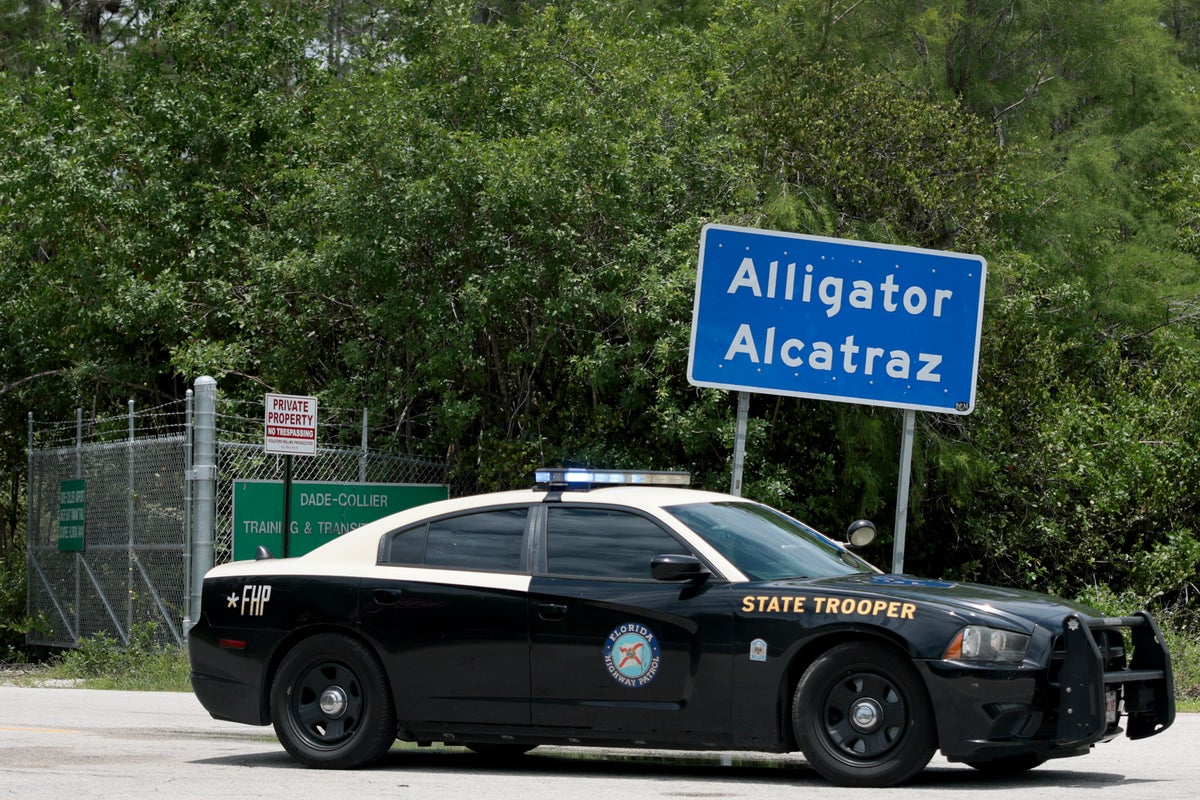
Florida just quieted one of the loudest lightning rods in modern immigration history.
Governor Ron DeSantis stood in the sticky heat of Ochopee, flanked by White House Border Czar Tom Homan, to declare the mission complete. The South Florida Detention Facility—infamously dubbed Alligator Alcatraz—is officially shut down. Less than a year after its high-profile opening in July 2025, the sprawling encampment of tents and barbed wire inside the Florida Everglades has zero detainees left.
DeSantis spun the closure as a unmitigated victory. He proudly boasted that the site processed and deported 21,000 undocumented immigrants during its brief, chaotic run. According to the governor, the state stepped up to fill a temporary operational gap until the federal government could scale up its own detention space.
But don't let the victory lap fool you.
Behind the political rhetoric lies a much messy reality of exploding budgets, compounding legal threats, and human rights nightmares that made the facility a massive liability.
The Billion Dollar Breakdown
When the Trump and DeSantis administrations hastily cleared a defunct municipal training airport in the Everglades to build this 5,000-bed facility, it was hailed as the blueprint for state-led mass deportation. It wasn't cheap. Operating a massive tent city in the middle of a swamp requires a mind-boggling logistical effort.
The price tag quickly skyrocketed to roughly $1.2 million every single day.
Florida initially sank a massive chunk of change into getting the site running, requesting $608 million in federal reimbursement. But as the months dragged on, the state racked up an additional $300 million in unbudgeted operational costs.
Here is where the financial gears locked up. Insiders close to the state vendor contracts revealed that while the original $608 million reimbursement seems secure, there is absolutely no guarantee the federal government will cover that extra $300 million shortfall.
The sudden rush to pack up the tents wasn't just about finishing a mission. It was about bleeding cash. Every day those lights stayed on, Florida taxpayers were holding the bag for a soaring bill the feds might never pay back. Now that the state has triggered the demobilization clauses in vendor contracts, they face tens of millions more in exit fees just to tear down the fences.
Life Inside the Swamp
Supporters argued Alligator Alcatraz kept dangerous criminals off Florida streets. Detainees and human rights lawyers painted a terrifyingly different picture.
The facility consisted of massive white tents packed with rows of bunk beds, completely encircled by chain-link cages. The geographic isolation was the point—it made the site easy to secure but nearly impossible to operate humanely.
The physical conditions inside the camp were brutal. Detainees described a daily struggle against the elements and infrastructure failures:
- Sewage and Flooding: Portable toilets routinely backed up, leaving concrete floors flooded with fecal waste.
- The Heat: Air conditioning units regularly failed, turning the plastic tents into ovens during the sweltering South Florida summer.
- Infestations: The swamp fought back. Detainees reported food contaminated with worms and relentless swarms of mosquitoes buzzing through showers and sleeping quarters.
- Isolation: Because of the remote location, immigration attorneys struggled to gain physical access to clients. Families regularly reported that loved ones vanished into the facility for weeks without a single phone call or legal update.
When state officials quieted the camp earlier this month, they claimed it was a temporary safety measure ahead of the 2026 Atlantic hurricane season. The tents were never engineered to survive a major tropical storm system in the open wetlands. Instead of returning after the storm threat passed, the remaining 1,400 detainees were scattered to federal facilities across California, Arizona, Louisiana, and Texas, never to return.
The Environmental Mess Left Behind
Closing the camp doesn't erase the damage done to one of the most fragile ecosystems on earth.
Environmental groups, alongside the Miccosukee Tribe of Indians, previously sued the state over the facility. They alleged the administration completely bypassed mandatory environmental reviews and permit processes to pour acres of concrete slabs and run heavy industrial operations directly on top of protected wetlands.
Even though the site is clearing out, the legal war isn't over. Activists and lawyers from groups like Friends of the Everglades are pushing ahead with lawsuits to force the state to completely remediate the land. They want the concrete jackhammered out and the natural water flow restored.
Miami-Dade County Mayor Daniella Levine Cava put forward a plan to permanently shield the property by selling the county-owned airport land back to the National Park Service. The goal is to absorb the entire site into the Comprehensive Everglades Restoration Plan, ensuring no one can ever build a makeshift prison there again.
What Happens Next
If you're tracking the future of enforcement tactics, the closure of Alligator Alcatraz isn't the end of the strategy—it's a pivot. The administration is already moving resources toward more permanent, hard-sided facilities. DeSantis has heavily touted a new "deportation depot" operating out of a former state prison in Baker County, away from the immediate logistical headaches of the Everglades.
The physical footprints in Ochopee will fade over the coming weeks as contractors pull down the fences and haul away the trailers. The site will eventually transition back to its original identity as a small pilot training airstrip.
If you are an advocate, legal professional, or researcher tracking these cases, your focus must immediately shift toward the federal facilities in the Southwest and Gulf Coast where the remaining Everglades detainees were sent. Tracking down individuals who were abruptly moved without notification remains the immediate priority for legal defense teams across the country.
:max_bytes(150000):strip_icc()/TAL-nassau-bahamas-BEAUTCARIB0323-4fbfce903e5a4418b895e03717e3de0d.jpg)