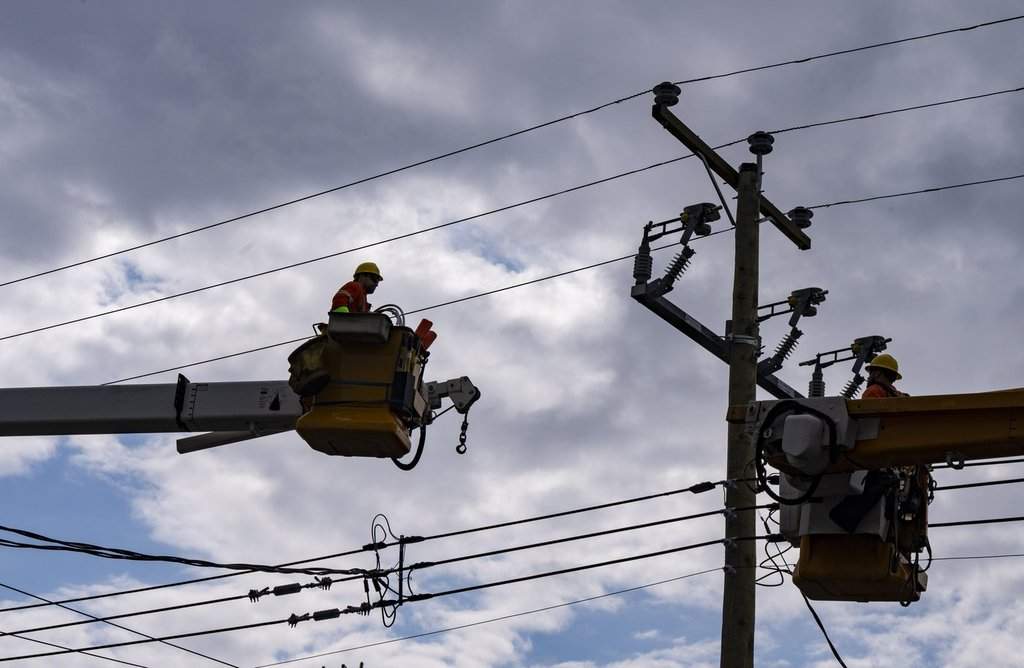
You wake up to pitch black, the distinct smell of humid summer air, and a dead smartphone. It's becoming a routine summer experience for Quebecers. Last night, severe thunderstorms ripped through southern Quebec, instantly knocking nearly 140,000 Hydro-Québec customers off the grid at the peak of the storm. High winds uprooted massive trees, snapping power lines like twigs and turning regional neighborhoods into dark zones.
While utility crews managed to pull off massive initial restorations, more than 30,000 hydro clients remain without power today. If you found value in this post, you might want to look at: this related article.
If you are reading this while staring at a blinking router or waiting for your fridge to defrost, you want to know when the lights will come back on and how to handle the lingering heat wave without AC. Let's look at exactly what happened, where the damage is worst, and how to bulletproof your home for the next inevitable grid failure.
The Reality of the Quebec Hydro Outages
According to Hydro-Québec spokesperson Audrey St-Pierre, roughly 200 field teams are currently deployed to patch the grid back together. The utility expects the vast majority of affected customers to have electricity restored by 11 p.m. tonight. For another look on this event, check out the recent update from TIME.
But progress isn't uniform. The storm path carved clear zones of destruction across the province, leaving some regions bearing the brunt of the blackouts.
The Hardest Hit Regions
The Laurentians region, sitting northwest of Montreal, took the worst beating. Right now, about 13,000 customers in that area are still waiting for power. Environment Canada confirmed that violent wind gusts reached up to 96 kilometers per hour at Montréal-Trudeau International Airport. Winds that fast transform heavy tree branches into projectiles, and when those branches hit aging distribution lines, the grid fails instantly.
The timing couldn't be worse. This storm hit right in the middle of a brutal summer heat wave stretching across Ontario and Quebec. Sitting in a home without air conditioning when outdoor temperatures soar isn't just uncomfortable; it's a legitimate health risk.
Why Summer Storms Cripple the Grid So Easily
People always ask why a modern power grid fails so spectacularly during a standard summer thunderstorm. The answer comes down to trees and infrastructure.
Quebec has an incredibly dense tree canopy. When a severe line of thunderstorms rolls through with near-triple-digit wind speeds, older trees outside of the immediate utility right-of-way fall onto localized lines. Hydro-Québec spends millions annually on tree trimming, but they can't cut down every tree on private property that happens to lean toward a wire.
When a major line snaps, it triggers a cascade. Circuit breakers trip to prevent electrical fires, cutting power to thousands of homes downstream instantly. Fixing this isn't a matter of pushing a button in a control room. It requires physical boots on the ground, climbing poles, splicing heavy gauge wire, and clearing fallen trunks in treacherous conditions.
What to Do While Waiting for Restoration
If you're part of the 30,000 still waiting for the lights to turn on, you need to manage your home right now to prevent food loss and property damage.
Keep the Fridge Closed
Don't peek. A completely unopened refrigerator keeps food safe for only about four hours. A full, sealed freezer can maintain its temperature for roughly 48 hours. Every time you open the door to check on your milk, you let precious cold air escape and drastically shorten that window.
Disconnect Your Electronics
When Hydro-Québec re-energizes your neighborhood line, it often causes a brief power surge. That sudden spike can easily fry the sensitive circuit boards inside your smart TV, microwave, or computer. Go around your house and unplug expensive electronics right now. Leave one lamp switched on so you know immediately when the power returns.
Manage the Heat Safely
With the current heat wave active, a sealed house turns into an oven quickly.
- Open windows on opposite sides of the house to create a cross-breeze, but only if the outdoor air is cooler than the indoor air.
- Move to the lowest level of your home, like a basement, where temperatures stay cooler.
- Drink water constantly. Don't wait until you feel thirsty to start hydrating.
How to Prepare Your Property for the Next Storm
We know this will happen again before the summer ends. Instead of getting caught off guard next time, take explicit steps to secure your home before the sky turns gray.
Audit the Trees on Your Lot
Walk your property line. Look for dead branches, rotting trunks, or trees that lean significantly toward the power lines connecting your house to the street. If you spot trouble, call a certified arborist immediately. Do not attempt to trim branches near power lines yourself.
Invest in a High-Quality Surge Protector
Power strips from the dollar store won't cut it. Look for a whole-house surge protector that installs directly into your main electrical panel. This device absorbs massive voltage spikes before they ever reach your appliances, giving you peace of mind during middle-of-the-night lightning storms.
Build a Real Emergency Kit
Stop relying on your phone flashlight. Prepare a dedicated storm bin containing:
- High-lumen LED flashlights and lanterns with extra batteries.
- A crank-powered or battery-operated weather radio to track Environment Canada alerts when cell towers get overloaded.
- At least three days' worth of bottled water and non-perishable food.
- External power banks kept at 100% charge to keep your communication devices alive.
Next Steps for Affected Residents
Check the official Hydro-Québec outage map for real-time updates on your specific block. Avoid driving through heavily wooded areas in the Laurentians right now, as dangling wires and weakened branches still pose a significant threat. If you see a downed power line, treat it as live, stay at least 10 meters away, and call 911 immediately to report it.
:max_bytes(150000):strip_icc()/TAL-nassau-bahamas-BEAUTCARIB0323-4fbfce903e5a4418b895e03717e3de0d.jpg)