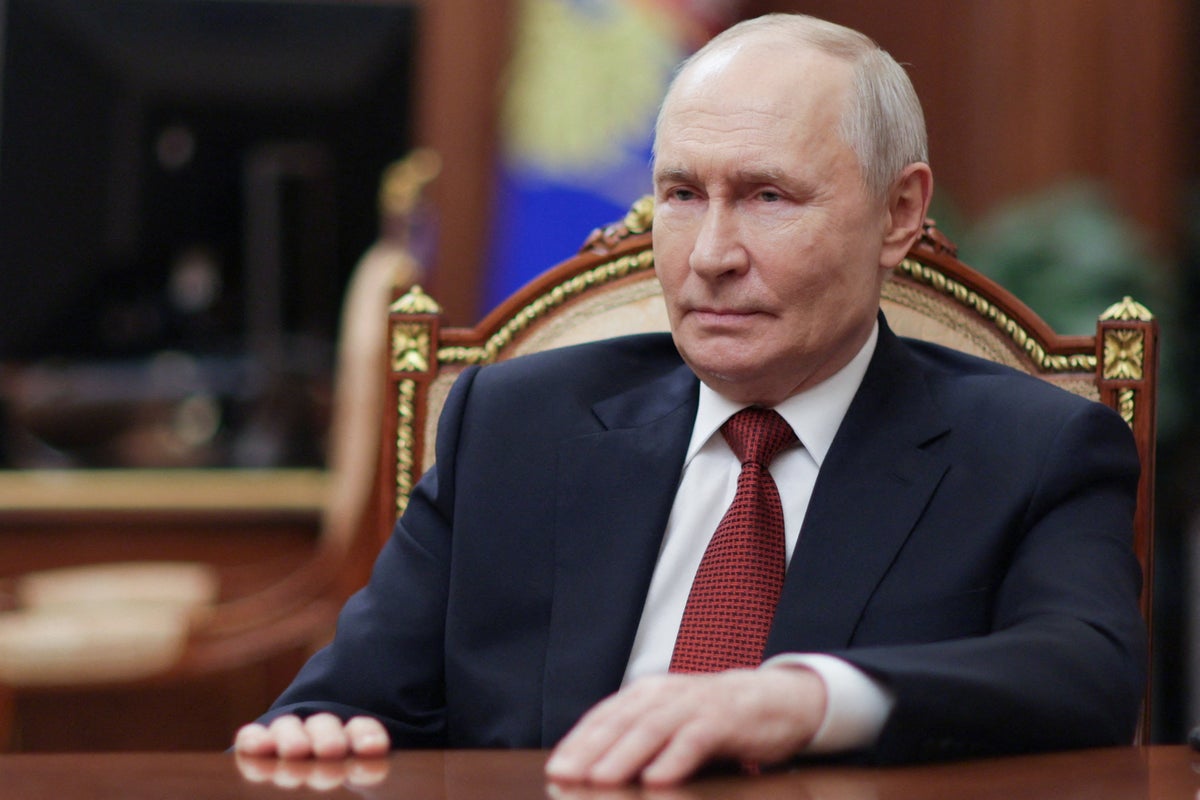
Vladimir Putin just did something he almost never does. He stood in front of his rubber-stamp United Russia party congress and admitted that things aren't going perfectly. Specifically, he acknowledged that Ukrainian drone strikes are causing real fuel shortages and structural issues inside Russia. If you've been following the conflict into this fifth year, you know how bizarre it feels to hear the Kremlin chief say out loud that the enemy is creating serious problems.
Naturally, a wave of optimistic headlines followed. Analysts are wondering if the Russian leader is finally cracking under the pressure of a stalled frontline and a bruised domestic economy.
Don't buy into the hype just yet.
When an autocrat admits to weakness, it's rarely a confession. It's almost always a calculation. Putin isn't showing cracks because he's losing his grip on power. He's managing expectations, conditioning his public for a long-haul domestic squeeze, and setting the stage for a highly specific diplomatic chess game involving the White House. Looking closely at the data shows this admission is a tactical pivot, not a white flag.
The cold reality of Ukraine drone campaign
Ukraine changed the rules of engagement by taking the fight directly to Russia's economic engine. Over the last few months, Kyiv deployed homegrown, long-range interceptor and strike drones to systematically hammer Russian oil infrastructure. They aren't just hitting frontline supply depots anymore. Ukrainian drones are reaching as far as the Ural Mountains and the heart of Moscow.
The results are impossible for the Kremlin to hide. Consider what's happening on the ground right now.
- Crimea is under a state of emergency: Recent strikes completely knocked out local energy grids and caused acute petrol shortages across the occupied peninsula.
- Gasoline scalping is rampant: In regions like Irkutsk, local governors put authorities on high alert to crack down on black-market fuel traders capitalizing on supply gaps.
- Rationing has begun: Several Russian provinces quietly introduced limits on how much petrol an individual can buy at the pump.
Putin acknowledged a certain shortage of fuel but quickly added that it's not critical. He claimed Russia will just scale up imports and fix its air defenses around key refineries. But energy experts know repairing sophisticated refining columns isn't easy when Western sanctions cut off access to specialized components. Russia is one of the biggest energy producers on the planet, so watching its citizens wait in long lines for gas is an incredible irony.
Reading between the lines of a Kremlin confession
Why admit this publicly? In a closed information ecosystem like Russia, Putin could easily blame the shortages on routine maintenance or corporate greed. By explicitly pointing the finger at Ukrainian infrastructure strikes, he's executing a deliberate psychological strategy.
First, he's using the attacks to rally a domestic population that's increasingly weary of a war now stretching deep into 2026. When drones hit civilian oil infrastructure, it allows state media to frame the conflict not as an imperial land grab, but as a defensive war protecting the homeland against foreign-backed terrorists. Putin told state television that Ukraine wants to cause a split in Russian society. By framing the fuel lines as a shared hardship caused by an external enemy, he's trying to harden public resolve rather than soften it.
Second, he's shifting the blame for the stalled military campaign. If the Russian army is struggling to make major gains toward strategic goals like Sumy or Lyman, Putin can now point to the damaged supply lines as a temporary logistical hurdle. It buys him time with his own military elite.
The Trump peace track and the Anchorage shift
The timing of Putin's sudden honesty isn't a coincidence. It directly aligns with behind-the-scenes diplomatic maneuvering involving Washington.
The White House sent special envoy Steve Witkoff and Jared Kushner to Moscow multiple times to broker a potential end to the conflict. Putin himself confirmed he's waiting for them to return for further detailed negotiations once the active phase of separate geopolitical tensions in the Middle East cools down.
A year ago, during talks in Alaska, Putin floated a deal. He offered to drop claims to certain southern Ukrainian territories if Kyiv withdrew from the Donbas. Lately, top Russian officials like Dmitry Peskov have expressed deep frustration, claiming Washington swung back to a firmer pro-Ukraine stance.
By admitting that Ukrainian strikes are hurting, Putin is sending a calculated signal to American negotiators. He's subtly acknowledging that a stalemate exists, which makes Russia look like it's operating in good faith ahead of potential peace talks. At the same time, he claimed Ukraine offered a mutual moratorium on long-range infrastructure strikes. He's laying the groundwork to say: "Look, we are both hurting, so let's freeze the map where it stands."
Western wishful thinking vs structural resilience
The mistake Western observers keep making is confusing operational friction with regime collapse. Russia is facing major headwinds. Air fleets are facing groundings because sanctions are finally choking out airline maintenance. The central bank is wrestling with sticky inflation. Now, the energy sector is taking direct hits.
But the Russian state isn't a house of cards waiting to fall from a few drone strikes.
The Kremlin adapted its military economy with surprising speed. They've rerouted supply chains through third parties, expanded domestic drone production like the new ZIRKA interceptors, and kept their frontline infantry supplied via alternative logistics networks. Even with internal fuel rationing, military transport always gets priority. The strikes hurt the Russian consumer far more than they hurt the Russian soldier on the line of contact.
Assuming Putin is on the verge of cracking underestimates his capacity for absorbing domestic pain. He's survived mutinies, intense economic isolation, and massive troop casualties. A temporary deficit at the gas pump won't make him abandon his goal of controlling Ukraine.
How to accurately track what happens next
If you want to know whether Putin is actually in trouble or just playing politics, stop watching his television interviews. Watch these specific indicators instead.
Track European asset usage
Watch how Europe handles the more than 200 billion euros in frozen Russian assets. If the EU successfully turns those assets into direct military procurement funds for Ukraine, it will outpace Russia's ability to rebuild its damaged refineries.
Monitor North Korean and Iranian supply lines
Russia's domestic shortages only matter if their foreign supply chains break. If shipments of artillery, missiles, and drone components from partner nations slow down, the logistical crunch will turn from a minor headache into a frontline catastrophe.
Watch the Ankara NATO summit outcomes
NATO allies are meeting in Ankara to discuss defense targets and long-term Ukraine strategy. If the alliance remains unified and commits to mass-producing advanced air defense and long-range weapons, Putin's calculations will have to change. If transatlantic tensions fracture the alliance, Putin will know he can outlast the West.
Don't mistake a shift in Kremlin public relations for a shift in strategy. Putin is dug in, and his recent admission of trouble is just another tool to manage his people and manipulate his adversaries.
Keep your eyes on the hard data, the supply lines, and the actual flow of weapons. That's where the war will be decided, not in a scripted television interview.