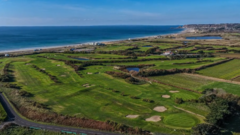
When a piece of land like the Les Mielles Golf & Country Club hits the market with a staggering £9.95 million price tag, it’s easy to look at the numbers and assume it’s just another real estate transaction. It isn't. Not when that land represents one of the few remaining significant open spaces in a place as geographically constrained as Jersey.
Chief Minister Lyndon Farnham’s recent signaling of support for bringing the site into public ownership isn't just political posturing. It's a fundamental question about how we value our landscape. Do we treat our last remaining green belts as commodities for the highest bidder, or as essential public infrastructure for the next century?
The petition launched by islander Matt Topman—which has already gathered hundreds of signatures—is the canary in the coal mine. People are tired of seeing their surroundings carved up and sold off without a clear vision for the long term.
The Economics of Nature
Let’s be brutally honest about the financials. Nearly £10 million is a massive commitment for any government. Critics will immediately point to the cost. They’ll ask where the money comes from. They’ll argue that a golf course isn't a core public service.
But these arguments miss the point entirely. If you look at the cost of land acquisition in isolation, you ignore the long-term utility of the asset. Once a private developer buys that land, it’s gone. You can’t "buy it back" later when you realize you desperately need more public space for mental health, recreation, or environmental preservation.
Think about the previous conservation successes in Jersey. Look at the projects at Plémont and Grève de Lecq. These weren't just about saving a view; they were about securing a future. When the government intervenes to secure land, it effectively freezes that asset for public benefit.
If the government acts now, they aren't just buying a golf course. They are buying an insurance policy against the encroaching urbanization that is slowly turning every open acre into a high-density footprint.
Why a Golf Course Isn't Just for Golfers
The common misconception is that saving a golf course is elitist. That it’s only for people with fancy clubs and too much time on their hands.
That’s outdated thinking.
The proposal on the table isn't about maintaining a pristine 18-hole course for the elite. It’s about "rewilding." It’s about taking a massive, managed green space and allowing it to serve a dual purpose. Part of it could remain as a recreational facility—golf is, after all, a sport that gets people outside—but the rest could be returned to nature.
Imagine a national centre for community use in the existing clubhouse. That’s not a golf amenity. That’s a hub for everyone.
The key here is the "open canvas" approach. If the site comes into public hands, the public gets a seat at the table to decide what that landscape looks like in twenty years. If it sells to a private entity, the public is essentially a spectator to whatever the new owner decides is most profitable. That could mean luxury housing, private gated facilities, or restricted access.
The Risk of Doing Nothing
You’re likely wondering if this is actually feasible. The answer is: it depends on political will.
Governments often shy away from these purchases because they are complex. It’s much easier to let the market handle it and just issue a planning permit later. But the "market" rarely has a 50-year vision. The market is obsessed with quarterly returns and immediate value.
When you lose a major site, you lose the opportunity to correct the mistakes of previous generations. If you’re a resident, you’ve probably seen areas in your own town that were once public or open, now covered in concrete. The regret is always the same: "Why didn't we protect that when we had the chance?"
Chief Minister Farnham has an opportunity here to lead a conversation that goes beyond the price tag. He needs to move past the "would like to see" phase and into the "here is the funding model" phase.
What You Should Demand from Local Leadership
If you live in the area or care about how land is managed, waiting for the government to act unilaterally is a strategy for disappointment. Here is what you should be pushing for right now:
- Demand Transparency on the Appraisal: Don't just accept the £9.95 million figure. Public funds require public scrutiny. Is the site actually worth that to the taxpayers, or is it inflated by development potential?
- Support a Mixed-Use Vision: Force the conversation toward inclusivity. If the site is bought with public money, it must be for the public. That means demanding access for hikers, families, and community groups, not just the golfing fraternity.
- Engage with the National Trust: The Chief Minister mentioned the National Trust for Jersey. That is a vital partnership. Private ownership of large estates is risky for the public. A collaborative model involving the Trust provides a layer of protection that a single government administration might lack in future cycles.
- Reject the Binary Choice: The debate shouldn't be "golf course vs. nothing." It should be about how to integrate a massive green asset into a modern, sustainable Jersey.
The Reality of Land Preservation
Let's address the elephant in the room: maintenance. Owning land is expensive. If the state buys the site, they are taking on the responsibility for its upkeep.
However, compare that to the alternative. A private owner might let it fall into disrepair while waiting for a zoning change that allows for high-density development. Or they might turn it into a private, gated resort that does nothing for the local economy beyond a few low-wage service jobs.
Public ownership ensures that the land isn't a bargaining chip.
The argument that we can't afford to buy it is often a cover for the fact that we don't want to manage it. But management is a solvable problem. You can lease out portions to operators. You can run it as a social enterprise. You can invite private investment for specific facilities while keeping the land itself in public trust.
Why This Is a Moment of Truth
This is about more than one piece of land. It’s about the precedent.
If the government stands by while Les Mielles is sold off to the highest bidder, they are signaling that they don't value land preservation over capital gains. That’s a dangerous message to send to the community.
There’s a shift happening. Across Europe and the UK, communities are waking up to the fact that their local environment is finite. They are fighting to keep public access to beaches, to forests, and to sports fields.
Jersey is small. You don't have an infinite supply of green, open space. Once you lose a site of this size, you never get it back. The price of £9.95 million will look like a bargain in thirty years.
Next Steps for Stakeholders
If you want to see this succeed, stop thinking about it as a "golf course" and start thinking about it as "community infrastructure."
- Show up. When public meetings are called, be there. The loudest voices are usually the ones advocating for the most restrictive outcomes.
- Email your representatives. Use specific language. Don't just say "save the land." Say "I support the acquisition of Les Mielles for the public trust because it secures long-term recreational and environmental benefits that cannot be replicated elsewhere."
- Monitor the petition. Matt Topman’s campaign is the primary vehicle for this right now. If it loses momentum, the urgency disappears.
The government has the power to bridge the gap between private property and public need. Farnham is talking the right talk. Now it’s time to see if the action matches the words.
This isn't about saving a game. It's about saving the ground we stand on. The clock is ticking on that sale. The window for a "once in a generation" opportunity is narrow, and once it closes, it stays closed. It is time for the government to step up and ensure that the future of this site is decided by the people of Jersey, not just the checkbooks of the highest bidder.