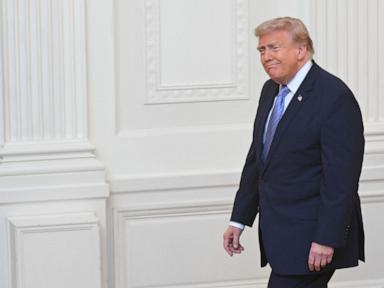
Donald Trump just hijacked the national news cycle again with a blistering 25-minute primetime address from the East Room. If you watched the mainstream media spin it, you probably heard the same old refrain about recycled grievances. But looking closely at the details reveals that this wasn't just another rerun of his classic complaints. This was a highly coordinated opening salvo for a completely new political strategy aimed squarely at the upcoming midterm elections.
The media spent all night fact-checking things that don't matter to his base. Meanwhile, they missed the actual mechanics of what the administration is doing right now. Trump's elections speech wasn't merely a venting session. It was a calculated policy pivot designed to force a stalled piece of voting legislation through Congress while giving federal agencies unprecedented power over local ballot boxes. For a more detailed analysis into similar topics, we recommend: this related article.
Here is what really happened behind the podium and why the standard talking points are getting it completely wrong.
The China Data Theft Claims Are a Distraction
Trump kicked off the core of his speech with a massive claim about foreign interference. He announced the declassification of documents showing that the People's Republic of China pulled off the largest compromise of election data in history. According to the president, a specific Chinese data exploitation unit managed to illicitly acquire 220 million U.S. voter files starting back in the 2020 election cycle. For additional information on this topic, detailed reporting is available at USA Today.
It sounds terrifying. A foreign superpower holding the personal files of almost every American voter is a great headline. But if you know anything about how election data works, you know this is a classic sleight of hand.
Voter files aren't top-secret state secrets. In the United States, voter rolls are mostly public records. Political campaigns, research firms, and marketing companies buy and sell these lists every single day. A White House assessment even quietly indicated that the information China allegedly accessed was already publicly available.
So why build a whole primetime address around it? Because it shifts the blame. Trump blamed a "deep state" conspiracy for covering up the intelligence. He alleged that U.S. spy agencies knew about the file compromise years ago but deliberately hid it from him and Congress. By framing public voter registration records as a catastrophic national security breach, the administration builds a perfect foundation for federal intervention. It turns a localized, decentralized administrative process into an international battlefield. That gives the executive branch a reason to step in.
The Hidden Power Play Behind the SAVE America Act
The real climax of Trump's elections speech didn't involve China at all. It focused on a stalled piece of legislation called the Safeguard American Voter Eligibility Act, or the SAVE America Act. Trump practically shouted at lawmakers to pass the bill. He explicitly stated that the only reason someone would oppose the legislation is because they want to cheat in elections.
Let's look at what this act actually does. It aims to impose strict conditions on voter registration nationwide, making photo identification and proof of citizenship mandatory to even register. It also aims to heavily restrict or outright ban mail-in ballots in almost all circumstances.
Critics and voting rights groups point out that the law would create massive logistical hurdles for perfectly legal voters. For instance, married citizens who changed their surnames often face intense bureaucratic nightmares trying to prove their identity under these exact types of rules.
But Trump isn't thinking about the logistics of name changes. He's thinking about leverage. By tying the freshly declassified China documents to the SAVE America Act, he's presenting a simple ultimatum to Congress: pass our voting restrictions or accept that communist foreign powers are running our elections. It’s a brutal, effective political trap. It forces moderate lawmakers into a corner right before the midterms.
The Weaponization of the Department of Homeland Security
While the media debated the legislative future of the SAVE America Act, Trump dropped a policy bomb that requires no congressional approval at all. He announced that he's deploying federal officers from the Department of Homeland Security to seven specific states. The explicit mission for these federal agents is to seize ballot boxes.
Think about how radical that is. American elections have historically been run by local counties and states. The federal government has almost no business touching a ballot box unless a federal court orders it after a lengthy legal battle. Trump bypassed that entirely. He justified the move by claiming that massive numbers of undocumented immigrants voted in those specific seven states.
This is where the real impact of Trump's elections speech lies. He’s using the executive branch to physically interfere with election infrastructure under the banner of national security. It bypasses local election officials completely. If DHS agents start seizing boxes or monitoring drop-off locations, it creates immediate friction and chaos at the local level. It doesn't matter if the courts eventually throw the policy out. The disruption happens in real-time, right when votes are being cast and counted.
The Specific Local Targets
Trump didn't just speak in broad generalities. He went after specific geographic targets to keep his base laser-focused. He zeroed in on an FBI file regarding Muskegon, Michigan. He claimed that democratic canvassers there admitted to signing voter registration forms in other people's names during the 2020 cycle. He also tied the timing of his speech to an ongoing FBI priority investigation in Fulton County, Georgia, where federal agents have been digging through mail-in ballot signatures.
By naming specific places like Muskegon and Fulton County, Trump makes the threat feel localized and immediate for his supporters. It provides local activist groups with explicit targets for their own poll-watching and monitoring efforts. It converts a national prime-time address into an actionable field guide for state-level political warfare.
The War on Traditional Media Distribution
One of the strangest moments of the night happened when Trump openly attacked ABC and NBC during the address. He lambasted them for refusing to broadcast his speech live on their main television networks, even demanding that their broadcast licenses be revoked. Both networks did stream the speech on their digital platforms and covered it immediately afterward, but that wasn't enough for the president.
This attack isn't just standard anti-media rhetoric. It shows a deep understanding of modern information consumption. Trump knows that by attacking the networks for "censoring" him, he drives his audience directly to the White House website, where his team was simultaneously uploading the heavily redacted declassified intelligence files.
It bypasses the traditional media filter entirely. He tells his audience to go read the raw files themselves. Of course, the average voter cannot easily interpret a heavily redacted intelligence file in real-time. But they don't have to. The mere existence of the files online, hosted on an official government portal, serves as proof enough for his supporters that the threat is real.
What Happens Next
Stop analyzing this speech as a simple historical grievance session. It's a forward-looking operational playbook. If you want to understand how this plays out over the next few months, watch these specific areas.
First, look at the legal standoffs. Governors in the seven targeted states are already pushing back against the DHS directive to seize ballot boxes. Expect immediate lawsuits filed by state attorneys general seeking emergency injunctions against federal agents entering local polling jurisdictions.
Second, watch the congressional floor. Republicans will use the China voter file narrative to force a vote on the SAVE America Act. They'll frame every single no-vote as a vote to let foreign actors control American data.
Finally, monitor the local election offices. The rhetoric in Trump's elections speech will inevitably spark an influx of partisan poll watchers and independent data analysts descended upon county offices in Michigan, Georgia, and Arizona. The goal isn't just to win a legislative debate in Washington. The goal is to reshape how the upcoming elections are conducted on the ground, county by county, box by box. Stay tuned to the local county commission meetings because that’s where the real fallout from this speech will land.
This video breaks down the specific claims made regarding international interference and the domestic legislative push that followed the address: Donald Trump's Election Security Speech Analysis.
http://googleusercontent.com/youtube_content/1