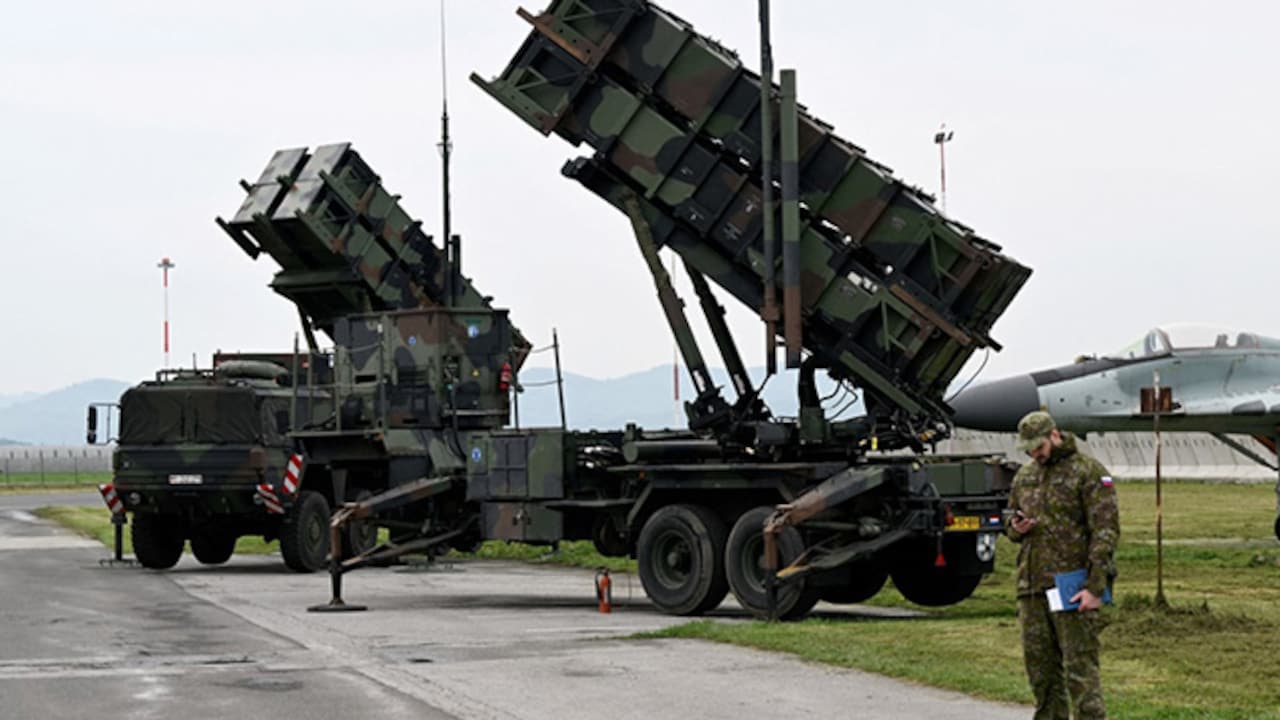
Donald Trump just handed Volodymyr Zelenskyy a massive headline at the NATO summit in Ankara. The US will grant Ukraine a license to build its own Patriot missile interceptors. On paper, it sounds like a seismic shift in Western military support. Trump even framed it with his trademark bravado, telling Zelenskyy that "this way, you can't complain that we're not giving them enough."
But don't let the political theater fool you. For a different view, consider: this related article.
If you look past the handshake and the casual "that's pretty cool, right?" banter, this announcement is a double-edged sword. It exposed a brutal reality that military planners have whispered about for months. The West is running dangerously low on air defense stockpiles, and Ukraine is essentially being told to build its own shield while under constant bombardment.
The Cold Logic Behind the Patriot Decision
The immediate reaction to the news focused on the diplomatic breakthrough. Zelenskyy has spent over a year begging allies for more Patriot batteries and interceptor refills. Russia recently escalated its air campaign, firing hundreds of ballistic missiles that tore through civilian infrastructure and air defense networks alike. Ukraine needed interceptors yesterday. Similar reporting on this matter has been provided by Reuters.
Instead of shipping crated missiles from American warehouses, Trump offered a blueprint and a legal permit. Why? Because the Pentagon's shelves are surprisingly bare.
The US military has faced unprecedented pressure on its own inventories. The conflict between the US, Israel, and Iran severely depleted American stocks of advanced interceptors, particularly during the intense early weeks of that campaign. Gulf states and Western bases across the Middle East consumed a massive portion of available Patriot PAC-3 inventory to counter ballistic threats.
Trump admitted as much in Ankara when asked if Washington would send more ready-to-use missiles to plug Ukraine's immediate gaps. "We don't have that many," Trump stated bluntly. "We need them for ourselves, too."
By shifting to a licensing model, the White House achieves a parallel objective. It fulfills a long-standing Ukrainian request while capping direct US military aid drawdowns. It is a classic outsourcing of defense risk.
How Joint Defense Manufacturing Works in a War Zone
Building an air defense network is not like setting up an automotive assembly line. The Patriot system, managed by defense titans Lockheed Martin and RTX Corporation (formerly Raytheon), is one of the most sophisticated pieces of engineering on earth.
Trump casually noted at the press conference that he hadn't actually informed these defense contractors about the licensing plan yet, though he felt sure "they will be thrilled." Corporate diplomacy aside, the actual transfer of tech involves layers of bureaucracy and extreme security protocols.
Under the proposed license, the US will not hand over its crown-jewel military tech secrets blindly. The arrangement relies on strict American oversight.
- Component Kits: The US will likely export highly complex internal guidance systems and seeker heads that cannot be easily replicated.
- Local Assembly: Ukrainian defense facilities will handle structural machining, solid-fuel rocket motor integration, and final assembly.
- Quality Control: American technical teams will supervise production lines to ensure the missiles meet stringent performance metrics.
This is not Ukraine's first rodeo with domestic production. Kyiv has done an incredible job modifying older Soviet frameworks and building long-range strike drones that have pounded Russian oil refineries deep behind the front lines. But assembling a drone with an off-the-shelf engine is vastly different from manufacturing a Mach 5 anti-ballistic missile capable of tracking a hypersonic threat.
The Logistical Nightmare of a Factory Under Fire
The most glaring issue with this plan is geography. Ukraine is a theater of active war. Every square inch of the country is within range of Russian reconnaissance drones and cruise missiles.
The moment construction begins on a facility capable of producing Patriot interceptors, that site becomes Moscow’s number one target. Russia has consistently prioritized striking Ukraine’s domestic military-industrial complex. Building highly sensitive, clean-room environments required for advanced electronics while dodging localized drone strikes is a nightmare scenario for engineers.
To make this work, Ukraine will have to adopt an aggressive strategy of decentralization.
Instead of one massive, vulnerable mega-factory, production will have to be split across dozens of hidden, underground, or heavily bunkered facilities. Components will be moved constantly to prevent Russia from mapping the supply chain. This keeps the program alive, but it drastically slows down production speeds and drives up costs.
Alternatively, parts of the assembly line might sit just across the border in neighboring NATO countries like Poland or Romania, with final steps occurring inside Ukraine to technically satisfy the domestic production label.
What This Means for the Timeline of the War
If you think these Ukrainian-made Patriots will protect Kyiv next month, you're mistaken.
Establishing a licensed production line for complex anti-ballistic missiles takes years under normal conditions. Sourcing specialized machinery, training local technicians, securing raw materials, and running safety certifications takes time. Even with accelerated wartime timelines and American technical teams traveling to Ukraine, it will likely be 12 to 18 months before the first homegrown interceptor rolls off the line.
This creates a dangerous security gap. Ukraine's current stockpiles are wearing thin. International orders from other buyers, like Switzerland, are already being delayed because global production lines are choked.
This licensing deal is a long-term strategic play, not an immediate fix for tomorrow’s missile strike. It signals that Washington expects this geopolitical confrontation to drag on for years, requiring Ukraine to become a self-sustaining fortress.
The Next Critical Steps for Defense Planners
For this licensing announcement to morph into actual protection for Ukrainian civilians, specific steps have to happen immediately.
- Clear the Corporate Hurdles: The White House needs to finalize intellectual property and export control agreements with RTX and Lockheed Martin to legally allow tech transfers.
- Deploy Point Defenses: Any designated manufacturing sites inside Ukraine must be heavily guarded by existing short- and medium-range air defense systems to protect the tooling machines before production even starts.
- Secure the Supply Chain: Washington must guarantee a steady flow of the advanced microchips and sensors that Ukraine cannot produce domestically.