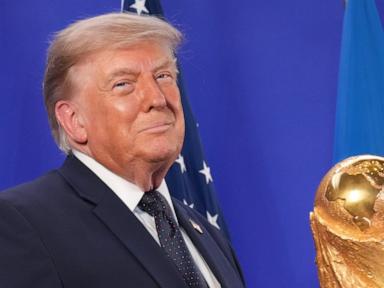
The 2026 World Cup final between Argentina and Spain is finally here, and Donald Trump is pulling no punches. While soccer purists argue over tactical formations and midfield pressing, the guy inside Trump Tower has already declared the true winner of the world's biggest tournament: the United States.
"It turned out we were a soccer country, and I think it's going to remain," Trump told a crowd of sports executives and diplomats during a packed FIFA reception at his Manhattan tower.
Honestly, nobody saw this coming. For a tournament heavily plagued by massive geopolitical tension, strict border rules, and administrative combat, the fact that we made it to Sunday's trophy presentation is a bit of a miracle. If you listen to mainstream media accounts, you're missing the real story of how Washington actually used soccer to run a masterclass in soft power—even while throwing massive tariffs at its own co-hosts.
The Geopolitical Chaos Behind the Scenes
Hosting a 48-team tournament across three massive nations was always going to be an administrative nightmare. But doing it under a hard-line administration that thrives on border enforcement added fuel to the fire.
Human rights groups spent months issuing dire warnings. Fans from several qualifying nations faced massive hurdles getting visas. At one point, the administration faced intense global scrutiny for denying entry to a highly decorated referee from Somalia. Things got even messier when escalating tensions with Iran forced their national team to set up camp across the border in Tijuana.
Then you have Trump’s open warfare with his own co-hosts, Canada and Mexico. Right in the middle of planning, he announced stiff tariffs on both nations and refused to renew their major trade pact. Just days before the final, he even threatened Canada with tariffs over the smoke from their wildfires blowing into New Jersey, where the championship match is being played.
At the FIFA reception, Trump couldn't resist a classic jab. He joked that the organization should bring the World Cup back to the U.S. again soon, adding, "this time, we’ll leave Mexico and Canada out."
Why the White House is Calling This a Massive Win
Despite all the pre-tournament panic, the administration managed to pull off a logistical coup. Billions of dollars in federal funding poured into security and infrastructure to ensure the tournament ran without a major hitch. The stakes couldn't have been higher; Washington knew that any major failure would instantly ruin America's credibility before the 2028 Summer Olympics in Los Angeles and the 2034 Winter Olympics in Salt Lake City.
And then there's the culture shift.
Instead of endless stories about visa denials and border friction, social media became a flood of international fans experiencing American subcultures. Think European fans falling in love with tailgating, southern barbecue, and putting ranch dressing on basically everything.
Andrew Giuliani, who heads up the White House FIFA Task Force, didn't hold back his satisfaction. He noted that while organizers are happy when the focus stays on the athletic feats on the pitch, the cultural crossover turned out even better than expected.
The VAR Call Heard 'Round the World
You can't talk about Trump and soccer without talking about his direct impact on the game itself. During the U.S. national team's round-of-16 match against Belgium, a controversial call threatened to remove a key American player from the pitch.
Trump took matters into his own hands and personally asked FIFA President Gianni Infantino to take another look at the play. FIFA ended up reversing the call. Even though the U.S. ultimately lost the match 4-1, Trump made sure to remind Infantino at the New York reception that it was a "great decision" because it kept America's star on the field.
It’s that exact kind of behind-the-scenes influence that shows how closely the White House tied its own identity to this tournament.
Handing Over the Trophy
When Trump takes the pitch at MetLife Stadium alongside Infantino to present the iconic trophy to either Argentina or Spain, it won't just be a photo op. It is the ultimate flex of American hosting capability.
Even the political leaders Trump spent months attacking are showing up. Mexican President Claudia Sheinbaum and Canadian Prime Minister Mark Carney are both attending the final in New Jersey at Trump’s direct request. It proves that soccer can bridge some of the nastiest geopolitical divides, even if only for 90 minutes.
The administration set out to prove that America could handle the world's most chaotic tournament under intense pressure. As the final whistle blows, they've done exactly that.
What This Means For Your Sports Trajectory
If you're an organizer, investor, or brand looking to capitalize on America's new identity as a dominant soccer nation, the time to act is right now. Don't wait for the 2028 Olympics to start building your footprint.
- Audit local field infrastructure: Demand and invest in turf and facility upgrades in your local municipalities immediately while federal and state sports grants are still highly active.
- Pivot your marketing strategy: If you manage a brand, stop treating soccer like a niche immigrant sport. Incorporate traditional American elements—like tailgating culture and classic food tie-ins—into your soccer campaigns to match the hybrid fan profile that exploded during this tournament.
- Secure youth sports pipelines: Position your local clubs to tie directly into major league academies as corporate sponsorships pour into the American soccer ecosystem over the next twenty-four months.