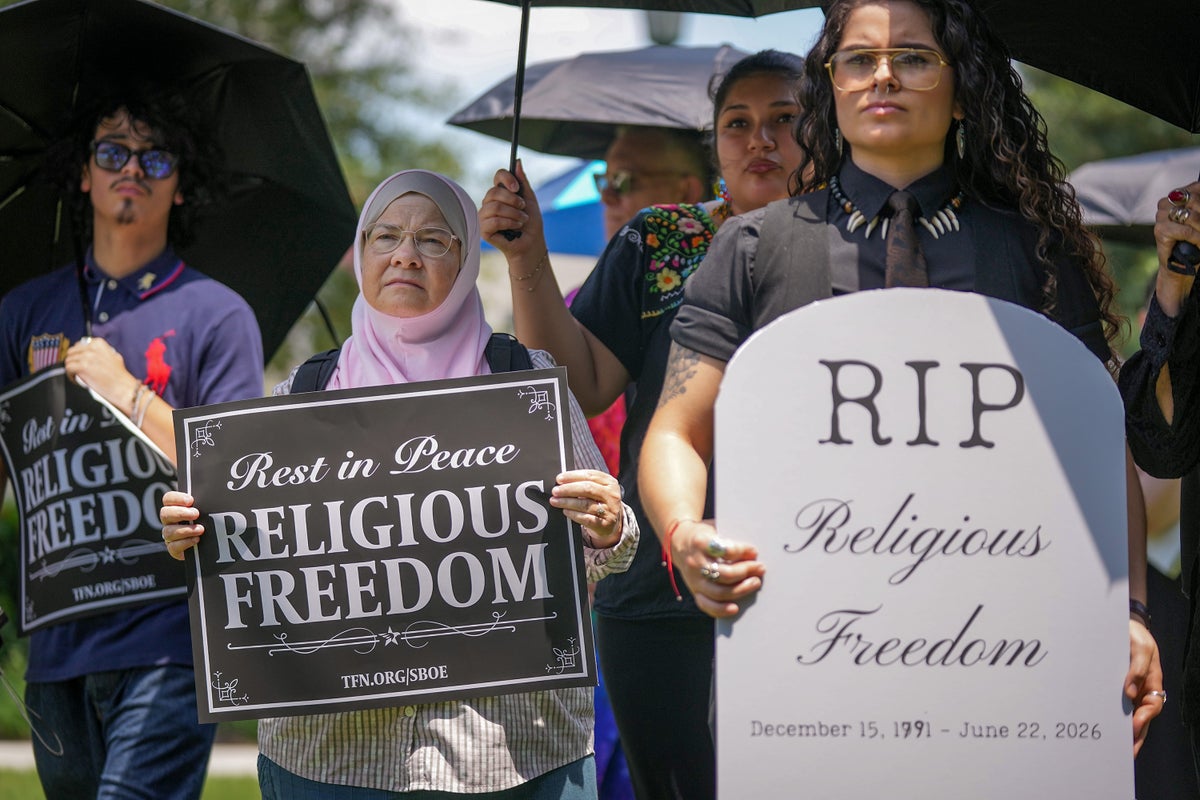
The headlines screaming about Texas public schools are missing the biggest shift in American education. Most people think the Texas State Board of Education is just having another standard political debate about school prayer or textbook phrasing. They think it is a local flare-up that will blow over by the next election cycle.
They are dead wrong.
What is happening right now in Austin is a systematic, legalistic restructuring of what millions of kids must read, think, and believe to graduate. The board is taking a final vote on a sweeping, mandatory reading list and an overhauled social studies curriculum for more than five million public school students. If you think this is just a symbolic culture war victory for conservatives, you do not understand how Texas politics shapes the rest of the country.
Texas educates roughly one in ten public school students in the United States. Because publishers build textbooks and digital curricula to capture the massive Texas market, whatever happens here inevitably bleeds into classrooms from Ohio to Florida. This is not an optional Bible study club. It is a top-down mandate that binds the hands of local school boards, replaces teacher autonomy with state-directed reading requirements, and sets up a direct, intentional challenge to decades of Supreme Court precedent regarding the separation of church and state.
The Mechanics of the 2030 Mandate
To understand why this vote matters, you have to look at the paperwork, not just the political speeches. The origin of this fight traces back to a state law passed in 2023. That statute required the state to establish a mandatory list of at least one literary work to be taught at each grade level. It sounded innocent enough at the time, framed as a way to ensure basic literacy and shared cultural knowledge.
The state board took that narrow legislative inch and stretched it into a mile. Instead of a modest list of classic books, the proposed new master list contains around 200 separate texts, essays, and specific book excerpts. If approved, these requirements will fully take effect during the 2030-31 school year.
The strategy here is brilliant from a bureaucratic standpoint. Local districts usually choose their own reading materials based on what fits their students best. Teachers love that flexibility. But under this new framework, the state dictates a massive chunk of the 36-week instructional year. English teachers who testified at the state board meetings pointed out that the sheer volume of these mandatory texts leaves almost no room to teach the actual state-mandated skills they are evaluated on.
School districts cannot just opt out of this list without major consequences. While the state cannot physically force a local school board to comply, it holds the purse strings. Texas uses a financial carrot-and-stick model. Districts that adopt the state-approved materials get extra funding per student. For cash-strapped rural schools or underfunded urban districts, walking away from that money is a luxury they simply cannot afford. It is a mandate in everything but name.
What the Required Reading Actually Looks Like
Let's look at the actual text of the proposal. The reading list blurs the line between historical literature and active religious instruction. It starts early, targeting children who are barely old enough to tie their shoes.
In kindergarten and first grade, six-year-old kids will face required picture-book stories. These are not general allegories about kindness. They are explicit biblical narratives like David and Goliath and Daniel and the Lion's Den. Supporters say these are foundational stories of Western literature. Critics note that they are presented without the broader mythological or historical context you would give to ancient Greek or Roman myths.
By the time students reach the fourth grade, the curriculum shifts from Old Testament stories to specific passages about Jesus in the New Testament. In middle school, the requirements deepen. Students are expected to read and analyze major portions of the New Testament, including the Beatitudes from the Sermon on the Mount and passages where Jesus instructs his followers to cast aside earthly anxiety to seek the kingdom of God.
By high school, the Bible becomes a required companion text for standard literature. If a class reads Charles Dickens' Great Expectations or Jane Austen's Pride and Prejudice, teachers are required to pair those novels with specific Bible passages as supportive materials.
Antero Garcia, a Stanford University professor and the president of the National Council of Teachers of English, stated that he does not know of any other state in the country with a mandatory reading list that includes religious texts this way. Kasey Meehan, who directs the Freedom to Read program at PEN America, confirmed that this specific approach is entirely unique to Texas. It goes far beyond teaching about religion as a historical force. It integrates the text into the core daily routine of learning how to read and write.
"Kids of all faith backgrounds and no faith are served by Texas schools and they should all feel welcome. But this is sending the message to children that one and only one religious text — a Christian one — is worthy of making this required reading list."
— Elva Mendoza, Texas Freedom Network
Redrawing History in Social Studies Classrooms
The reading list is only half the battle. The board is also voting on a parallel rewrite of the state's social studies lessons. This is where history is being actively rewritten to fit a specific theological worldview.
The new social studies standards explicitly link biblical stories with American history, often using creative parallels that leave secular historians scratching their heads. For example, the board added a requirement that introduces the biblical story of Moses directly alongside the Underground Railroad and Harriet Tubman. The justification offered by supporters is that Tubman was nicknamed "Moses" by her contemporaries. While that is a historical fact, the curriculum uses that nickname to pivot into teaching the biblical Exodus narrative as a historical blueprint for American liberty.
At the same time the board expanded Christian narratives, they systematically scaled back references to other cultures and faiths. During the initial curriculum meetings, the board voted to completely eliminate a social studies standard that required students to learn about Muslim contributions to algebra and astronomy.
Ruth Nasrullah, a Muslim speaker who testified before the board, argued that the proposed standards defy the Constitution by highlighting only one group of Americans as the founders who built the country, to the total exclusion of others.
The board also saw fierce debates over how to present secular civil rights leaders. Early drafts of the social studies curriculum specified that high school students should know the significance of leaders like Thurgood Marshall, Barbara Jordan, and Hector P. Garcia, but noticeably left out Martin Luther King Jr. After a massive public outcry and hours of heated testimony from parents and educators, the board made minor tweaks to add King back into the text. They also adjusted language around the dark chapters of American history, choosing to describe the forced wartime incarceration of Japanese Americans during World War II simply as one of many "changes" that occurred during the war era.
The Battle Inside the Boardroom
The atmosphere at the Barbara Jordan State Office Building in Austin, where the fifteen-elected members of the board meet, has been chaotic. Nearly 500 citizens signed up to speak during the public comment periods. The crowd reflected a deep, bitter fracture in the state.
On one side, conservative citizens and religious advocacy groups argue that this curriculum is a necessary correction to a public education system they believe has drifted from its roots. Brooke Mazel, a retiree who traveled from Lubbock to testify, urged the board to adopt the biblical materials. She argued that her children and grandchildren grew up with strong faith and family values because of these teachings, stating that America should celebrate its history as a nation founded on unwavering Christian values.
On the other side, parents, civil rights lawyers, and non-Christian religious leaders argue that the policy turns public schools into parochial schools. They point out that a public classroom contains children from Jewish, Muslim, Hindu, Buddhist, and atheist families. Forcing a child of another faith to read New Testament parables about the kingdom of God as a state-mandated assignment inherently alienates that child.
The voting patterns on the board reflect this razor-thin divide. The preliminary votes on these measures passed by an 8-7 margin. Every single Democrat on the board voted against the changes, joined by a couple of moderate Republicans who worried about the legal liabilities and the logistical nightmare this imposes on local teachers. But the conservative majority held the line.
What Happens Next for Texas Teachers
If you are an educator or a parent, you need to understand that this is not a theoretical debate. The legal challenges will start the minute the final vote is recorded. Civil rights organizations like the American Civil Liberties Union and Americans United for Separation of Church and State are already preparing lawsuits. They will argue that mandating Christian scripture violates the Establishment Clause of the First Amendment.
But the conservative legal strategy behind this curriculum is banking on those lawsuits. They want this to go to the courts. With a conservative supermajority on the U.S. Supreme Court, Texas leaders believe they can overturn old rulings that kept sectarian religious texts out of the standard public school day.
For the teachers on the ground, the practical next steps are messy. If you teach in Texas, or in a state that follows Texas curriculum trends, you need to prepare for a significant shift in your daily lesson plans.
First, get ready for intense local scrutiny over how you handle these texts. If you treat the story of David and Goliath strictly as literature, you may face anger from religious parents who want it taught as literal divine truth. If you treat it as absolute religious truth, you face legal liability from parents protecting their civil rights.
Second, start auditing your current reading syllabi. Since the state is mandating around 200 specific texts to take effect, you will have to cut out modern books, diverse authors, and local elective topics just to find the hours required to check off the state's boxes.
The Texas Bible vote is a masterclass in how to use bureaucratic levers to achieve a cultural overhaul. It bypasses local democracy, leverages state funding to force compliance, and uses the English department to achieve what school prayer advocates could never get past the courts. Don't look at this as a temporary political stunt. It is the new blueprint for public education in America.



.jpg)