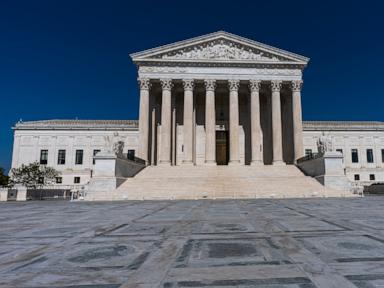
The United States Supreme Court just dropped a massive ruling on birthright citizenship, and the fallout is rewriting the political landscape. In Trump v. Barbara, a split court struck down Executive Order 14160, the Trump administration's direct attempt to end automatic citizenship for children born in the US to undocumented immigrants or temporary visa holders.
If you've been reading the mainstream coverage, you probably think this is a simple story of a conservative court unexpectedly bucking a conservative president. It isn't. The real story lies in a deep, bitter ideological war over the text of the Fourteenth Amendment. This battle reveals a fundamental disagreement about who gets to be called an American.
The ruling protects the long-standing status quo, but the sharp rifts among the justices show that the debate is far from dead. Let's look at what actually happened behind the closed doors of the nation's highest court and what it means for the future of American immigration law.
The Executive Order That Sparked the Crisis
On January 20, 2025, right after taking office for his second term, President Donald Trump signed Executive Order 14160. The order instructed federal agencies to deny citizenship documents, like passports and social security numbers, to children born on US soil unless at least one parent was a US citizen or a lawful permanent resident.
The administration aimed to target what critics call "birth tourism" and stop the automatic granting of citizenship to children of undocumented immigrants. This policy would have upended over a century of legal tradition. An estimated 150,000 children are born in the United States each year to parents without permanent status. The executive order immediately triggered frantic legal challenges from civil rights groups and immigration advocates across the country.
Lower courts rushed to issue injunctions, blocking the order before it could fully take effect. The administration argued that the president had the power to interpret the Fourteenth Amendment's Citizenship Clause. They claimed the phrase "subject to the jurisdiction thereof" excluded people who owe allegiance to foreign powers. Civil rights lawyers argued that the Constitution is ironclad and cannot be altered by executive decree. The stage was set for a dramatic showdown at the Supreme Court.
How the Justices Split on the Fourteenth Amendment
The Supreme Court rejected the administration's policy, but the voting alignment shows a complex legal split. The majority consisted of Chief Justice John Roberts, who wrote the main opinion, joined by Justices Sonia Sotomayor, Elena Kagan, Amy Coney Barrett, and Ketanji Brown Jackson. Justice Brett Kavanaugh joined the majority in part, agreeing that the executive order violated federal statutes, which created a 6-3 alignment on statutory grounds but a tighter 5-4 split on the core constitutional issues.
Chief Justice Roberts anchored his opinion in a deep historical review of English common law. He argued that American law has always tied citizenship to the place of birth rather than the legal status of the parents. According to Roberts, the Framers of the Fourteenth Amendment intended to create a broad, inclusive rule that could not be modified by changing political winds.
On the other side, Justices Clarence Thomas, Samuel Alito, and Neil Gorsuch launched a fiery dissent. They argued that the majority misunderstood the original intent of the Reconstruction era. Thomas asserted that citizenship requires a deeper political bond or permanent domicile within the country, rather than just physically being present on US soil.
The Clash Over History and Original Intent
The debate centered entirely on the Citizenship Clause of the Fourteenth Amendment, ratified in 1868. The text states that all persons born or naturalized in the United States, and subject to the jurisdiction thereof, are citizens. The administration's solicitor general, D. John Sauer, argued that "subject to the jurisdiction" meant owing complete political allegiance to the United States. He argued that tourists, guest workers, and undocumented immigrants maintain allegiance to their home nations, meaning their children do not automatically qualify for citizenship.
Chief Justice Roberts dismissed this interpretation. He explained that the phrase historically meant being subject to American laws and courts. If an individual can be arrested and prosecuted under US law, they are within the jurisdiction of the United States. The only historic exceptions were diplomats and invading armies, who enjoy sovereign immunity.
Roberts wrote that citizenship is the right to have rights and to participate freely in the political community. He argued that the court was breaking no new ground but was keeping a historic promise made during the Reconstruction era to secure a stable definition of American identity.
A Direct Conflict Between the Black Justices
One of the most striking aspects of the ruling is the direct confrontation between the court's two Black justices, Clarence Thomas and Ketanji Brown Jackson. Their competing opinions offer completely different interpretations of the Civil War's aftermath and the true purpose of the Reconstruction amendments.
Justice Thomas focused his dissent on the idea that the Fourteenth Amendment was a specific, targeted remedy designed to overturn the infamous Dred Scott decision. He wrote that the Citizenship Clause was enacted specifically for freed slaves who had established a permanent home in the country. In his view, using an amendment meant to heal the wounds of slavery to grant automatic citizenship to the children of foreign nationals who entered the country outside the legal system distorts its historical purpose.
Justice Jackson issued a sharp concurrence to challenge Thomas directly. She argued that Thomas's interpretation was narrow and deeply flawed. Jackson pointed out that Thomas has spent decades advocating for a colorblind Constitution, yet here he chose to view the Citizenship Clause as a restrictive, race-conscious remedy.
Jackson wrote that the Reconstruction amendments were designed to create a broad, forward-looking definition of citizenship that would expand the American political community. She argued that limiting citizenship based on parental status mimics the restrictive legal theories that the Fourteenth Amendment was explicitly written to destroy.
What This Means for Families and Legal Practitioners
The ruling provides immediate legal certainty for hundreds of thousands of mixed-status families across the country. Children born in the United States will continue to receive birth certificates, social security cards, and passports regardless of their parents' immigration status.
For legal practitioners, the decision solidifies the 1898 precedent established in United States v. Wong Kim Ark, which affirmed birthright citizenship for the child of Chinese immigrants. The Supreme Court has made it clear that the executive branch cannot unilaterally redefine constitutional terms to enforce immigration goals.
However, the close margins on the constitutional questions suggest that immigration hawks will continue to look for ways to test these limits. Future challenges could come through targeted congressional legislation rather than executive orders, attempting to force the court to rule on whether lawmakers have the power to define the scope of jurisdiction.
Next Steps for Navigating the Post Ruling Reality
If you are an immigration advocate, a legal professional, or a family affected by these shifting policies, you need to know how to navigate the immediate aftermath of this decision.
First, verify that local and state agencies are fully complying with the ruling. Some administrative offices delayed processing citizenship paperwork while waiting for the Supreme Court's decision. Ensure all birth registrations are moving forward normally.
Second, review documentation for children born during the period when Executive Order 14160 was active. Ensure that any temporary denials or administrative holds issued by federal agencies are cleared immediately.
Third, stay informed about the administration's broader immigration strategies. While the birthright citizenship ban failed, the administration has successfully defended other restrictive measures, such as the cancellation of temporary humanitarian protections for certain nations. The legal landscape remains highly volatile.