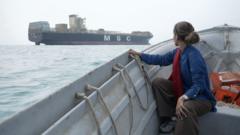
The world looks at the Strait of Hormuz and sees an oil chokepoint. They see high-stakes geopolitics, US blockades, and Iranian Revolutionary Guard speedboats. But if you stand on the shores of Qeshm Island or look out across the narrow channel where 20% of the world's oil flows, you see a completely different reality.
It is a place where modern economic warfare slams directly into ancient survival.
The mainstream media loves to paint the recent lull in the region as a return to normalcy. After Iran attacked three cargo vessels and seized two of them for "inspections," the headlines shifted to an "uneasy calm." But talk to the local shark fishermen who navigate these waters every single day. For them, calm is an illusion. The maritime standoff hasn't ended; it just changed its shape.
The Illusion of a Reopened Waterway
When negotiators in Pakistan attempt to stitch together a fragile ceasefire between Washington and Tehran, the global shipping industry breathes a sigh of relief. Tanker tracking data shows a few brave crews venturing back into the chokepoint. Don't let those numbers fool you.
The Strait of Hormuz isn't functioning normally. You can't just flip a switch and undo months of escalation.
The United States maintains a tight naval blockade on Iranian ports, aiming to starve Tehran into submission before diplomatic talks can progress. Iran fires back by asserting its right to control shipping, using the Islamic Revolutionary Guard Corps (IRGC) to intercept commercial vessels under the guise of "maritime violations."
When a third cargo vessel was struck by an unknown projectile 93 kilometers northwest of Dubai, it became obvious that the risk profile hasn't dropped. It has just become unpredictable. For international shipping companies, it means skyrocketing insurance premiums. For the crews on board, it means tracking radar screens with bated breath, knowing a drone or a fast-attack craft could appear on the horizon at any moment.
Collateral Damage on the Water
While global powers argue over ceasefire terms and sanctions, local fishermen are paying the price with their lives. Consider the shark fishermen of southern Iran. For generations, these families relied on deep-water catches in the strait to survive. Today, those traditional fishing grounds are a no-go zone.
Step into their shoes for a second. You launch your small wooden dhow or motorboat from Qeshm Island. You need to feed your family. But the deep waters where the big fish run are now packed with warships, mines, and aggressive coastal patrols.
- Fewer fish: Fishermen are forced to stay close to the shoreline. The coastal waters are overfished, meaning daily catches have plummeted.
- Surging costs: Staying out longer to catch fewer fish burns precious fuel. In an economy already crushed by hyperinflation and blockades, fuel costs are eating away what little profit remains.
- Fatal risks: This isn't just about money. It's about survival. Local fishermen have vanished in the strait. Some were caught in the crossfire of naval skirmishes; others hit floating debris or sea mines. Bodies have washed up as far away as the coast of Oman, waiting for identification.
The competitor articles love to focus on the metal hulls of massive oil tankers. But the true tragedy of the Hormuz crisis is the destruction of a centuries-old way of life for thousands of coastal families who want nothing to do with international politics.
Why the Current Strategy is Failing
The international community treats the Strait of Hormuz like a regional math problem that can be solved with the right combination of naval escorts and diplomatic pressure. That is a fundamental misunderstanding of how we got here.
Western strategists believe that escalating the naval blockade will force Iran to capitulate. It doesn't. History shows that whenever Tehran feels cornered, it leverages its geographic advantage. The strait is only 39 kilometers wide at its narrowest point. Iran doesn't need a massive, state-of-the-art navy to cause chaos. A handful of cheap sea mines, anti-ship missiles hidden in coastal cliffs, and a fleet of fast speedboats can paralyze global trade.
The real mistake is assuming that a ceasefire agreement signed in a distant capital will instantly bring peace to the water. The IRGC operates with a high degree of autonomy. Even if diplomats shake hands, the tension on the water remains white-hot. A nervous radar operator or a rogue speedboat captain could spark a fresh round of conflict in seconds.
What Happens Next
If you want to know where this crisis is heading, stop watching the political press conferences and start watching the shipping lanes. The current "uneasy calm" is a holding pattern, nothing more.
To understand if the region is truly stabilizing, keep an eye on these three metrics:
- The Insurance Risk Premium: Watch the Lloyd's of London Joint War Committee updates. Until they remove the Strait of Hormuz from their high-risk area list, the shipping world still considers it a combat zone.
- The Small Boat Activity: True peace will show up in the behavior of the IRGC navy. If the speedboats stop buzzing commercial tankers and checking cargo manifests, the risk of an accidental escalation drops significantly.
- Local Fish Markets: Talk to the merchants in the coastal markets of Bandar Abbas. When the deep-sea fishermen can safely return to the middle of the strait without fear of being shot or blown up, you'll know the crisis is actually over.
Until then, the calm is just a veneer. The underlying economic and military pressures are still building up beneath the surface, waiting for the next spark.


.jpg)