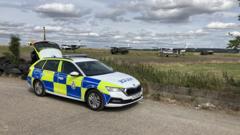
When a veteran skydiver with over 10,000 jumps dies mid-air, it sends shockwaves through the community and dominates news headlines. The recent tragedy at Dunkeswell Aerodrome near Honiton involving 49-year-old wingsuit coach Chas McNeil has left Skydive South West devastated. Instantly, the public conversation shifts to familiar, fearful questions. How does someone with that much experience lose their life? Is skydiving getting more dangerous?
The short answer is no. Statistics show it's safer than ever. But elite-level disciplines like wingsuit flying introduce entirely different risk profiles that casual observers—and even amateur jumpers—often completely misunderstand.
The Reality of Risk in Advanced Wingsuit Flying
Most people assume that skydiving accidents happen because a parachute simply fails to open. While equipment malfunctions do occur, they are incredibly rare with modern engineering. When you look at highly experienced licensed skydivers, the danger profile shifts dramatically away from gear failure and toward human performance boundaries, extreme speeds, and aerodynamic complexities.
Wingsuit flying essentially turns a human body into a flying wing. It relies on fabric wings sewn between the legs and under the arms to generate lift and forward speed. You aren't just falling straight down; you're moving forward at speeds often exceeding 100 miles per hour.
This horizontal velocity alters how a skydiver interacts with the air. It introduces a phenomenon called a "body wake." If a jumper deploys their parachute while moving forward at extreme speed, the chaotic air currents behind their body can easily tangle the lines or warp the canopy as it opens. This is why wingsuit coaches place immense emphasis on the "flare" technique—a sharp aerodynamic braking maneuver used to slow down forward momentum immediately before pulling the ripcord.
The Double Edged Sword of 10,000 Jumps
There is a psychological trap in high-risk sports known as habituation. When you do something safely thousands of times, your brain stops treating the environment as an immediate threat.
I've seen it happen across various extreme sports. A novice jumper is hyper-vigilant, checking their altimeter every few seconds. An expert with a massive logbook like McNeil's operates on deep muscle memory. That expertise is usually a lifesaver. But when an advanced maneuver goes wrong at high speeds, the margin for error shrinks to fractions of a second.
According to statements from Skydive South West, McNeil was using his personal parachute equipment and an advanced wingsuit while jumping with a friend. In a close-knit, family-run drop zone, losing a regular coach and mentor hurts deeply. The wider community, including the veterans' charity Phoenix Heroes, where McNeil served as a regional captain, felt the blow immediately.
Unpacking the Rules and Regulatory Aftermath
Whenever a fatality occurs on British soil, the governing body, British Skydiving, steps in. They don't just rely on standard police forensics. They convene a formal Board of Inquiry to inspect the gear, review any available camera footage, and analyze the telemetry data from automatic activation devices.
Many people don't realize how strictly regulated the sport is in the UK.
- Every incident report is parsed to see if equipment rules need to change.
- The Civil Aviation Authority (CAA) receives copies of the final findings.
- The Coroner uses the technical expertise of the Board to determine the precise cause of death.
Speculation runs rampant on social media after these events. People guess about medical emergencies, sudden wind gusts, or gear tampering. The truth is usually far more technical and mundane. It takes months for independent investigators to piece together the exact aerodynamic or physical sequence that led to the impact.
Why the Dunkeswell Aerodrome History Completes the Picture
To truly understand why this specific incident caused such a massive local reaction, you have to look at the history of the airfield. The site saw a completely unrelated double tragedy previously, when a tandem student and instructor lost their lives under a different operational firm, Skydive Buzz Ltd, which later went into liquidation.
The current operators, Skydive South West, were formed by former employees and have no connection to that past entity. Yet, running a small drop zone means carrying the weight of public perception. When a high-profile accident occurs at a familiar landmark, the public naturally conflates separate events, putting immense pressure on the staff and local jumpers who are simply trying to process the raw grief of losing a friend.
If you are looking at this tragedy and wondering how to approach skydiving moving forward, the best path is transparency. Understand that tandem skydiving as a tourist has a radically different safety threshold than solo, high-performance wingsuit flight. If you want to support the community or explore the sport safely, your next steps shouldn't be driven by panic.
Look directly at the safety statistics provided by national organizations, respect the training boundaries set by local clubs, and let the formal Board of Inquiry finish its technical assessment before drawing conclusions about what went wrong in the skies over Devon.
:max_bytes(150000):strip_icc()/TAL-nassau-bahamas-BEAUTCARIB0323-4fbfce903e5a4418b895e03717e3de0d.jpg)