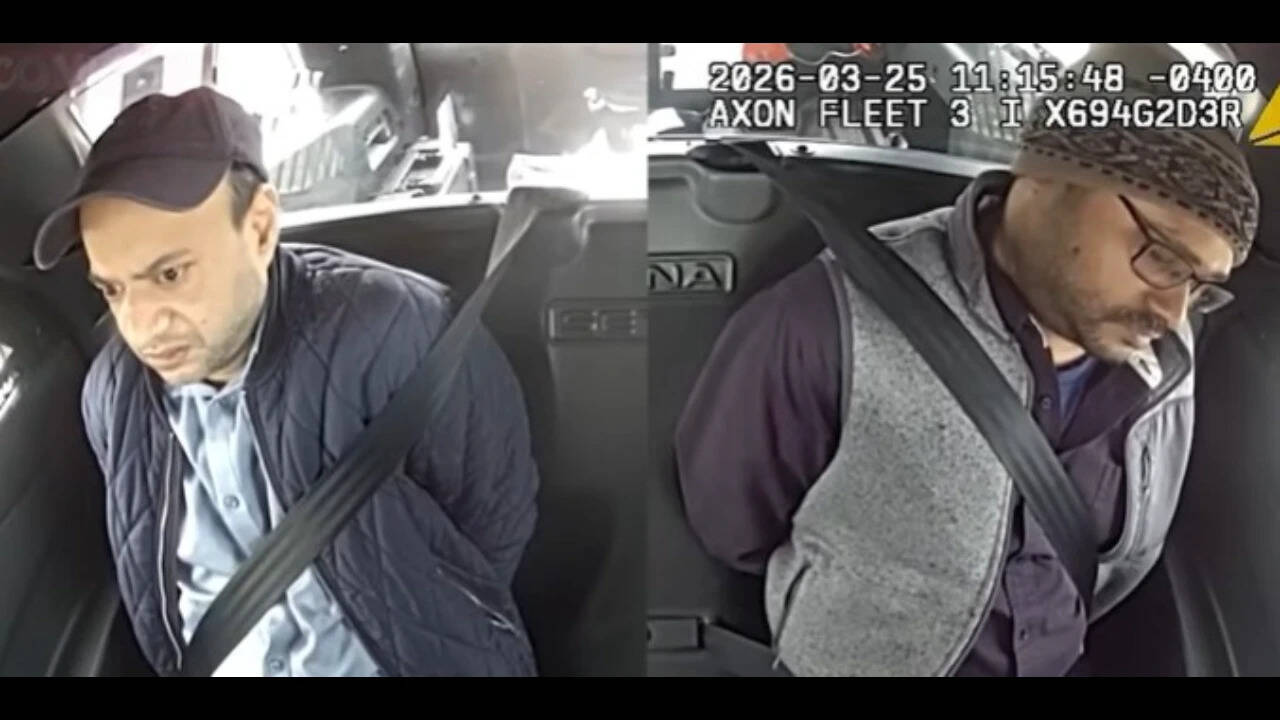
You think you're too smart to get scammed. Everyone does. We read headlines about older adults losing fortunes and assume they must just be gullible. But the latest footage released by the Westlake Police Department in Ohio proves that these international operations aren't amateur hour. They are highly organized psychological traps.
When bodycam and interrogation footage dropped showing the arrest of two men involved in a massive gold scam targeting a 78-year-old Westlake resident, it wasn't just another local crime report. It exposed the absolute terrifying precision of modern elder fraud. The victim genuinely believed she was working hand-in-hand with federal agents. Her words to the police say everything about how deep the manipulation goes. She admitted that the whole time she thought she was speaking to the FBI.
The two suspects, identified as Manan Shah and Ankit Gupta, were caught in an undercover sting. While they claimed during questioning that they were just simple couriers hired to pick up a package, the operation they were part of managed to drain nearly $200,000 in real gold from a single senior before the trap snapped shut. Understanding how this happened means looking past the surface of the arrest and examining how these networks exploit fear.
The Anatomy of the Westlake Gold Scam
This nightmare didn't happen overnight. It started back in August 2025 with something incredibly common. A simple pop-up alert appeared on the woman's home computer screen. The message claimed her system was heavily compromised and hacked. It provided a customer service number, which she called.
That first call is where the trap was set. The voice on the other end didn't just offer tech support. They immediately passed her up the chain to a fake federal agent. These criminals spun an incredibly intricate narrative. They claimed her identity had been stolen, her bank accounts were tied to international cyber crimes, and a federal investigation was actively underway. They even invented a story about an undercover agent being killed in the line of duty to elevate the stakes and create a profound sense of urgency.
Fear makes people compliant. The scammers told the 78-year-old woman that her life savings were at risk of being frozen by the government or seized by cartels. The only way to keep her wealth safe was to liquidate her assets, buy physical gold, and hand it over to "government couriers" for secure storage in a federal vault.
She believed them. Over the course of several months, she repeatedly went to local gold dealers, bought bars, and handed them over right outside her own home. By March 2026, she had handed over almost $200,000 worth of gold.
How the Westlake Police Set the Trap
The criminal network made a fatal mistake when they pushed too hard. Not satisfied with the $200,000, they instructed the victim to cash out 80% of the equity in her 401k account to buy even more gold. Around the same time, the local gold shop where she was making these massive purchases started getting highly suspicious. The unusual volume of transactions flagged immediate concerns, and the victim finally reached out to local authorities.
Westlake Police detectives didn't just take a report and walk away. They immediately took over the operation. They intercepted the victim's phone calls and text messages, keeping the communication channel with the scammers wide open while pretending everything was normal.
To catch the couriers in the act, the police created a perfect illusion. They packaged fake gold, generated counterfeit receipts, and sent photos of the bundle to the scammers to prove the "package" was ready for pickup. When the car arrived at the Westlake home to collect the gold, police were waiting.
The department deployed aerial drones to track the suspects' vehicle from the moment it entered the neighborhood. Officers moved in quickly and blocked the car, arresting Manan Shah and Ankit Gupta on the spot without any incident.
Inside the Interrogation Room
The newly released police footage offers a rare look at what happens when these networks get disrupted. When brought in for questioning, both Shah and Gupta tried to distance themselves from the broader criminal enterprise. They claimed they had no idea they were participating in an international scam that was wiping out an elderly woman's life savings.
According to their statements, they were just operating as independent contractors. They told detectives they received instructions through encrypted messaging apps to drive to specific locations, pick up packages, and deliver them to a secondary drop-off point. In their version of the story, they were just delivery guys picking up a parcel for a quick payday.
This defense is incredibly common in modern courier scams. International fraud rings based overseas frequently use local couriers who are recruited through online job boards or community networks. Sometimes these couriers are fully aware of the crime. Other times, they operate with willful blindness, ignoring the glaring red flags of picking up heavy boxes of valuables from residential doorsteps in exchange for quick cash. Whether they knew the full scope or not, their role as the physical hands of the scam is what makes these crimes possible.
Why Traditional Red Flags Fail Victims
It is easy to look at this case from the outside and wonder why the victim didn't just hang up the phone. But these networks use sophisticated psychological tactics that deliberately short-circuit rational thinking.
First, they demand absolute secrecy. The fake agents told the Westlake woman that because this was a high-level federal investigation, she could not mention it to anyone. Not her family, not her financial advisors, and definitely not local police. They warned her that talking would compromise the case and could lead to her immediate arrest for obstructing justice. This effectively cut her off from any reality check.
Second, they create a constant state of hyper-vigilance. By keeping the victim on the phone for hours at a time and checking in constantly, they don't give the brain a chance to cool down and process the absurdity of the situation. The constant pressure keeps the victim trapped in an emotional fight-or-flight response.
Finally, they mimic authority flawlessly. Scammers use spoofed phone numbers that match real law enforcement agencies on caller ID. They send pictures of fake badges, official-looking documents, and legalistic paperwork via text message. To someone unfamiliar with federal law enforcement protocols, the presentation looks entirely authentic.
Immediate Steps to Defend Against Courier Scams
You need to know exactly how to handle these situations before they happen to you or an older family member. True security depends on recognizing the hard lines that legitimate organizations will never cross.
Never trust your caller ID. Scammers easily manipulate the numbers displayed on your screen to mimic local police departments, the FBI, or your bank. If you receive an unexpected call claiming your accounts are compromised, hang up immediately. Find the official number of the institution yourself and call them back directly.
Be highly skeptical of any computer pop-up warnings. Legitimate tech companies like Microsoft or Apple will never lock your screen and demand that you call a phone number to fix a virus. If your screen freezes with a warning message, force restart your device or take it to a local, trusted professional.
Understand that no government agency collects cash or gold. The FBI, the IRS, and local police departments will never send a representative to your home to pick up money, cryptocurrency, or gold bars for safekeeping. Any request to convert liquid cash into physical precious metals or digital assets is a definitive indicator of fraud.
Talk to your family openly about these tactics. Isolation is the ultimate weapon for a scammer. Ensure that older relatives know they can talk to you about unusual financial requests without facing judgment or anger. Establishing an environment of open communication is the single most effective way to break the spell of an aggressive phone scam.
If you suspect that you or someone you know has been targeted, report the incident immediately to your local police department and file a detailed report with the FBI Internet Crime Complaint Center. Acting quickly and sharing transaction details provides law enforcement with the data required to track down the networks and stop the couriers before they can disappear with a lifetime of savings.