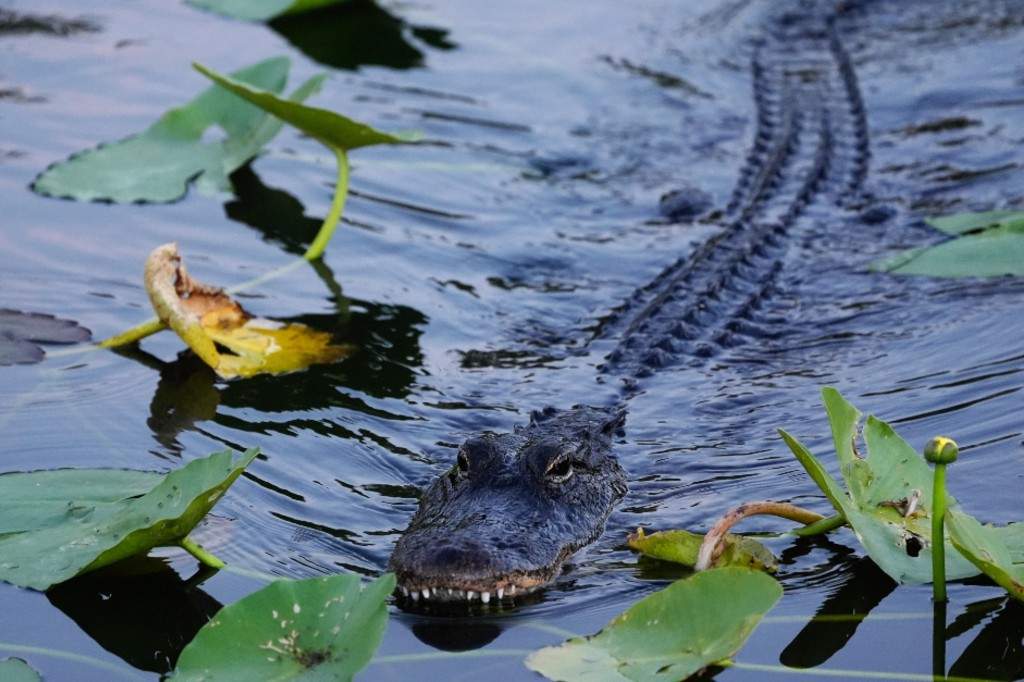
A peaceful Sunday afternoon hike turned into an absolute nightmare. A 31-year-old Orlando woman lost her life after a horrific alligator attack in a Florida river, sending shockwaves through local communities and leaving seasoned wildlife experts stunned. She was swimming with her boyfriend and her best friend in the Econlockhatchee River, located inside the Little Big Econ State Forest. They were not doing anything reckless. They were not teasing wildlife. They just stepped into the water to cool off after a long trail walk.
The media immediately flooded the internet with sensational headlines. Many commentators online began blaming the victims, claiming they must have ignored obvious warning signs or acted maliciously. That narrative is completely false. State officials quickly clarified that the group did nothing to provoke the reptile. The tragic reality is that environmental factors, seasonal behavior, and a severe local drought combined to create a lethal scenario in just three feet of water.
Understanding what actually happened can save your life. This incident shatters many common myths about where alligators hunt and when they are most aggressive. If you step into Florida freshwaters thinking you are safe just because the water only reaches your knees, you are making a fatal mistake.
The Nightmare at Little Big Econ State Forest
The details of the encounter are deeply disturbing. Around 1:30 p.m. near the Barr Street Trailhead, the group stopped by a small launch area along the riverbank. The river was running exceptionally low. The woman was kneeling in roughly three feet of water when a massive alligator lunged.
It did not just bite and let go. It targeted her upper body, clamping down on both of her arms with immense pressure.
Her boyfriend did not hesitate. He lunged into the water, grabbed her, and fought desperately to rip her away from the alligator's jaws. He managed to pull her free after a brutal struggle, but the damage was already catastrophic.
Audio from the emergency 911 call paints a harrowing picture of the immediate aftermath. Screams and frantic crying echo in the background as the caller begs operators to send help fast. The caller states that both of her arms were dislocated and torn, with one arm completely severed by the animal. The group was far off the main trail, making it difficult for emergency crews to locate them quickly. First responders used utility vehicles and boats to reach the remote shoreline. Sadly, the victim succumbed to her massive blood loss and injuries while being rushed to the hospital.
What Drives an Apex Predator to Attack in Three Feet of Water
Wildlife biologists from the Florida Fish and Wildlife Conservation Commission immediately launched a massive response. Contracted nuisance alligator trappers worked for hours alongside the Seminole County Sheriff’s Office. They pulled two massive alligators from the immediate vicinity of the attack site. One measured 12 feet long. The other was a staggering 13 feet long.
Lt. Grant Eller stated that the 13-foot alligator was captured directly at the launch area and is considered the prime candidate for the attack. DNA samples from the reptiles were sent straight to the state laboratory for testing to confirm which animal was responsible.
Why would a 13-foot apex predator attack a human in water that barely covers a person's waist? The answer lies in a perfect storm of environmental conditions that most casual hikers completely ignore.
Florida is experiencing a prolonged drought. This means rivers like the Econlockhatchee are shrinking, compressing the available habitat. Large alligators that normally rule deep, isolated pools are forced into closer proximity with shallow banks and trail crossings.
The timing magnified the danger. The attack occurred at the tail end of the alligator mating and nesting season. During this window, large males and nesting females become hyper-territorial. Their hormone levels are high, their tolerance for intrusion is zero, and their drive to protect their domain is fierce. When you combine compressed territory due to low water levels with peak seasonal aggression, a wading human ceases to look like an bystander. Instead, they look like an invading threat or easy prey.
The Crucial Mistakes Waders Make in Florida Freshwaters
Most people believe alligators only attack if you are swimming deep or wading at dusk. That is a myth. Alligators are ambush predators. They do not need deep water to strike. A 13-foot alligator can compress its body flat against the riverbed, hiding perfectly in two to three feet of murky water. They watch the surface, waiting for vibrations.
When you kneel or sit in shallow water, you drop your head and torso down to the alligator's eye level. You lose your height advantage. To an alligator waiting in the weeds, a splashing human torso looks exactly like a deer or wild hog drinking at the water's edge.
Another common error is assuming that popular hiking trails are safe zones. The Barr Street Trailhead is a heavily frequented spot. Hikers regularly visit to enjoy the scenic overlooks. Frequent visitors noted that a known female alligator often uses that specific stretch of river to lay her eggs. Locals know to stay out of the water, but visitors often miss the subtle signs of wildlife activity. Warning signs are posted near the trailhead, but signs cannot predict the movement of a transient 13-foot male looking for a fight.
Understanding Alligator Behavior During Droughts and Mating Seasons
The statistics show that fatal encounters remain statistically rare, but they are rising as human populations expand into wild spaces. The state estimates there are roughly 1.3 million alligators living across all 67 counties in Florida. Every single body of fresh or brackish water has the potential to harbor a gator.
Prior to this attack, state data showed an average of about eight unprovoked alligator bites per year, with only 26 total fatalities recorded since 1948. Three separate alligator attacks occurred within just one week in June. This spike is not a coincidence. It is a direct reflection of extreme weather patterns and natural seasonal cycles intersecting with human recreation.
During droughts, do not trust clear water either. While the Econlockhatchee River can run tea-colored due to tannins, shallow pools can look deceptively inviting. Low water levels also reduce the abundance of natural prey like large fish and turtles, making alligators hungrier and more willing to take risks on larger targets.
Concrete Steps to Protect Yourself in Alligator Territory
You cannot manage the instincts of a wild reptile, but you can change how you interact with their environment. If you hike, camp, or forage near Florida waterways, you must adopt strict safety rules.
- Stay completely out of the water unless it is a designated, cleared swimming zone. Wading, kneeling, or sitting along natural riverbanks is an open invitation for an ambush strike.
- Avoid the water edge during the transition seasons. May through July represents the peak of mating, nesting, and hatching activity. Alligators are naturally more aggressive during these months.
- Never assume shallow water means small alligators. Giant bulls can and will sun themselves or hide in water that is less than 36 inches deep.
- Scan the shoreline for slides. Alligators leave distinct, smooth mud paths where they slide into the water. If you see a slide, an alligator uses that spot regularly. Turn around.
- Keep pets far away from the riverbanks. Dogs mimic the exact size and distress frequencies of natural prey, drawing gators from hundreds of yards away.
If you ever find yourself facing an alligator strike, do not try to pull away smoothly. Alligators rely on a death roll to dismember prey. Fight back violently. Target the animal's eyes, snout, and the sensitive skin around its palatal valve at the back of its throat. Make yourself as difficult to manage as possible.
The tragedy in Seminole County is a stark reminder that nature does not care about your weekend plans. Pack your gear, enjoy the trails, admire the scenery from a distance, but keep your feet firmly on dry land. Missing out on a quick swim is a small price to pay to ensure you make it back to the trailhead alive.



.jpg)